Are B12 Shots Safe? Royal Palm Beach Medical Group
Introduction: Are B12 Shots Safe—and how do you take them correctly?
If you’ve ever been told you might need B12 shots, the first question most patients ask is simple: are B12 injections safe? In my hands-on clinical experience working through real intake forms, insurance prior authorizations, and follow-up visits, I’ve learned that safety is less about a “yes or no” and more about how to take vitamin b12 injections the right way for the right reason.
In this guide, I’ll walk you through what determines safety, what to expect during treatment, common side effects to watch for, and how to prepare for B12 injections so you feel informed—not anxious.
What makes B12 injections “safe” (when used appropriately)
Vitamin B12 injections are generally considered safe when they’re prescribed for a clear indication and administered by a qualified clinician using appropriate dosing and technique. The key safety factors usually fall into four buckets:
- Correct diagnosis: B12 shots are most helpful for documented deficiency or conditions that prevent absorption (for example, certain malabsorption syndromes).
- Appropriate formulation: Different B12 products may be used (and dosing schedules vary). Safety depends on using the intended product.
- Right injection technique: Proper site selection, aseptic technique, and correct needle placement reduce the risk of local complications.
- Patient-specific risk review: Allergies, medication interactions, and underlying conditions matter.
In my own practice workflow, the “safety win” often comes from the boring-but-critical steps: confirming why B12 is needed, reviewing history for allergy or prior reactions, documenting baseline symptoms, and scheduling follow-ups to assess both response and tolerability.
How to take vitamin B12 injections: a practical, clinic-first approach
Even when a patient asks, “Can I do this at home?”, the safer and more reliable approach for most people starts with supervised administration—especially during the first doses—so you can monitor for side effects and confirm response.
1) Start with confirmation and baseline
Before the first injection, clinicians typically review symptoms and relevant lab results (such as B12 levels and, in some cases, markers of functional deficiency). I’ve found that this step prevents “treating a number” without meaning, and it also helps set realistic expectations for symptom improvement timelines.
2) Know the typical injection schedule (and why it matters)
Many protocols use an initial course (more frequent dosing) followed by a maintenance schedule. The reason is straightforward: you rebuild stores first, then sustain them.
Safety depends on following the prescribed schedule rather than “guessing” frequency. Over-supplementation is usually not dangerous for everyone, but it can create confusion in symptom tracking and complicate follow-up care.
3) Injection site and technique: what reduces complications
Injection route and site selection are clinician-dependent and should follow the product’s instructions. In general, clinicians focus on:
- Skin preparation and aseptic technique to reduce infection risk
- Correct site to minimize nerve irritation and pain
- Needle handling and proper disposal
In real-world patient follow-ups, the most common complaints I hear aren’t dramatic complications—they’re soreness, bruising, and mild transient discomfort. Technique and site choice are often what make those issues manageable.
4) What to expect after the shot
After B12 injections, some people experience:
- Mild soreness at the injection site
- Temporary redness or slight swelling
- Mild headache or feeling “off” for a short period
These are typically manageable with observation and simple supportive measures recommended by your clinician.
5) When to contact your clinician urgently
Safety isn’t only about routine side effects. You should contact your healthcare team promptly if you develop signs of a more serious reaction, such as:
- Hives, facial swelling, wheezing, or trouble breathing
- Severe or worsening injection-site pain
- Fever or spreading redness
If you ever feel your symptoms are escalating quickly, don’t “wait it out.” Get medical guidance.
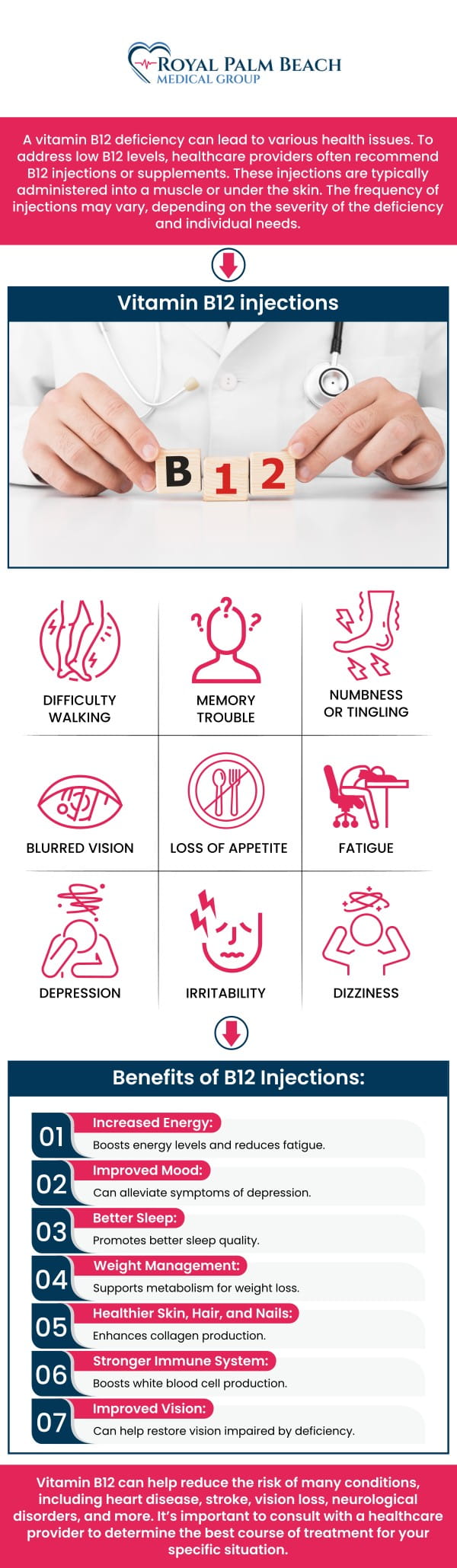
Common concerns: side effects, allergies, and “who should be extra cautious”
Patients often want to know the likelihood and impact of side effects. While individual responses vary, here’s how I approach it in practice: separate common, mild reactions from rare but important issues, and make sure patients know what’s normal versus what’s not.
Local side effects
The most typical issue is localized discomfort—often from the injection itself rather than from the vitamin. If a patient has had repeated soreness, I’ve seen clinicians adjust technique or site selection to improve comfort and adherence.
Allergic reactions
True allergic reactions are uncommon, but product ingredients and individual history matter. If you’ve ever reacted to injections or have known allergies, this should be discussed before starting.
Masking the real cause
This is one of the most overlooked safety points: taking B12 can improve symptoms, but it doesn’t automatically fix the underlying cause of deficiency if it’s not addressed. In my experience, the best outcomes happen when B12 supplementation is paired with a plan to evaluate and manage the reason your B12 was low in the first place.
Making B12 injections safer in real life: a checklist I recommend
If you want a practical way to improve safety and reduce frustration, use this checklist before and after your injections:
- Confirm your prescribed dose and schedule (don’t freestyle frequency).
- Bring your medication list so your clinician can check interactions and history.
- Track symptoms on a simple timeline (energy, numbness/tingling, diet changes).
- Document injection-site reactions so patterns are visible.
- Ask when you’ll recheck labs (if labs are part of your plan).
Pros and cons of B12 injections
| Aspect | Potential Pros | Potential Limitations |
|---|---|---|
| Absorption | Bypasses the digestive process, useful for malabsorption issues | Doesn’t address the underlying cause by itself |
| Onset and response tracking | Can improve deficiency symptoms; easier to monitor response to a fixed regimen | Symptom improvement varies; neurological symptoms may take time |
| Convenience | Clinic-administered doses reduce technique errors | Requires visits or training for self-injection (depending on your care plan) |
| Side effects | Often limited to local soreness | Rare allergic reactions require prompt medical attention |
FAQ
How to take vitamin b12 injections if I’m unsure about the schedule?
Use the schedule your clinician prescribes and ask when you should recheck labs. In practice, safety and effectiveness depend on consistent dosing during the rebuilding phase and then maintenance, not on adjusting frequency based on how you feel day-to-day.
What are the most common side effects of B12 shots?
The most common effects are mild injection-site soreness, redness, or slight swelling. Less common but important issues include signs of allergic reaction or symptoms that worsen instead of improving—those should be reported promptly.
Are B12 injections safe for everyone?
Most people tolerate B12 injections well when there’s a clear medical indication and appropriate product use. Safety is individualized—if you have known allergies, significant medical conditions, or prior injection reactions, your clinician should review your history before starting.
Conclusion: make B12 injections safe by aligning dose, diagnosis, and follow-up
B12 injections are generally safe when they’re prescribed for the right reason, administered using correct technique, and paired with follow-up to confirm response. The most practical way to improve safety is to focus on how to take vitamin b12 injections correctly: stick to the prescribed regimen, track symptoms, and know when to seek care for concerning reactions.
Next step: If you’re starting (or restarting) B12 shots, ask your clinician to confirm your exact dosing schedule and the plan for follow-up labs or symptom reassessment.
Discussion