Bacteriostatic Water Injection
If you’ve ever opened a multi-dose container and worried, “Am I actually set up to keep things sterile and safe?”, you’re not alone. In my hands-on work with pharmacy workflows and medication preparation, I’ve seen confusion around bac water vials—especially when people treat them like “just another diluent.” This guide explains bacteriostatic water injection, what it does (and doesn’t) do, how to use it correctly, and how to avoid the mistakes that can turn a routine step into a safety issue.
What bacteriostatic water injection is (and what “bacteriostatic” really means)
Bacteriostatic water injection is sterile water intended for reconstitution or dilution of certain medications. “Bacteriostatic” means the formulation includes an added antimicrobial component (commonly benzyl alcohol) that helps inhibit microbial growth—particularly after repeated needle entries into a vial.
In practical terms, I treat bacteriostatic water as a process enabler: it can make multi-dose handling more manageable when a vial must be accessed more than once. But it does not make poor technique “safe.” If you introduce contamination, you can still create a problem—just less rapidly, depending on conditions.
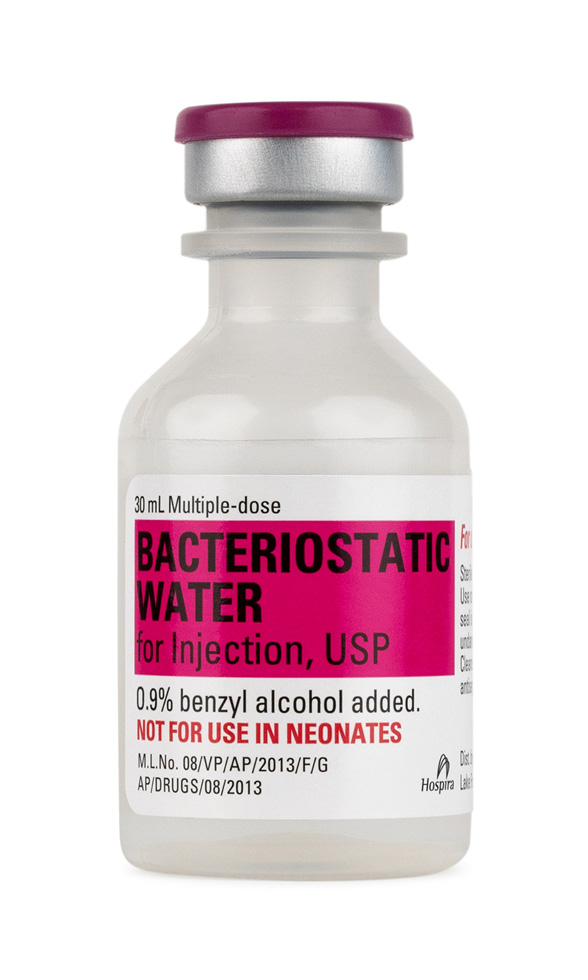
Why bac water vials are used in medication reconstitution
Many injectable medicines come as sterile powders that require reconstitution before administration. In my experience, the key decision is not “Is water water?”—it’s whether the diluent matches the medication’s instructions.
Common reasons teams choose bac water vials include:
- Multi-dose access needs: If a plan involves multiple entries over time, bacteriostatic water can support more forgiving vial handling compared with plain sterile water.
- Workflow consistency: Using the prescribed diluent reduces variability in preparation steps across staff and shifts.
- Compatibility: The right diluent helps maintain the intended dosing and formulation characteristics of the reconstituted medication.
Important limitation I’ve seen: People sometimes assume bac water vials are interchangeable with sterile water for every medication. They aren’t. Some products specify exact diluents, concentrations, and handling steps for stability and safety.
How bacteriostatic water should be handled and used
Proper technique matters as much as the vial label. When I coach teams, the goal is to create a repeatable, low-error process.
1) Verify the prescription and the medication’s instructions
Before you ever open bac water vials, confirm:
- That the medication product instructions specifically allow bacteriostatic water for reconstitution
- The correct volume to add (based on the medication’s concentration guidance)
- The intended storage conditions after reconstitution (some preparations have specific time limits)
When I’ve audited real workflows, the biggest preventable errors come from “general practice” rather than the exact product instructions.
2) Maintain aseptic technique during vial access
Aseptic technique is the foundation. In real settings, I emphasize three practical habits:
- Clean surfaces and controlled environment: reduce contamination risk during preparation
- Disinfect vial access points: follow the recommended approach for alcohol swabbing and contact time
- Use appropriate needles/syringes: avoid reusing or improvising components
3) Inject the diluent correctly (gentle technique)
Once you add the bacteriostatic water, the aim is to reconstitute the powder without creating unnecessary stress to the preparation. I generally recommend following the reconstitution guidance included with the medication—some call for gentle swirling, others for specific handling to avoid foaming.
4) Label and track what you prepared
After reconstitution, I strongly prefer a labeling step that includes:
- Medication name and concentration (if applicable)
- Date/time of reconstitution
- Beyond-use guidance per the medication instructions
This step is often overlooked, but in practice it prevents mix-ups—especially when multiple preparations are handled in the same session.
Common bac water vial mistakes (and how to avoid them)
Here are issues I’ve repeatedly seen across different teams and environments—home-based “DIY” setups and more formal pharmacy workflows alike:
Mistake 1: Using bac water vials when the medication requires a different diluent
Fix: follow the medication’s prescribing information or pharmacy instructions exactly. If it says sterile water, use sterile water.
Mistake 2: Relying on “bacteriostatic” to compensate for contamination
Fix: treat bacteriostatic water as an aid to multi-dose vial handling—not as a substitute for aseptic technique.
Mistake 3: Confusing vial “inhibition” with guaranteed safety
Fix: follow preparation and storage time guidance for the specific reconstituted medication. Limits are about stability and contamination risk over time, not just growth inhibition.
Mistake 4: Incorrect volumes or calculation errors
Fix: double-check dose calculations and intended final concentration. In my experience, a second-person verification (or a structured checklist) catches errors early.
Which storage and timing rules apply?
The storage conditions after reconstitution typically depend on the medication—not just on the bac water vials used to dilute it. Some preparations have strict temperature ranges and beyond-use timing windows. The most trustworthy source is the medication’s official instructions (or the pharmacy’s dispensing instructions).
When I see problems, it’s usually because people follow a “general rule” for bacteriostatic water rather than the specific preparation’s guidance.
FAQ
Are bac water vials safe to use for reconstituting injectable medications?
They are intended for sterile reconstitution/dilution when used as directed. Safety depends on the specific medication’s instructions, your preparation technique, and correct storage/timing after reconstitution.
What’s the difference between bacteriostatic water and sterile water?
Bacteriostatic water includes an antimicrobial component designed to inhibit microbial growth after vial entry. Sterile water has no bacteriostatic additive. Whether you should use one or the other depends on the medication’s compatibility and instructions.
How many times can I withdraw from a bac water vial?
The vial’s intended use supports multi-dose access, but the correct number of entries and the overall “beyond-use” timeline should follow the medication’s reconstitution and storage guidance, plus the instructions provided with the vial and prescription.
Conclusion
Bacteriostatic water injection and bac water vials are useful tools for reconstituting certain injectable medications—especially when repeated vial access is needed. But the real safety and quality come from matching the correct diluent to the specific medication, using aseptic technique, and following the reconstituted product’s storage and timing instructions.
Next step: Take the medication label or pharmacy instructions you’re using and write down the exact diluent requirement, reconstitution volume, and after-reconstitution storage/timing limits—then build your prep checklist around those specifics.
Discussion