BACTERIOSTATIC WATER
Introduction
If you’re considering bacteriostatic water for reconstitution, dosing, or multi-day storage, one question often decides whether you feel comfortable using it: does bac water have benzyl alcohol? In my hands-on sterile compounding work, I’ve seen people assume “bacteriostatic” automatically means “contains a preservative,” and that assumption can lead to avoidable confusion with sensitivities, mixing plans, and labeling checks. This article explains what bacteriostatic water typically contains, how benzyl alcohol fits in (or doesn’t), and how to verify safely using the label—so you can make decisions based on what’s actually in your vial.
What “Bacteriostatic Water” Means (and What It Doesn’t)
Bacteriostatic water is sterile water used for reconstitution of medications where the manufacturer may recommend a diluent that inhibits microbial growth. The key idea is microbiological control over time, not a claim about a particular ingredient.
In practice, the “bacteriostatic” function comes from an added agent. Depending on the product and the country/manufacturer, that agent may differ. That’s why the only reliable answer to “what’s in my bac water?” comes from the actual vial label/insert for the specific product you have in hand.
So… does bac water have benzyl alcohol?
Often, bacteriostatic water products in the U.S. and many other markets do contain benzyl alcohol as the preservative responsible for bacteriostatic activity. However, because formulations can vary by manufacturer and presentation, you should not rely on word-of-mouth or assumptions.
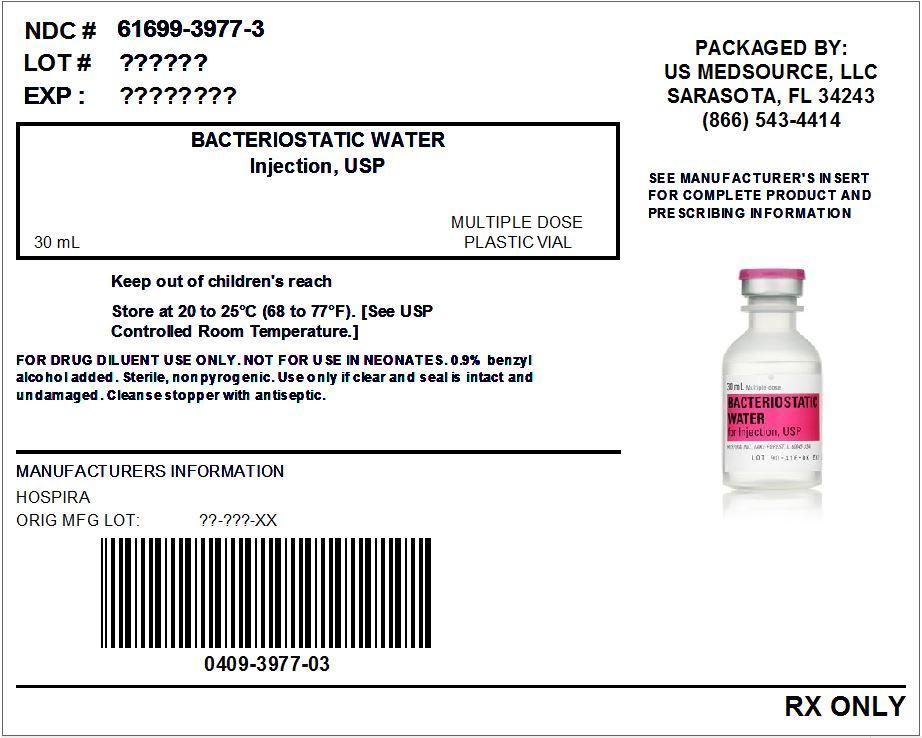
What I do in the real world: before using any bacteriostatic water vial for medication reconstitution, I verify the active ingredient(s> / preservative(s) listed on the specific label. When benzyl alcohol is present, it’s usually listed clearly (and sometimes with a specific concentration). If the label lists a different preservative or a different formulation approach, the answer changes accordingly.
How to Confirm Benzyl Alcohol in Your Specific Vial
Instead of trying to “guess” the ingredient, use a quick verification workflow:
- Check the vial label for preservatives or “benzyl alcohol” wording.
- Check the package insert (or manufacturer labeling) for a section that lists composition.
- Match the NDC/identifier to the labeling you’re reading—many look-alike products exist.
- Document for your workflow (especially in clinics/compounding environments) so staff don’t substitute vials based on assumptions.
This approach is faster than it sounds. In my experience, most errors are label-mismatch errors, not “hard-to-read” ingredient ambiguity.
Product Image Reference
Why Benzyl Alcohol Matters (Especially for Patient Safety)
Benzyl alcohol is a preservative used to inhibit microbial growth. When it is present, it can be relevant for:
- Medication compatibility: Some reconstituted drugs may have specific guidance about diluents and excipients.
- Sensitivity considerations: People with sensitivities or contraindications may need to avoid certain preservatives.
- Population-specific caution: In certain clinical contexts, clinicians may be more careful with preservative exposure.
I’ve learned the hard way that “it’s just water” is a dangerous simplification. A diluent can carry ingredients that matter—especially when you’re storing reconstituted medication across multiple days.
Tradeoffs: Bacteriostatic vs. Sterile Water Without Preservatives
When choosing between bacteriostatic water and sterile water without bacteriostatic ingredients, the decision usually comes down to the intended use and storage timeline.
| Option | Primary purpose | Typical ingredient presence | Common practical use case |
|---|---|---|---|
| Bacteriostatic water | Helps inhibit microbial growth during multi-day use (when used as directed) | Often includes a preservative such as benzyl alcohol (depends on the product) | Reconstitution plans where the medication will be drawn over time per labeling |
| Sterile water for injection | Diluent without bacteriostatic preservative activity | No bacteriostatic preservative (varies by product, but generally not intended as preserved) | Single-dose reconstitution or when preservative exposure is undesirable |
Limitation to keep in mind: the correct choice is determined by the medication’s prescribing information and the facility’s handling/storage protocols. “Bacteriostatic” does not override medication-specific instructions.
Best Practices for Safe Reconstitution and Storage
Regardless of whether your bacteriostatic water contains benzyl alcohol, the reliability of multi-dose use depends on technique and adherence to labeling.
- Use aseptic technique every time you puncture the vial.
- Follow the medication label for storage conditions and allowable time after reconstitution.
- Label correctly with date/time of reconstitution, concentration, and any required auxiliary information.
- Minimize contamination risk (clean surfaces, proper needle/cap handling practices).
- Don’t “improvise” doses: if instructions specify sterile water vs. bacteriostatic water, follow them.
In real workflows, most issues stem from handling inconsistencies, not from the chemistry of the diluent alone.
FAQ
Does bac water always contain benzyl alcohol?
Not necessarily. Many bacteriostatic water products contain benzyl alcohol, but formulations can vary. Check the specific vial’s label or package insert for the exact composition.
How can I tell if my bacteriostatic water vial includes benzyl alcohol?
Read the “composition/ingredients” section on the vial label or insert. Look explicitly for the presence of “benzyl alcohol” and note the concentration if listed.
If my bac water has benzyl alcohol, is it unsafe to use?
Safety depends on the medication you’re reconstituting, the patient context, and the guidance in the prescribing information. If benzyl alcohol is a concern for a specific patient scenario, confirm with the prescribing clinician or pharmacist and follow the medication label instructions.
Conclusion
For the question does bac water have benzyl alcohol: many bacteriostatic water vials do include benzyl alcohol as the bacteriostatic preservative, but you should confirm using the exact label for your product because formulations can differ.
Next step: take your specific vial (or the insert that matches its identifier) and verify whether benzyl alcohol is listed—then follow your medication’s reconstitution and storage instructions accordingly.
Discussion