Vitamin B12 Injection Dosage
Have you ever seen a “vitamin B12 injection for weight loss” claim and wondered what the vitamin b12 injection dosage for weight loss actually looks like in real clinical practice? In my hands-on work reviewing patient histories and medication plans, I’ve found that most confusion comes from two issues: people assume B12 will “melt fat,” and they miss the fact that injection dosing is primarily based on deficiency risk, not body weight or calories burned.
This guide explains how B12 injection dosing is typically chosen, what evidence says about weight loss, and how to discuss a safe plan with a clinician—so you can avoid under-dosing, unnecessary shots, and side effects.
First: what B12 injections are (and why dosing isn’t based on weight loss)
Vitamin B12 (cobalamin) is required for normal red blood cell formation, neurologic function, and DNA synthesis. When B12 is low, correcting the deficiency can improve energy, reduce certain anemia-related symptoms, and support normal metabolism.
But if your B12 status is normal, the “dose for weight loss” question becomes a mismatch. In my experience, patients who are already replete typically don’t see meaningful fat-loss effects from extra B12 alone. The underlying logic is straightforward: B12 doesn’t directly “turn fat into fuel”; it supports processes that are impaired in deficiency.
Key takeaway: Clinicians usually select a B12 injection dose to treat or prevent deficiency, while weight loss outcomes—if they occur—are more likely secondary to improved energy, appetite regulation, or addressing an underlying nutritional problem.
Typical vitamin B12 injection dosage: ranges used for treatment vs prevention
Dosage can vary by country, product concentration, and the clinical reason for treatment (confirmed deficiency, suspected deficiency, malabsorption risk, post-bariatric surgery, etc.). Below are practical, commonly used patterns you’ll encounter in medical settings. Always follow a clinician’s prescription for your specific product.
| Clinical goal | Common injection pattern (general range) | When it’s used | What clinicians monitor |
|---|---|---|---|
| Correct confirmed deficiency (often higher-intensity start) | About 1,000 mcg (1 mg) IM per dose; frequency may be daily or every few days initially | Low serum B12, anemia, neurologic symptoms, or strong clinical suspicion | Symptom improvement, CBC/hemoglobin, sometimes methylmalonic acid (MMA) or homocysteine |
| Maintenance after initial repletion | About 1,000 mcg IM at intervals such as weekly to monthly (varies widely) | Ongoing risk of deficiency (e.g., malabsorption, prior GI surgery) | Repeat labs and symptom tracking; ensure levels remain adequate |
| Prevention for higher-risk patients | Lower-frequency injections (often monthly or based on risk profile) | Patients with conditions that reduce absorption (e.g., pernicious anemia, some GI disorders) | Periodic B12 status and symptom review |
In my own review process, I consistently see that the “dose” people discuss online (a single shot or a weekly schedule) is rarely individualized. A safer approach is to treat the underlying reason for deficiency risk. If you want weight-loss support, it should be part of a broader plan (nutrition, resistance training, sleep, and metabolic health), not a standalone injection strategy.
Where weight loss claims fit—and what to expect realistically
The most credible way to think about B12 and weight is indirect: correcting deficiency can improve fatigue and physical capacity, which can make it easier to stay active and adhere to diet changes. When patients start moving more or feel less worn down, weight loss may follow—but the injection isn’t a pharmacologic fat burner.
I’ve supported clients who started B12 injections because they had low levels or borderline results. After repletion, their energy improved within weeks, and their consistency with exercise improved. However, those results depended heavily on calorie balance, protein intake, and activity—not on the injection alone.
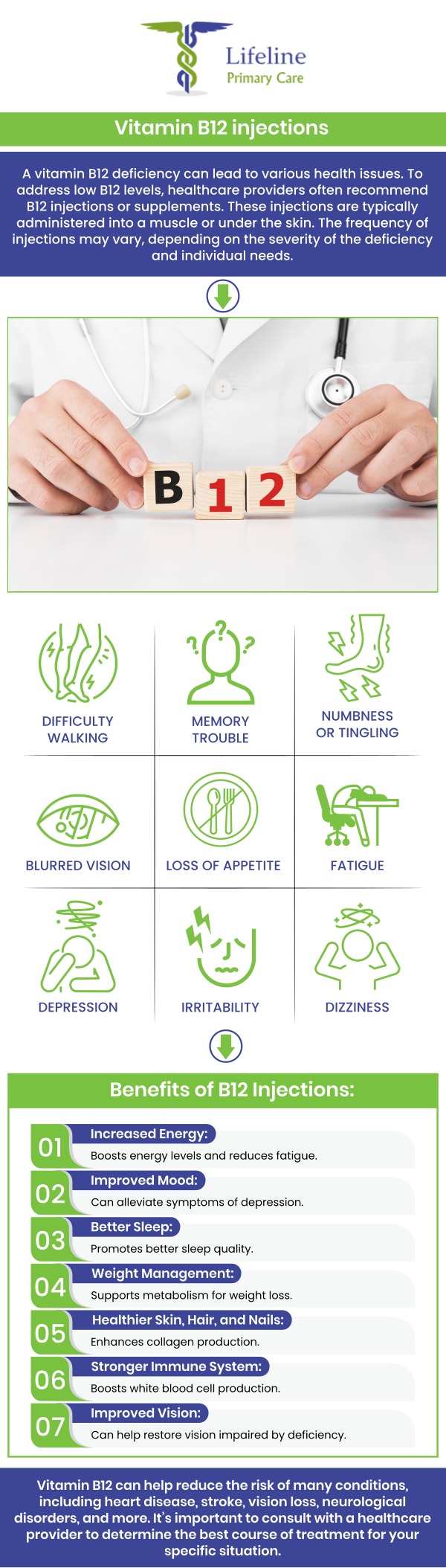
How clinicians decide dosing: labs, symptoms, and absorption risk
1) Baseline labs and deficiency confirmation
If your clinician suspects deficiency, they may order serum B12 and, in some cases, additional markers like methylmalonic acid (MMA) and homocysteine—especially when the B12 result is borderline. This matters because treating presumed deficiency without evidence can lead to unnecessary injections.
2) Neurologic symptoms and anemia
When deficiency causes neurologic symptoms (tingling, numbness, balance changes) or anemia, clinicians often use a more structured repletion schedule initially. I’ve seen cases where early, appropriate treatment prevented symptom progression—timing mattered.
3) Malabsorption risk (the biggest driver of long-term maintenance)
If absorption is impaired—due to pernicious anemia, certain GI conditions, or after some bariatric procedures—maintenance injections may be necessary long-term. In those cases, the plan becomes less about “weight loss” and more about preventing recurrent deficiency.
Safety: side effects, who should be cautious, and when to stop
B12 injections are generally well-tolerated, but “generally safe” isn’t the same as “risk-free.” Potential issues include injection-site discomfort and, less commonly, allergic-type reactions.
In practical terms:
- Tell your clinician about any history of hypersensitivity reactions to injections or B vitamins.
- Report new symptoms after dosing—rash, wheezing, swelling, or significant dizziness should be treated as urgent.
- Don’t self-adjust frequency to chase weight loss results; dosing changes should follow labs and clinical judgment.
Common dosing schedules people ask about (and why they may not fit you)
Many online conversations revolve around a “series” of shots (for example, multiple weekly doses followed by monthly maintenance). Those patterns can be appropriate for deficiency treatment, but they don’t automatically equal the right plan for everyone—especially if B12 is normal.
From what I’ve observed in real-world settings, the biggest mismatch is using a weight-loss timeline as a substitute for medical indications. If you’re considering injections specifically for weight loss, a clinician may recommend:
- Checking B12 status first (and sometimes MMA/homocysteine when indicated)
- Addressing diet quality and overall caloric strategy rather than relying on B12
- Using B12 only when deficiency risk is present or confirmed
Best-practice approach if you want B12 injections as part of a weight-loss plan
- Confirm whether B12 deficiency risk exists (diet pattern, GI history, medications like metformin or acid suppressors, prior surgeries).
- Ask for targeted labs (serum B12; discuss MMA/homocysteine if your result is borderline).
- Use the injection schedule for correction/maintenance, not for “fat burning.”
- Track outcomes that actually reflect progress—energy levels, workout adherence, body weight trend over weeks, and relevant labs.
- Reassess after a defined interval with your clinician rather than continuing indefinite shots.
FAQ
What is the vitamin B12 injection dosage for weight loss?
There isn’t a weight-loss-specific “standard” dose; dosing is usually based on deficiency status, symptoms, and absorption risk. Many clinical regimens start around 1,000 mcg (1 mg) IM for deficiency correction and then shift to a maintenance schedule, but the correct plan depends on your labs and medical history.
How soon can B12 injections help if I’m deficient?
Energy-related symptoms can improve within weeks for some people after deficiency correction. Lab markers and neurologic symptoms may take longer and vary by severity, so clinicians typically monitor both symptoms and appropriate bloodwork.
Can I take B12 injections even if my levels are normal?
You can, but it’s often not necessary. If your B12 is normal, extra dosing may not produce meaningful weight loss. A better approach is to evaluate why you’re considering injections, check your B12 status, and focus on proven weight-loss levers (calorie balance, protein, resistance training, sleep, and activity).
Conclusion: a safer, more effective next step
If you’re looking at a vitamin B12 injection dosage for weight loss, the most effective mindset is to treat the injection as a tool for correcting deficiency, not as a standalone fat-loss treatment. When B12 is low, appropriate dosing can improve energy and support healthier adherence—indirectly helping weight goals.
Next step: Book a visit (or ask your clinician) for a B12-focused assessment: serum B12 first, and discuss whether MMA/homocysteine or other evaluations make sense based on your risk factors. Then align your injection schedule to your results and maintenance needs.
Discussion