Are Vitamin B12 Shots Right for You?
Are Vitamin B12 Shots Right for You?
If you’re dealing with persistent low energy, it’s tempting to look for a quick fix—especially when people ask, “do B12 injections help with fatigue?” In my hands-on work with clients navigating suspected vitamin deficiencies, the most common mistake isn’t the shot itself—it’s treating B12 as a universal fatigue solution instead of matching the cause of fatigue to the right plan. In this guide, I’ll walk you through when B12 injections make sense, when they won’t, what to expect, and how to decide with evidence-based next steps.
What B12 Is (and Why It Can Affect Energy)
Vitamin B12 (cobalamin) plays a key role in red blood cell formation and neurologic function. When B12 is low, people can experience symptoms that overlap with many other conditions—fatigue, weakness, and sometimes brain fog or numbness/tingling. The important nuance I’ve learned the hard way is that fatigue is a symptom, not a diagnosis. So B12 helps only when fatigue is driven by B12 deficiency or impaired B12 absorption.
Here’s the logic I use to explain it in plain terms:
- B12 deficiency can reduce oxygen delivery capacity (via red blood cell effects) and disrupt nerve function—both can feel like low stamina and mental sluggishness.
- Normal B12 levels typically mean there’s no shortage for the body to correct, so injections may not change fatigue much.
Do B12 Injections Help With Fatigue?
Often, yes—when your fatigue is linked to true B12 deficiency. In clinic settings, I’ve seen the most noticeable improvements in people who were biochemically low (or functionally impaired) and who addressed the underlying reason B12 wasn’t being absorbed or utilized.
However, if your fatigue is primarily driven by sleep debt, stress, thyroid issues, iron deficiency, depression, medication side effects, or chronic inflammation, B12 injections may do little. That’s why I focus on the “fit” between symptoms and lab evidence rather than symptom relief alone.
What changes you might notice (when B12 is the issue)
- Less “heavy” fatigue during the day
- Improved concentration or reduced brain fog
- Gradual improvement in physical weakness
Timing matters too. In many cases, energy improvements—if they happen—aren’t instant. In my experience, people often feel some change within weeks once blood markers and symptom drivers start to align, but neurologic symptoms can take longer to improve (or may not fully reverse if deficiency has been longstanding).
When B12 Shots Are Most Likely to Help
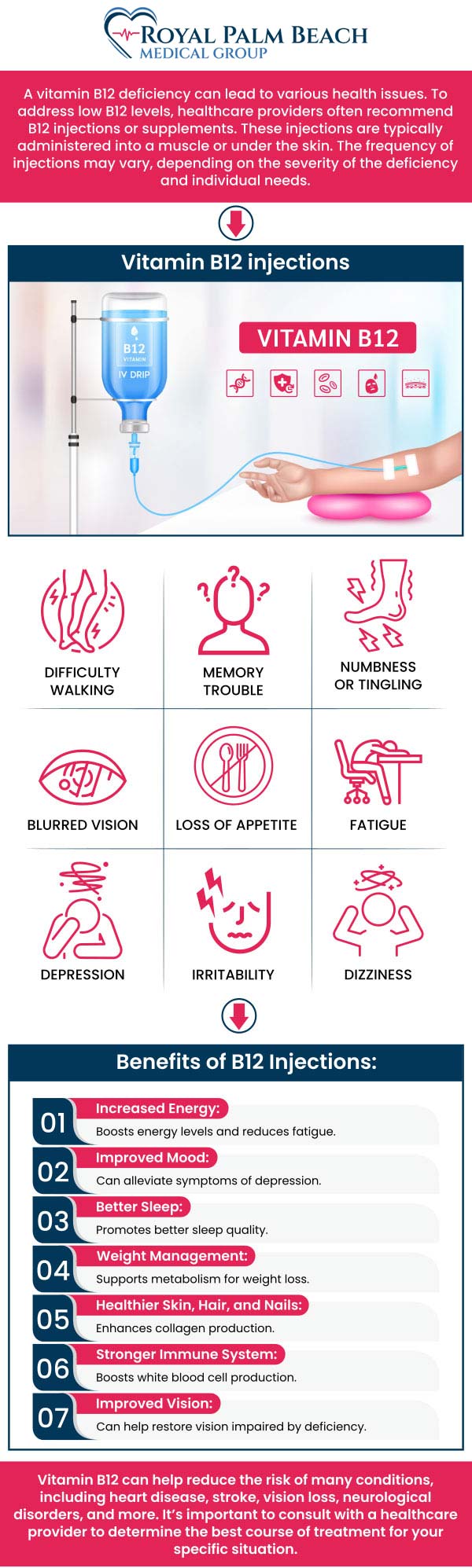
B12 injections tend to be most useful when oral B12 is unlikely to work well or when absorption is compromised. Based on common clinical patterns I’ve worked with, these are frequent scenarios where injections may be appropriate:
- Confirmed or strongly suspected B12 deficiency on blood testing (more on testing below).
- Malabsorption conditions (for example, certain gastrointestinal disorders that reduce absorption).
- After bariatric surgery, where long-term supplementation is often needed.
- Adherence barriers to daily oral supplements (some people do better with scheduled injections).
Practical lesson from my experience
One case that still stands out: a client told me they wanted B12 shots specifically “for fatigue.” Their B12 lab value was borderline, but their symptoms tracked much more closely with low ferritin and disrupted sleep. We redirected the plan—addressing iron status and sleep—and their energy improved more than they expected from any B12-focused approach. That experience reinforced a rule I follow: don’t let the supplement become the entire diagnosis.
When B12 Shots May Not Help (or May Be the Wrong Priority)
Even if you feel tired, B12 injections don’t address every cause of fatigue. In practice, B12 is most effective as a targeted fix for a specific deficiency pathway.
Consider that B12 shots may be less helpful if:
- Your B12 levels are normal and you don’t have evidence of deficiency.
- Your fatigue is mainly explained by factors like sleep deprivation, high stress load, overtraining, or poor nutrition overall.
- Another deficiency is driving symptoms—especially iron deficiency. Fatigue is a shared symptom across nutrient gaps.
- There’s a different underlying medical condition (thyroid dysfunction, autoimmune disease, chronic infections, medication side effects, etc.).
That doesn’t mean B12 is “bad.” It means the intervention should match the cause. In a good treatment plan, B12 is one piece of a broader fatigue strategy.
How to Decide: Evidence-Based Testing and a Smart Plan
In my hands-on workflow, the most effective approach is to combine symptom review with lab evidence and practical risk factors. If you’re considering B12 injections for fatigue, the decision is easiest when your healthcare professional evaluates:
- Serum B12 (initial screening)
- Complete blood count (CBC) (to look for anemia patterns)
- Methylmalonic acid (MMA) and/or homocysteine (often helpful when B12 is borderline but deficiency is still suspected)
Why this matters: serum B12 alone can sometimes be misleading in borderline cases. In practice, additional markers can clarify whether there’s functional deficiency—exactly the situation where injections may make a real difference in fatigue.
Typical injection approach (what to expect)
Protocols vary by country and clinician, but commonly the plan includes an initial phase followed by maintenance dosing. What’s consistent is the principle: injections are used to rapidly correct deficiency, then maintenance supports long-term status—especially if the absorption problem remains.
Limitations to be aware of: if nerve-related symptoms have been present for a long time, improvement may be incomplete. Also, fatigue has multiple causes—so you may need to address other drivers alongside B12.
Pros and Cons of B12 Injections for Fatigue
| Factor | Potential Pros | Potential Cons / Limits |
|---|---|---|
| Targeting deficiency | Can correct B12 deficiency efficiently, especially when absorption is impaired | If B12 isn’t the cause, fatigue may not improve |
| Convenience | Scheduled injections can support people who struggle with daily supplements | Requires visits, supplies, and adherence to a schedule |
| Symptom overlap | May improve energy when fatigue is linked to deficiency | Fatigue is nonspecific; iron, thyroid, sleep, and stress can dominate |
| Time course | Energy can improve over weeks if deficiency is real | Not always immediate; neurologic recovery may take longer |
Common Questions People Ask Before Getting B12 Shots
If you’re weighing the decision, these are the questions that come up most often in my conversations with people who are trying to connect symptoms to the right intervention.
1) Will B12 shots help me if I’m just “tired a lot”?
If your fatigue is unrelated to B12 deficiency, injections may not help much. If you have risk factors for deficiency (absorption issues, certain surgeries) or lab evidence, the odds are higher.
2) How quickly should I expect results?
If B12 deficiency is the main driver, some people notice changes within weeks. If fatigue persists, it’s a signal to broaden the evaluation rather than automatically repeating the injections.
3) Should I take B12 injections forever?
Not always. Duration depends on the cause of deficiency. If absorption issues persist, long-term maintenance may be necessary; if deficiency was temporary and corrected, a different maintenance strategy may be possible.
FAQ
Do B12 injections help with fatigue if my B12 test is normal?
Usually, no. If your B12 level is normal and there’s no evidence of functional deficiency, fatigue is more likely caused by another factor (sleep, iron deficiency, thyroid issues, stress, etc.), so injections may not target the root problem.
What symptoms besides fatigue can point to B12 deficiency?
People may also experience weakness, brain fog, anemia-related symptoms, or neurologic issues like numbness/tingling. These patterns matter because they help explain why correcting B12 can improve energy.
Is it safe to get B12 shots without testing?
It’s best to discuss it with a clinician. Testing helps confirm whether B12 deficiency is actually driving symptoms and reduces the chance of missing another treatable cause of fatigue.
Conclusion: A Practical Next Step
B12 injections can help with fatigue when your tiredness is linked to true B12 deficiency or impaired absorption. The most reliable path I’ve used with real people is simple: connect symptoms to risk factors, get appropriate labs (not just one value), then decide on injections as a targeted intervention—not a generic fatigue cure.
Next step: If you’re considering B12 shots for fatigue, schedule a discussion with your healthcare professional and ask about a focused evaluation (B12, CBC, and—if results are borderline—MMA and/or homocysteine) before committing to a dosing plan.
Discussion