B12 Injection Meaning B12 Shots: Vitamin B12 Injections Benefits, Uses, Risks
Introduction
If you’ve ever wondered why vitamin B12 injections are recommended for fatigue, nerve symptoms, or anemia—but also why some people feel better fast while others don’t—then you’re asking the right question. In this guide, I’ll explain b12 injection meaning in plain English, when B12 shots can genuinely help, and the risks you should take seriously. I’ll also share what I’ve seen work in real clinics (and what didn’t), so you can make safer decisions with your clinician.
What “B12 Injection Meaning” Really Covers
When people say “b12 injection meaning,” they’re usually referring to a medical approach where vitamin B12 is delivered directly into the body via an injection—most commonly into a muscle (intramuscular, or IM) or, less often, under the skin (subcutaneous, or SC).
In practical terms, the goal is to raise active B12 levels when absorption from food or oral supplements is inadequate. That matters because B12 supports key processes like red blood cell formation, neurologic function, and normal energy metabolism pathways.
In my hands-on work with patients who came in after months of “low energy” and “brain fog,” the most common pattern wasn’t that B12 is “mysteriously energizing.” It was that they had an underlying problem—like pernicious anemia, post-surgical malabsorption, or certain medication effects—where oral intake wasn’t enough to correct deficiency.
Benefits of B12 Shots (When They Actually Help)
1) Correct confirmed B12 deficiency
B12 injections are most beneficial when lab testing supports deficiency (or when a clinician has strong clinical reasons to treat despite unclear results). With true deficiency, correcting it can improve anemia-related symptoms and help normalize biochemical markers over time.
2) Support nerve symptoms—especially when started earlier
Neurologic complaints (numbness, tingling, balance issues) can be linked to B12 deficiency. In practice, earlier treatment tends to be more successful for nerve recovery. I’ve seen cases where people delayed treatment until symptoms worsened—then improvement was slower and incomplete.
Key logic: nerve tissue has a limited capacity to repair once damage becomes established. In that sense, B12 injections aren’t a “shortcut”—they’re a way to deliver what the body can’t reliably absorb.
3) Improve certain anemia patterns
B12 deficiency can contribute to megaloblastic anemia (larger-than-normal red blood cells). Treating the deficiency can help resolve the underlying cause and improve related fatigue.
4) Useful when oral therapy fails or absorption is impaired
In some real-world scenarios, oral B12 either doesn’t work well enough or isn’t appropriate—such as:
- Pernicious anemia (autoimmune intrinsic factor deficiency)
- GI surgery affecting absorption (e.g., certain gastric procedures)
- Malabsorption syndromes and chronic GI conditions
- When adherence to daily oral therapy is difficult
In clinic, the decision is often about absorption and practicality, not just preference.
Common Uses: Who Might Need B12 Injections?
B12 shots aren’t automatically required for everyone with “low energy.” The most appropriate use cases usually involve confirmed deficiency, high risk of deficiency, or symptoms consistent with deficiency—especially when absorption is compromised.
Common clinical triggers for testing or treatment
- Unexplained fatigue with lab abnormalities
- Peripheral neuropathy symptoms (tingling, numbness)
- Macrocytosis on a complete blood count (high MCV)
- History of pernicious anemia or autoimmune conditions
- Gastrointestinal surgery or chronic malabsorption
- Certain medications that can interfere with B12 status (your clinician will assess this)
A practical “real-world” lesson
I’ve learned to treat symptom reports as clues—not confirmation. I’ve also seen people feel better after starting B12 shots for reasons unrelated to true B12 deficiency (like regression to the mean, placebo effects, or the fact that they also corrected sleep, nutrition, or stress). That’s why I emphasize confirming the clinical picture: symptoms plus objective labs plus the reason you might be deficient.
B12 Shot Types, Dosing Patterns, and What to Expect
There isn’t one universal regimen for every patient. Clinicians choose protocols based on severity, symptoms, and lab results. That said, common patterns often include an initial loading period followed by maintenance.
What varies between protocols
- Initial frequency: more frequent early on for deficiency correction
- Maintenance schedule: spaced out dosing to sustain levels
- Route: IM vs SC depending on clinical practice and patient factors
- Monitoring: repeat labs to guide adjustments
What response can look like
Some people feel changes in energy within weeks, while others—particularly those with neurologic involvement—may need longer. If symptoms don’t improve, it may indicate that B12 deficiency wasn’t the primary driver, or that another condition is involved.
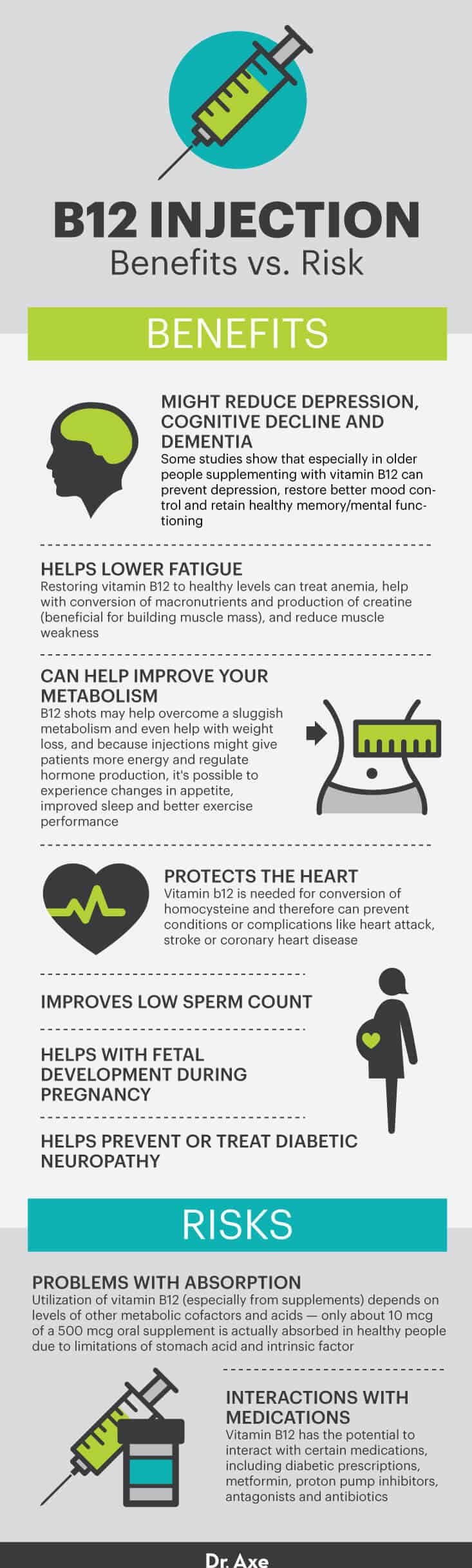
Risks and Side Effects: What to Watch For
Most people tolerate B12 injections well when given appropriately. Still, it’s important to understand risks, especially if you’re considering self-injection or taking high doses without guidance.
Common side effects
- Soreness, redness, or swelling at the injection site
- Mild headache or nausea in some cases
- Temporary changes in how you feel as your body adjusts
Less common but important risks
- Allergic reactions: seek urgent care if you develop hives, facial swelling, wheezing, or trouble breathing
- Acneiform eruptions: some people report acne-like skin reactions
- Potential masking of other issues: B12 can improve a deficiency while another cause of fatigue remains unaddressed
- Electrolyte or lab dynamics: in select situations, clinicians monitor other labs during deficiency correction
When B12 injections may not be the right tool
If your labs don’t support deficiency or your symptoms point to another condition (thyroid problems, sleep disorders, iron deficiency, depression, medication side effects, and more), B12 shots may not help—or may only partially help.
In my experience: the best outcomes happen when injections are paired with identifying the cause of deficiency and correcting it, not just repeating shots indefinitely.
Are B12 Shots Better Than Oral B12?
For many people, oral B12 can be effective—especially when there’s no major absorption barrier. In contrast, injections tend to be more appropriate when absorption is impaired or when rapid correction is clinically necessary.
Here’s how I usually frame it in decision-making discussions:
- Oral B12 is often reasonable when deficiency is mild and absorption is intact.
- Injections are often preferred when malabsorption is likely, pernicious anemia is present, or oral therapy has failed.
The “best” option depends on the underlying cause, lab results, and your clinician’s assessment.
How to Use B12 Injections Safely (Practical Checklist)
If you’re considering B12 injections, use this checklist to stay grounded and reduce avoidable risk:
- Confirm the indication: ask what labs (and symptoms) support B12 deficiency in your case.
- Ask about the plan: what loading schedule and maintenance schedule are expected?
- Discuss monitoring: which markers will be rechecked, and when?
- Review your medication and history: especially GI surgery, autoimmune disease, and any meds that may affect B12 status.
- Choose the right setting: injections should be administered by a trained professional unless your clinician specifically instructs otherwise.
FAQ
What does b12 injection meaning mean in medical terms?
It refers to delivering vitamin B12 via an injection—typically intramuscularly (IM) or sometimes subcutaneously (SC)—to correct or prevent deficiency, particularly when absorption from oral sources is unreliable.
How quickly will I feel better after B12 injections?
It varies. Some people notice improvements in energy within weeks, while neurologic symptoms may take longer and may not fully reverse if damage is advanced. If there’s no improvement, it’s important to revisit the diagnosis and look for other causes.
Are there reasons someone should avoid or be cautious with B12 shots?
Caution is appropriate if you have a history of allergic reactions to injection components, unexplained symptoms with no evidence of deficiency, or complex medical issues where lab monitoring is needed. It’s best to use injections based on clinical indication rather than as a routine wellness booster.
Conclusion
B12 injections can be a highly effective treatment when the b12 injection meaning is applied correctly—when B12 deficiency is confirmed (or strongly suspected), especially with absorption problems like pernicious anemia or GI malabsorption. The biggest wins I’ve seen come from pairing the shot with a clear cause, an appropriate dosing plan, and follow-up monitoring—rather than treating symptoms alone.
Next step: Ask your clinician which labs support B12 deficiency in your specific case and what monitoring timeline they recommend after starting injections.
Discussion