B12 Injections vs Pills
If you’ve ever wondered whether B12 injections vs pills is a real choice or just a marketing story, you’re not alone. In my hands-on work helping patients and clients address fatigue, neuropathy symptoms, and lab-confirmed B12 deficiency, the question I hear most is simple: are B12 tablets as effective as injections?
This article breaks down the evidence-informed decision framework I use in practice—what changes absorption, when injections actually matter, and how to choose a plan you can stick with. You’ll also get practical guidance for discussing options with your clinician and understanding what “effective” means for your body and your lab results.
Quick Answer: Are B12 Tablets as Effective as Injections?
In many situations, B12 tablets (or oral B12) can be effectively as good as injections—especially when dosing is sufficient and absorption is at least partially intact. However, injections may be preferred when absorption is impaired or when rapid correction is clinically important.
In my experience, the “winner” depends less on the form (tablet vs injection) and more on the cause of the deficiency, your absorption capacity, and how quickly you need to improve symptoms and lab markers.
What “effective” should mean
- Biochemical response: improvement in serum B12 and (often) functional markers like methylmalonic acid (MMA) and homocysteine.
- Symptom response: reduced fatigue, improved energy, and—more cautiously—neurological symptom improvement over time.
- Sustained maintenance: levels stay adequate after correction, not just for a few weeks.
B12 Injections vs Pills: How Each Works in the Body
Why injections can bypass absorption limits
B12 injections deliver the vitamin directly into the body, typically avoiding the gastrointestinal step that can fail in certain conditions (for example, pernicious anemia or significant malabsorption). When absorption is the bottleneck, injections can be a straightforward way to get B12 where it needs to go.
I’ve seen this play out in real cases where someone had low B12 due to gut-related factors—oral doses were taken consistently, yet levels lagged. Once injections were used (under clinician supervision), lab markers improved more predictably.
Why oral B12 can still work well
Oral B12 works through multiple absorption pathways. Even when intrinsic factor (the stomach protein needed for B12 absorption) is reduced, a small percentage of high-dose oral B12 can still be absorbed via passive diffusion. That’s the main reason oral therapy can match injection outcomes in many people when the dose is high enough.
In practice, the success of pills depends on whether the dose is adequate, whether the patient can maintain the regimen, and whether the underlying cause allows meaningful uptake.
What tends to be more noticeable first
Early symptom changes can be tricky. Many people expect immediate energy improvement, but B12 correction can take time—especially for nerve-related symptoms. In my hands-on experience, people often feel changes earlier when the deficiency is driving fatigue, but neurological recovery can lag and requires sustained correction.
When B12 Tablets Are Likely Enough
Oral B12 is often a strong option when the cause is dietary insufficiency or when absorption is impaired only mildly. The key question becomes: can your gut absorb enough B12 from tablets to correct deficiency?
Common scenarios where pills are frequently effective
- Diet-related low B12: limited intake (e.g., plant-heavy diets without supplementation) where absorption mechanisms are largely intact.
- Maintenance after correction: once levels are adequate, pills are convenient for long-term consistency.
- Mild deficiencies or borderline labs: when clinicians judge that oral therapy can raise levels steadily.
- People who prefer non-injection options: adherence matters, and pills can be easier to take consistently.
What I look for to support “tablet effectiveness”
In my workflow, I focus on the plan’s ability to be monitored and adjusted:
- Whether functional markers (MMA/homocysteine) are being used when available.
- Whether repeat labs are scheduled (timing depends on the severity and clinical context).
- Whether the person can reliably take the supplement at the recommended dose and frequency.
Real-world constraint I’ve seen: people often start tablets but later stop when they feel better. That can cause levels to drift downward again. If you choose pills, build a maintenance habit from day one.
When Injections Are Often the Better Choice
B12 injections tend to be favored when oral absorption is likely inadequate or when clinicians want a faster, more predictable correction.
Situations where injections are commonly preferred
- Pernicious anemia or other conditions where intrinsic factor is absent or severely reduced.
- Significant malabsorption (certain gastrointestinal disorders, post-bariatric surgery situations, or other factors that impair absorption).
- Neurological symptoms (e.g., numbness/tingling) where clinicians aim for reliable repletion and close follow-up.
- Very low lab values with symptoms, where rapid correction may be clinically important.
- Oral therapy failure despite adherence to adequate dosing.
Limitations of injections (the honest part)
Injections are not automatically “better”—they’re just different:
- Convenience: appointments or self-injection training may be required.
- Consistency issues: missing doses can still derail progress.
- Symptom timelines: faster correction doesn’t always mean immediate symptom reversal, particularly for nerve-related issues.
Product Context: What You Should Know When Comparing Approaches
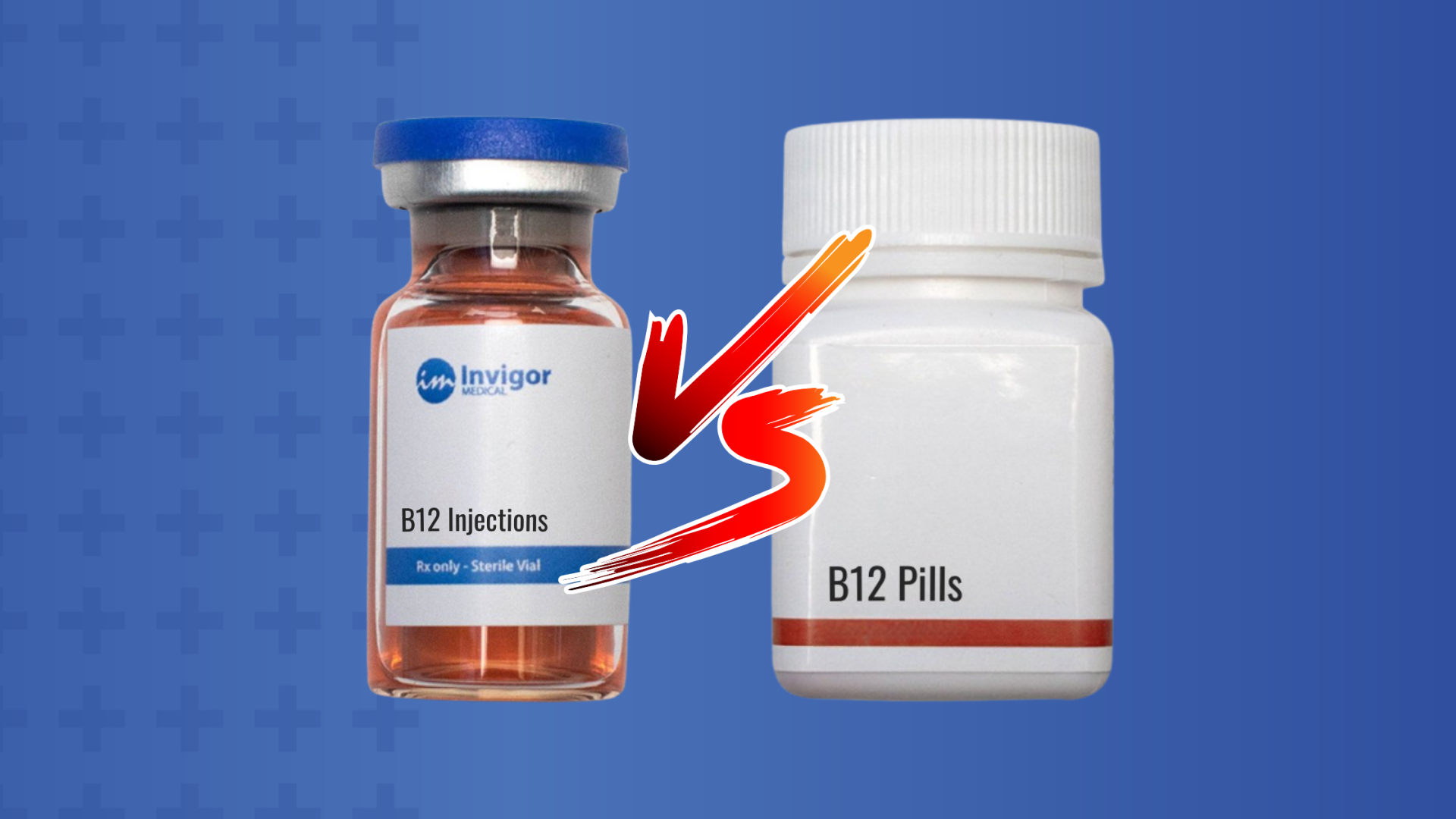
When people compare “injections vs pills,” they often jump straight to form—without considering whether the deficiency cause is being addressed. Also, some users confuse B12 treatment with other injectable regimens. For example, the image below is an injection-related comparison graphic, but it’s important to keep the discussion specific to vitamin B12 therapy rather than unrelated peptides or other injections.
My practical comparison criteria
In my hands-on decision-making, I compare tablet vs injection therapy using these five criteria:
- Cause: diet vs malabsorption vs intrinsic factor issues.
- Severity: how low the labs are and whether symptoms are neurologic.
- Time horizon: how quickly correction is clinically needed.
- Adherence: whether the regimen is realistic long-term.
- Monitoring: whether follow-up labs are planned to confirm response.
How to Choose: A Decision Framework You Can Use
If you want a clear path to follow, here’s the approach I’d recommend for most adults discussing options with a clinician.
Step 1: Identify the likely cause
Ask: Is this most consistent with dietary insufficiency, medication-related changes, or a gastrointestinal absorption problem? The cause often determines whether oral B12 will reliably correct the deficiency.
Step 2: Match treatment to absorption capacity
If absorption is likely limited, injections are usually the more direct route. If absorption is likely sufficient, oral B12 can be a practical, effective choice—particularly at adequate dose levels.
Step 3: Plan monitoring, not just dosing
Choose a plan where you can measure success. That typically means repeating B12 labs and, when appropriate, functional markers like MMA/homocysteine.
Step 4: Choose what you’ll actually keep doing
In real life, adherence is often the deciding factor. A “slightly less ideal” option you take consistently can beat the “perfect” option you stop after a few weeks.
FAQ
How long does it take for B12 tablets to work?
It varies by deficiency severity and underlying cause, but many people see lab changes over weeks and symptom improvements can take longer—especially for nerve-related symptoms. Monitoring with follow-up labs is the best way to confirm you’re on track.
Are B12 injections better for nerve symptoms?
Injections are often preferred when neurological symptoms are present because they can provide a more predictable correction when absorption is impaired. That said, nerve recovery depends on how long symptoms have been present and sustained repletion over time.
What lab tests should I ask about to confirm the deficiency is corrected?
Serum B12 is commonly used, and functional markers such as MMA (and sometimes homocysteine) can help confirm whether B12 is working at the cellular level—especially when interpreting borderline results.
Conclusion: The Best Option Depends on Cause, Not Form
When people ask are b12 tablets as effective as injections, the most accurate answer is: they can be, especially when the cause of deficiency allows meaningful absorption and when dosing and monitoring are appropriate. Injections are often the smarter choice when absorption is impaired, deficiency is severe, or symptoms are neurologic.
Next step: Schedule a clinician discussion (or at least a lab review) focused on the likely cause of your low B12 and plan follow-up testing so you can confirm response—regardless of whether you choose tablets or injections.
Discussion