Best Vitamin B12 Injection Sites: Where to Inject B12 · PA Relief
Introduction: the “I know where it should go” problem
If you’ve ever stared at a syringe and wondered “am I about to hit the right spot?”, you’re not alone. In my hands-on work with patients managing B12 deficiency (including those with pernicious anemia), the most common issue isn’t understanding B12 itself—it’s choosing the best place to give yourself a b12 injection safely and comfortably, especially when you’re injecting at home.
This guide walks through the most practical vitamin B12 injection sites, what “good technique” looks like, and how to reduce pain and risk. You’ll also see where the deltoid fits in—and when other sites may be a better choice.
Before you choose an injection site: what matters most
Injection site selection isn’t just about convenience. It affects absorption, comfort, and safety. When I teach self-injection, I emphasize three priorities:
- Correct tissue type: Most vitamin B12 injections are given intramuscular (IM). IM targets muscle for reliable absorption.
- Consistent technique: The same general approach each time helps prevent variable pain or swelling.
- Safety boundaries: Avoid sites with irritation, infection, scars that distort anatomy, or areas you can’t visualize or feel confidently.
Also, never switch injection sites or routes (IM vs subcutaneous) without your prescriber’s guidance. Some people receive injections that are recommended for IM, while others may have different instructions based on their formulation and treatment plan.
Best vitamin B12 injection sites (and when each one makes sense)
Here are the most commonly used IM injection sites people discuss for vitamin B12: deltoid, ventrogluteal, and vastus lateralis. Your “best” option depends on your comfort, available muscle, and your ability to identify landmarks safely.
1) Deltoid (upper arm): good for many adults, requires landmark confidence
The deltoid is often chosen for self-injection when someone can reliably find the muscle area and has enough muscle mass. It’s also one of the sites clinicians commonly demonstrate for home use.
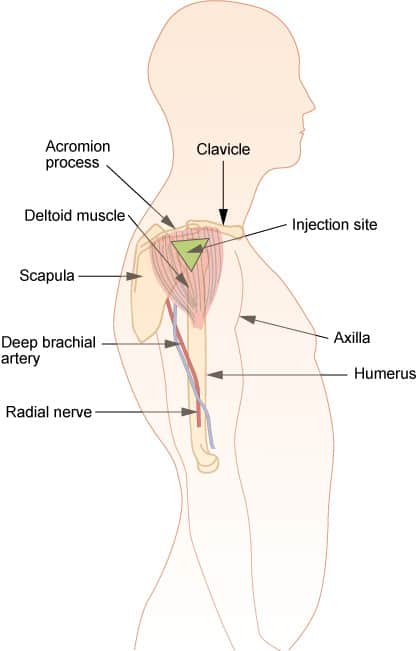
My practical lesson: In early home-injection sessions, I’ve seen people get more anxious when they’re unsure they’re in the deltoid rather than a nearby area that feels tender or bony. If the injection area doesn’t feel like a clear, meaty muscle when you palpate it (gently), don’t force it—your prescriber or nurse should help you confirm landmarks.
When deltoid can be a good fit:
- You have enough deltoid muscle to feel it clearly.
- You can relax the arm and keep the area still.
- You’ve been trained to identify the correct injection zone.
Possible downsides: If you have less muscle mass in the upper arm or frequently feel pinching near the shoulder or upper arm bone, you may prefer another site.
2) Ventrogluteal (hip): often favored for comfort and safety, but land-marking matters
The ventrogluteal area (upper-outer hip region) is widely regarded as a strong IM site because the muscle tends to be well-developed and away from many major structures—when properly located.
My practical lesson: The ventrogluteal site is great once you know exactly where it is. I’ve watched comfort improve dramatically after repeated, coached landmarking. The first attempt is often the hardest; after that, people typically find it more consistent than they expected.
When ventrogluteal can be a good fit:
- You’re able to identify the landmark area confidently (usually with guidance).
- You prefer a site other than the arm.
- You have a clinician-approved plan to rotate sites.
Possible downsides: It can be harder for some people to visualize and reach without assistance, especially when self-injecting.
3) Vastus lateralis (outer thigh): common for self-injection when arms are inconvenient
The vastus lateralis is the outer portion of the thigh and is frequently used for self-injection because the muscle is accessible and easy to locate with practice.
My practical lesson: Many patients I work with choose the thigh when they’re home alone because they can position themselves comfortably and steady the leg. If you tend to feel more anxious in the arm, the thigh can be psychologically easier—leading to smoother technique.
When vastus lateralis can be a good fit:
- You can access the outer thigh comfortably.
- You have a clear, firm muscle area.
- You want a consistent site you can reach reliably.
Possible downsides: Thigh injections can still cause soreness, especially if you use the same exact spot repeatedly—site rotation is important.
How to pick the “best place to give yourself a b12 injection” for your routine
If your goal is the best place to give yourself a b12 injection, think in terms of what you can do safely and consistently every scheduled dose. Here’s the decision logic I use when advising self-injection routines.
| Injection site | Strengths | What to watch for | Best when you... |
|---|---|---|---|
| Deltoid (upper arm) | Commonly taught; practical for adults | Landmark uncertainty; less muscle comfort | Feel confident locating the muscle zone |
| Ventrogluteal (hip) | Often comfortable; generally safe when correctly located | Landmarking takes practice; reach can be an issue | Can identify landmarks with training |
| Vastus lateralis (outer thigh) | Accessible; easy to steady during injection | Need for rotation to reduce soreness | Prefer a reachable, consistent site at home |
My recommended selection checklist
- Can you reliably locate it? If not, choose a site you can find with confidence or ask for hands-on guidance.
- Does it feel muscular, not bony or irritated? If you feel sharp bone proximity or frequent tenderness, reconsider.
- Can you rotate within that site? Rotation reduces repeated trauma to the same spot.
- Will you maintain consistency? Consistency helps your body tolerate injections and helps you track symptoms.
Technique basics that reduce pain and improve consistency
Even when the site is correct, technique influences comfort and results. Below are high-level, practical principles I reinforce during training.
- Prepare your workspace: Good lighting and a stable surface reduce hesitation.
- Relax the muscle: Tensing makes injections more painful for many people.
- Use proper injection hygiene: Clean the skin as instructed by your clinician and avoid touching the cleaned area.
- Rotate injection points: Move around within the approved site area for each dose to limit soreness.
- Know what “normal” can look like: Mild soreness or a small bruise can occur; severe or worsening symptoms should be reviewed.
Pros and cons: choosing one site vs rotating between sites
Some people prefer one consistent site (often for ease), while others rotate between approved sites. In my experience, rotating can be helpful when soreness accumulates or when you’re prone to bruising.
Pros of rotating sites:
- May reduce repeated local irritation.
- Helps prevent the “same-spot” soreness pattern.
Cons of rotating sites:
- More landmarking steps—this can increase anxiety if you’re not trained.
- Tracking where you injected can become confusing without a simple routine.
Practical balance I recommend: Use the rotation plan your prescriber approves, and if you’re still building confidence, prioritize one or two sites you can locate reliably—while still rotating within those areas as directed.
When to get help instead of continuing alone
Self-injection should feel manageable, not risky. Seek additional training or clinical help if you experience:
- Persistent, severe pain after injections
- Signs of infection (worsening redness, warmth, swelling, fever)
- Difficulty locating the landmark areas safely
- Frequent numbness, tingling, or unusual symptoms after injection
FAQ
What is the best place to give yourself a b12 injection?
The best site is the one you can locate consistently and accurately for your approved injection route (commonly IM). For many adults, deltoid, ventrogluteal, and vastus lateralis are used—your choice should depend on landmark confidence, comfort, access, and your prescriber’s instructions.
Can I switch injection sites for vitamin B12?
Often, yes—rotation between approved IM sites is commonly advised to reduce local soreness. However, you should follow your prescriber’s plan for your specific formulation and dosing schedule, and get guidance if you’re unsure about landmarks.
How do I know I’m injecting into the right muscle?
With proper landmarking, the injection should go into the intended muscle area without feeling like you’re hitting bone. If you’re unsure, the most reliable approach is to get hands-on instruction from a clinician so you can confirm the site on your body before you continue independently.
Conclusion: make your next injection your easiest one
Choosing the best place to give yourself a b12 injection comes down to safe landmarking, consistent technique, and smart rotation within approved IM sites. In my hands-on experience, people do best when they pick a site they can identify confidently (often deltoid for arm comfort, ventrogluteal for landmark-supported safety, or vastus lateralis for easy access) and stick to the clinician-approved plan.
Next step: Write down your approved injection sites and rotation schedule, then practice landmark identification with a clinician’s guidance (or a recorded reference) until you can consistently find the correct muscle area.
Discussion