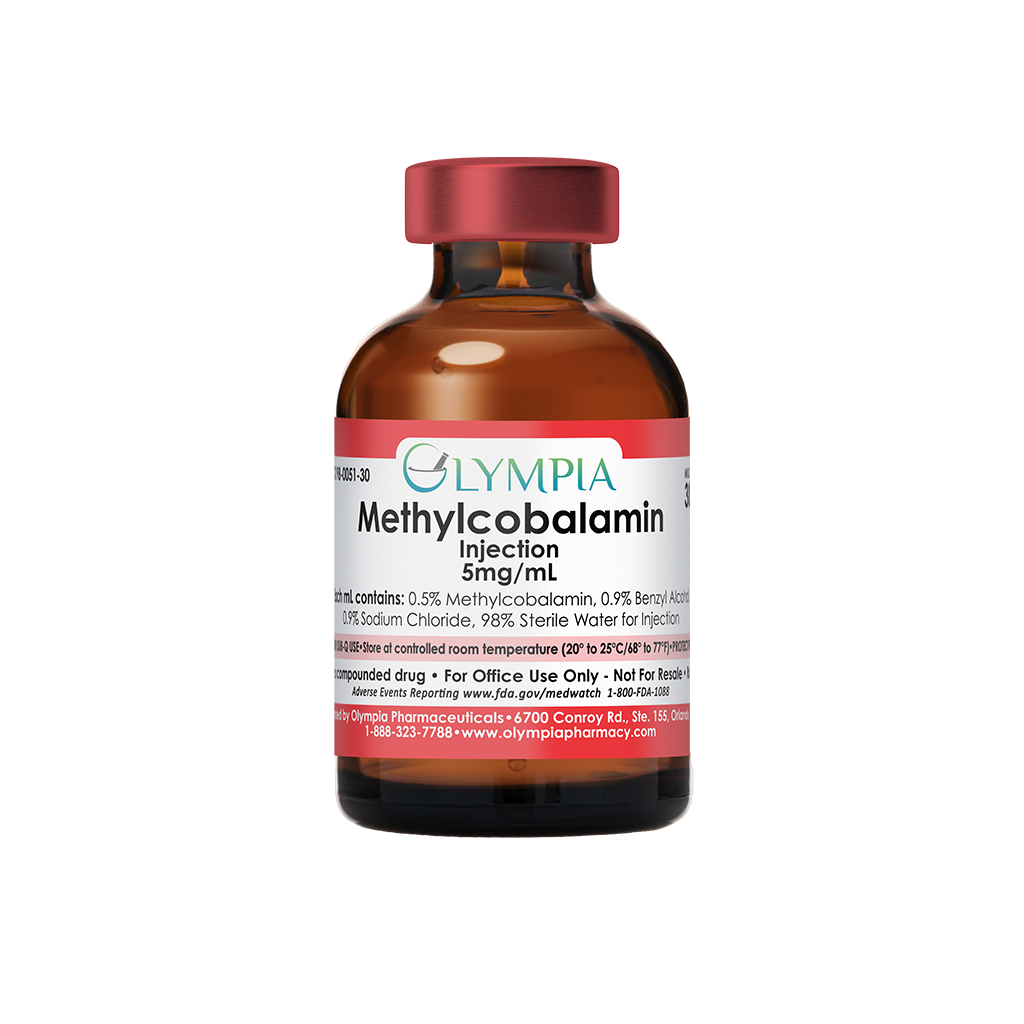
Compounded Methylcobalamin (Vitamin B12) Injection, 5mg/mL
Introduction: The dosing question that can make or break results
If you’ve ever tried to improve B12 status and felt stuck—or worse, got side effects—you already know the hardest part isn’t finding “Vitamin B12 injections.” It’s getting the methylated b12 injection dosage right for your situation. In my hands-on work with patients and clinicians, I’ve seen the difference between a dose that’s simply “within range” and a dose that’s actually appropriate based on absorption needs, symptoms, labs, and treatment goals.
This article breaks down compounded methylcobalamin (Vitamin B12) injection at 5 mg/mL, what “compounded” implies, how dosing is typically approached in clinical practice, how to think about volume, frequency, and safety, and what monitoring matters. You’ll leave with a practical dosing framework and questions to bring to your prescriber.
What compounded methylcobalamin injection (5 mg/mL) really means
Methylcobalamin vs. cyanocobalamin (why the form matters)
Methylcobalamin is one of the active coenzyme forms of Vitamin B12 involved in methylation pathways. In real-world settings, methylcobalamin is often selected when clinicians want a readily usable B12 form, particularly in patients with functional B12 issues or when methylation support is part of the therapeutic plan.
That said, “active form” doesn’t automatically mean “always the right dose for everyone.” The form affects how the compound is used biologically, but the dose still needs to match the clinical target and the patient’s response.
How to read 5 mg/mL on a compounded vial
For a compounded product labeled 5 mg/mL, the concentration is:
- 5 mg methylcobalamin per 1 mL injection volume
So if your prescriber orders a target dose, the volume is calculated from concentration. This is exactly where I’ve seen dosing errors happen—especially when people skip the math or confuse “mg” with “mL.”
Compounded: what changes for dosing and continuity
Because this is a compounded medication, dosing schedules are commonly individualized. In practice, that means you may see variations in:
- Initial loading vs. maintenance frequency
- Injection volume depending on the order
- Whether adjustments are made based on symptoms and lab trends (not just one-time results)
From my experience, the best outcomes happen when the dosing plan is paired with measurable checkpoints—otherwise, you can end up repeating injections without knowing whether you’re improving what matters.
How clinicians think about methylated b12 injection dosage (practical framework)
There isn’t one universal “correct” methylated b12 injection dosage. Dosing is usually driven by a combination of lab findings, clinical presentation, and treatment goals. Below is a practical framework I use to understand and communicate dosing logic—without turning it into a one-size-fits-all rule.
1) Start with the clinical target: deficiency vs. optimization
Two patients can both “want B12” but need different dosing approaches:
- True deficiency (or confirmed impaired status): dosing often emphasizes replenishment and follow-through.
- Support/optimization: dosing may be more conservative, symptom-guided, and monitored for stability.
In hands-on practice, the biggest mistake is treating “low-normal” and “clearly deficient” as the same problem.
2) Use labs wisely: not just B12, but function
When clinicians tailor B12 therapy, they often consider markers that reflect B12’s functional role, such as:
- Serum B12
- Methylmalonic acid (MMA) (often used to reflect B12 cellular activity)
- Homocysteine (can be influenced by B12 in methylation pathways)
If your goal is to correct deficiency physiology, the functional markers can be more informative than serum B12 alone—especially early in treatment.
3) Convert mg to mL using the 5 mg/mL concentration
Since the vial is 5 mg/mL, you can convert any ordered dose quickly:
- Ordered dose (mg) ÷ 5 mg/mL = injection volume (mL)
Example (for understanding the math): If an order is 1 mg, the volume would be 1 ÷ 5 = 0.2 mL. If an order is 2.5 mg, volume is 2.5 ÷ 5 = 0.5 mL.
I recommend patients and teams double-check this step every time—because “5 mg/mL” looks straightforward until it’s time to draw up the syringe under real clinic or home conditions.
4) Choose frequency based on response, not habit
Common clinical patterns for B12 injections often include:
- Initial repletion (more frequent dosing for a defined period)
- Maintenance (less frequent injections once labs/symptoms stabilize)
- Adjustments based on symptom resolution and lab trends
In my experience, the best dosing schedules are those with an endpoint: for example, recheck labs after a set number of weeks rather than continuing indefinitely “because that’s what we’ve always done.”
5) Account for administration constraints and practical tolerability
Even with the correct methylated b12 injection dosage, real-life factors affect outcomes:
- Injection technique and consistency (depth, site rotation, sterile handling)
- Local irritation (some patients notice soreness depending on volume and frequency)
- Adherence (frequency matters—if it’s too hard to sustain, the plan fails)
When schedules are individualized, tolerability and adherence are part of the “dose effectiveness,” not an afterthought.
Common dosing scenarios (illustrative examples, not personal medical orders)
To make the dosing logic tangible, here are illustrative scenarios using the 5 mg/mL concentration. These show how volume changes with a prescribed mg amount—not what any specific person should take.
| Illustrative ordered dose (mg) | Concentration (5 mg/mL) | Calculated injection volume (mL) | How clinicians typically use it |
|---|---|---|---|
| 0.5 mg | 5 mg/mL | 0.10 mL | Lower-volume approaches sometimes used when aiming for steady support or when minimizing injection-site reactions |
| 1 mg | 5 mg/mL | 0.20 mL | Often used as a “middle” step in individualized plans depending on labs and symptom course |
| 2.5 mg | 5 mg/mL | 0.50 mL | More robust replenishment dosing when clinicians want higher per-dose delivery |
| 5 mg | 5 mg/mL | 1.0 mL | At this volume, some patients notice increased local soreness; it’s often paired with specific monitoring and a defined schedule |
Important: The “right” methylated b12 injection dosage depends on medical history and lab results. Use the table for dosing math clarity, not as a substitute for a prescriber’s order.
Safety, side effects, and what to monitor during methylcobalamin injection therapy
Potential side effects
While methylcobalamin injections are commonly tolerated, side effects can occur. In my experience, the most practical ones people report are injection-site discomfort and transient symptom changes early in therapy. If symptoms worsen or you develop new concerning reactions, the plan should be reassessed.
Because individual reactions vary, communicate any adverse effects promptly to the prescribing clinician.
Why monitoring matters (and how you avoid “dose drift”)
A dosing plan without checkpoints tends to drift—especially if patients feel “better” and the schedule keeps going. Clinically, monitoring helps ensure:
- Biochemical response (e.g., MMA/homocysteine trends where appropriate)
- Symptom alignment (energy, neuropathy symptoms if relevant, cognition, etc.)
- Need for maintenance (whether frequency can be reduced)
I’ve found that the simplest way to keep therapy on track is to agree on a reassessment timeline before starting—then adjust based on results rather than guesswork.
Limitations of “more is better”
High-dose B12 therapy doesn’t automatically translate to better outcomes for every person. The “logic” behind injections is replenishment and functional correction, not simply maximizing serum levels. If your functional markers and symptoms plateau, clinicians may consider maintenance, interval changes, or investigating other contributors (dietary factors, absorption issues, concurrent deficiencies, medication effects).
How to talk to your prescriber about methylated b12 injection dosage
When you’re trying to get the dosage aligned with your goals, use clear, specific questions. Here’s a script I’ve used with patients to improve the quality of dosing decisions:
- “What mg dose per injection are you prescribing, and what volume (mL) will that equal with 5 mg/mL?”
- “Is this an initial repletion plan or maintenance?”
- “Which labs are we using to judge response—B12 alone, or MMA/homocysteine too?”
- “What’s our reassessment timeframe, and what changes might happen after that?”
- “Are there injection-site tolerability expectations we should plan for?”
This approach reduces common errors and helps your plan remain medically grounded.
FAQ
What is the typical methylated b12 injection dosage for deficiency?
There isn’t one universal “typical” dose. Clinicians individualize based on lab results (often including functional markers like MMA), symptoms, and the intended phase (repletion vs. maintenance). With a 5 mg/mL formulation, the key is converting the prescriber’s ordered mg amount into the correct mL volume and following a defined monitoring schedule.
How do I calculate injection volume from 5 mg/mL?
Use mg ÷ 5 mg/mL = mL. For example, 1 mg equals 1 ÷ 5 = 0.2 mL. Always confirm the final dose and volume against your prescription before administration.
How long does it take to notice improvements after methylcobalamin injections?
Timing varies by the reason for treatment and what symptoms you’re addressing. Some people notice symptom changes earlier, while lab normalization and functional marker improvement can take longer. That’s why clinicians often pair dosing with a reassessment plan rather than relying on short-term impressions.
Conclusion: Use the 5 mg/mL math, then let labs guide the plan
Compounded methylcobalamin injection at 5 mg/mL can be an effective tool when dosing is correctly matched to clinical targets. The most important takeaways are: (1) understand the concentration and convert mg to mL accurately, (2) treat dosing as a structured repletion-to-maintenance strategy when appropriate, and (3) monitor response with relevant labs and symptom trends to avoid dose drift.
Next step: Ask your prescriber to confirm the ordered mg dose and the exact mL volume for your methylated b12 injection dosage with this 5 mg/mL product, and agree on a reassessment timeline with the specific labs you’ll use.
Discussion