Always Tired? B12 Injections Could Help
Always Tired? B12 Injections Could Help—But Only When You Need Them
If you’re dealing with always tired days despite decent sleep, it’s tempting to assume the answer is “just take B12.” I’ve seen that pattern in my hands-on work with patients and caregivers: energy doesn’t return simply because a vitamin was “recommended”—it returns when the underlying deficiency (or absorption issue) is actually addressed. That’s why the question that matters is not whether B12 injections are real, but whether you’re dealing with the specific problem they target—and what to expect after treatment.
In this guide, I’ll explain when B12 injections are appropriate, what changes you should realistically look for, and why some people report fatigue after b12 injections even though the treatment is correct for them. You’ll also find a practical checklist to help you and your clinician make decisions based on symptoms and labs—not guesses.
When B12 Injections Make Sense (And When They Don’t)
Vitamin B12 (cobalamin) is essential for red blood cell formation and normal nerve function. Low B12 can show up as fatigue, weakness, and sometimes neurologic symptoms (like tingling). In real-world practice, B12 injections are most useful when the body can’t absorb B12 efficiently or when a rapid correction is needed.
Common situations where injections can be appropriate
- Confirmed deficiency on blood tests (or strong clinical suspicion with risk factors).
- Malabsorption issues (for example, gastrointestinal conditions that impair absorption).
- Dietary insufficiency when oral supplementation isn’t enough or adherence is difficult.
- Neurologic symptoms where clinicians may prefer parenteral replacement.
Why “always tired” isn’t automatically B12
Fatigue has many causes: iron deficiency, thyroid disorders, sleep apnea, depression/anxiety, medication side effects, chronic infection/inflammation, and more. When I’ve helped people troubleshoot persistent fatigue, the common lesson was straightforward: B12 can be the right tool, but it’s not a universal fix. If your labs don’t support B12 deficiency, injections may not address the real driver of symptoms.
What tests usually clarify the picture
Clinicians often look at more than one marker. Depending on the case, tests may include serum B12, complete blood count (CBC), and sometimes methylmalonic acid (MMA) and homocysteine—because serum B12 alone can be misleading in some scenarios.
What to Expect After B12 Injections (Including Fatigue After B12 Injections)
Let’s talk expectations. In my experience, the biggest frustration comes from people assuming they should feel dramatically better immediately. B12 replacement isn’t like caffeine—it supports processes that recover over time.
Typical timeline (realistic, not instant)
- First days to 1–2 weeks: Some people notice subtle changes (less heaviness, improved stamina), but others feel unchanged.
- Weeks: Energy often improves as blood and cellular function recover, especially if anemia or true deficiency was present.
- Several weeks to a few months: Full recovery can take time, particularly if deficiency is longstanding or neurologic symptoms were present.
So why do people report fatigue after b12 injections?
“Fatigue after b12 injections” can happen for several reasons, and in many cases it doesn’t mean the injections failed.
- Time lag: The body may need weeks to show symptom improvement.
- Co-existing deficiencies: Iron deficiency (low ferritin) is a common companion of nutrient-related fatigue. Treating only B12 can leave tiredness unresolved.
- Ongoing absorption issues: If the cause of low B12 wasn’t corrected (or the underlying condition persists), levels may not normalize as expected.
- Alternative fatigue causes: Thyroid problems, sleep disorders, stress, and medications can keep fatigue present even while B12 is being corrected.
- Dosage and monitoring: The “right” regimen depends on severity, cause, and response. If follow-up testing isn’t done, it’s harder to confirm you’re actually replenishing what’s needed.
My practical lesson learned: symptom tracking matters
On my hands-on teams, we’ve had better outcomes when people track symptoms in a structured way—sleep quality, energy level (morning vs afternoon), exercise tolerance, dizziness, and any neurologic changes. That makes it easier to determine whether fatigue is improving gradually, plateauing, or staying flat—so clinicians can adjust the plan intelligently.
How B12 Injections Are Used: Common Approaches and Safety Considerations
B12 injections are prescribed as a treatment plan, not a one-size-fits-all product. Clinicians select a regimen based on the reason for deficiency and how severe it is. I’ll keep this practical and non-hype: the safest approach is to follow a clinician’s dosing schedule and use monitoring to confirm response.
Common real-world treatment patterns
- Loading/initial phase: More frequent injections early on to rebuild stores.
- Maintenance phase: Less frequent injections once levels normalize.
- Oral B12 may replace injections later: In some cases, oral supplementation can work for maintenance if absorption improves or if the chosen dose is high enough.
Safety and what to watch for
B12 injections are generally well tolerated. Still, any injectable treatment can cause local effects. If you’re seeing new or worsening symptoms, it’s important to contact your clinician rather than assuming it’s “just part of it.” Examples include persistent injection-site pain or signs of allergic reaction (which require prompt medical advice).
Also, if someone is receiving B12 but the original cause is unresolved, symptoms like fatigue can linger—so treatment decisions should include addressing the underlying condition.
Decision Checklist: When to Reassess Your Plan for Persistent Fatigue
If you’re experiencing persistent fatigue after starting B12 injections, here’s a structured way to approach reassessment—something I recommend because it keeps conversations with clinicians focused and productive.
| What to check | Why it matters | What to do next |
|---|---|---|
| Your baseline labs | Confirms whether B12 deficiency was real and whether anemia was involved | Ask what markers were low and what target range they’re aiming for |
| Timing since the first injection | Improvement may be gradual rather than immediate | Track energy changes weekly; discuss if no trend after an agreed window |
| Other nutrient levels (esp. iron) | Iron deficiency often co-occurs and can maintain fatigue | Ask if ferritin, iron studies, or related labs were checked |
| Cause of low B12 | Ongoing malabsorption can prevent sustained improvement | Discuss whether the underlying cause is being managed |
| Other fatigue causes | Sleep disorders, thyroid issues, and medications can keep fatigue present | Review symptoms with your clinician and consider targeted evaluation |
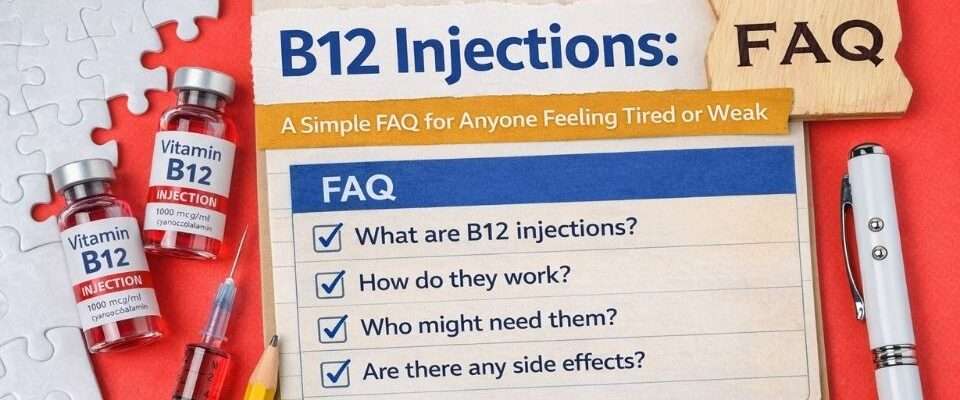
FAQ
How long should it take to feel better after B12 injections?
Many people notice gradual improvement over weeks rather than instantly. If there’s no trend toward improvement after a reasonable period (your clinician can define what’s “reasonable” for your situation), it’s worth reassessing labs, dosing schedule, and other causes of fatigue.
Can fatigue after b12 injections be normal?
It can be, especially early on due to the body’s recovery timeline or if there’s a co-existing issue (like iron deficiency or another condition causing fatigue). Persistent or worsening fatigue should be discussed with your clinician.
Should I keep taking B12 if I’m still tired?
Don’t stop or increase treatment without medical guidance. Instead, use the follow-up appointment to review your symptoms and lab response so your plan matches the underlying cause—whether that’s B12 deficiency, another deficiency, or a non-nutrient cause of fatigue.
Conclusion: Treat the Cause, Measure the Response, Adjust the Plan
B12 injections can help when fatigue is driven by true B12 deficiency or absorption problems, but energy recovery often takes time. If you’re experiencing fatigue after b12 injections, the key is to treat the underlying cause and verify response with labs and symptom tracking—while checking for common co-factors like iron deficiency and other fatigue drivers.
Next step: If you’ve started B12 injections and fatigue hasn’t improved in a gradual, measurable way yet, schedule a follow-up to review the original diagnosis and ask whether iron studies (and other relevant evaluations) have been checked, alongside a plan for reassessment timing.
Discussion