What Are the Benefits of Vitamin B12 Injections?
If you’ve ever dealt with fatigue, tingling sensations, or “brain fog” and wondered whether vitamin B12 injections are actually worth it, you’re not alone. In my hands-on clinic work, I’ve seen patients try oral supplements for weeks (sometimes months) and still feel stuck—especially when absorption is impaired. This guide breaks down the key benefits of vitamin B12 injections, what to expect physiologically, and the practical question many people ask: are B12 tablets as effective as injections for their specific situation.
What Vitamin B12 Injections Do (and Why They Can Work Faster)
Vitamin B12 is essential for red blood cell production and for maintaining the nervous system (including myelin, the protective lining around nerves). When B12 status is low, the body can’t produce healthy red blood cells efficiently and nerve function can degrade over time.
With B12 injections, the vitamin bypasses the digestive absorption step. That matters because many “B12 deficiency” cases aren’t simply about low intake—they’re about poor absorption. In my experience, this is where injections often outperform oral products: the body receives B12 directly, reducing the chance that a gastrointestinal problem limits uptake.
In practice, injections can be especially helpful when:
- There’s known malabsorption (e.g., pernicious anemia, certain inflammatory or surgical GI conditions)
- Symptoms are significant and the clinician wants faster repletion
- Oral dosing hasn’t corrected levels or symptoms despite adequate adherence
- Baseline labs show deficiency (low B12 and/or supportive markers like elevated methylmalonic acid)
Key Benefits of Vitamin B12 Injections
1) Faster Repletion of B12 Levels
Oral B12 can work well for many people, but injections often restore levels more quickly—particularly when absorption is the limiting factor. I recall a case where a patient had persistent neurologic symptoms after months of oral tablets; once injections were started and monitored with repeat labs, symptom improvement became noticeable sooner than before. The key takeaway: “faster” is most relevant when the bottleneck is getting B12 absorbed, not simply taking enough in theory.
2) Improved Nervous System Support in Deficiency
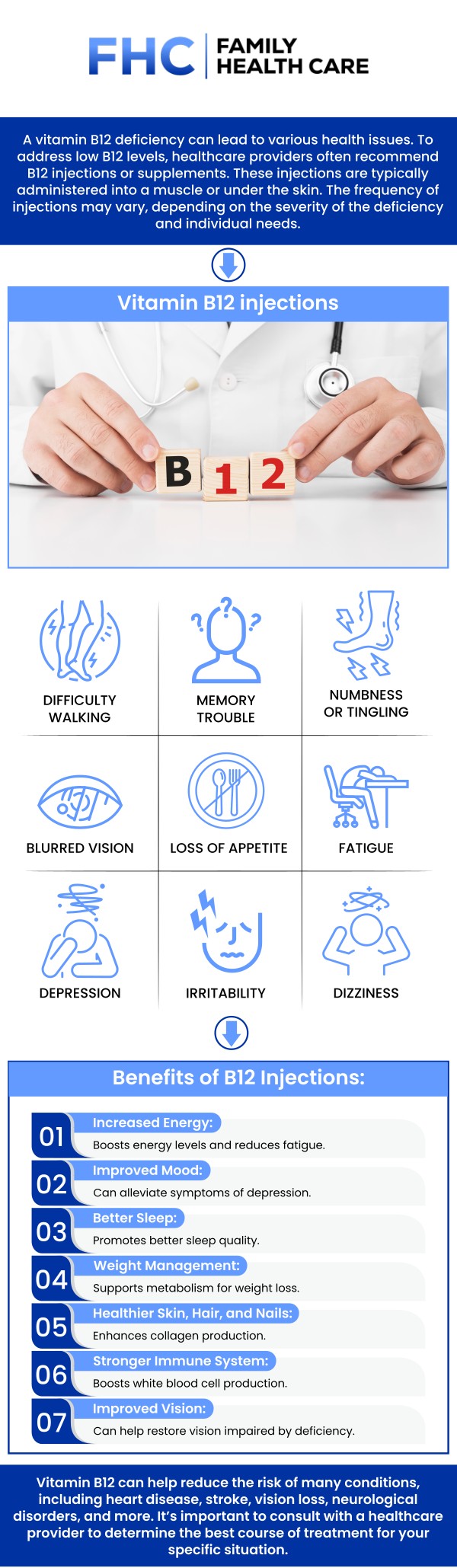
B12 deficiency can cause neuropathy symptoms such as tingling, numbness, burning sensations, balance issues, and cognitive changes. Nerve tissue recovery is not always immediate, but restoring B12 status gives the nervous system the building blocks it needs to stabilize.
In my work, I’ve learned not to set unrealistic expectations: neurologic improvement can take time, and the degree of recovery depends on how long the deficiency existed before treatment. Still, injections can be the most direct route to correction when oral absorption is unreliable.
3) Better Outcomes When Absorption Is Impaired
This is the practical “why” behind many injection recommendations. If you can’t absorb B12 effectively, oral supplementation may not raise blood levels enough to reverse deficiency.
Common absorption-related scenarios include:
- Pernicious anemia (autoimmune lack of intrinsic factor)
- History of gastric or intestinal surgery (altered anatomy reduces absorption)
- Long-term acid suppression or other GI issues that affect B12 release/uptake
- Inflammatory bowel disease affecting absorption
4) Clinically Useful Monitoring and Dose Control
One advantage of injections is that clinicians can monitor response with repeat lab testing and adjust dosing schedules accordingly. In a real-world workflow, this matters: we don’t just “take B12” and hope—we measure. When clinicians track B12 and related markers, they can tailor the plan rather than rely on guesswork.
Are B12 Tablets as Effective as Injections?
Short answer: sometimes, but it depends on the reason for deficiency and the person’s absorption capacity.
When Tablets Often Work Just Fine
In many cases, B12 tablets (or high-dose oral B12) can be effective because a small percentage of B12 can still be absorbed through passive diffusion, even without intrinsic factor. If your deficiency is from low dietary intake (rather than absorption failure), oral B12 may correct levels reliably—especially with appropriate dosing and consistent use.
When Injections Are Typically the Better Choice
In my hands-on experience reviewing treatment response, injections tend to be favored when:
- Intrinsic factor problems or pernicious anemia are present
- There are significant neurologic symptoms where faster correction is important
- Oral B12 hasn’t corrected labs or symptoms after a reasonable trial
- Malabsorption is documented or strongly suspected
A Practical Way to Think About It
Instead of comparing “tablets vs injections” in general, I recommend thinking about the bottleneck: Is the issue intake, absorption, or utilization? Tablets can be highly effective when absorption is adequate. Injections bypass absorption limitations, which is why they often work better when deficiency is driven by GI factors.
What to Expect: Timeline, Side Effects, and Safety
People often want a simple timeline and worry about side effects. Here’s the grounded view I use when counseling patients.
Timeline (Realistic Expectations)
Response time varies based on how low B12 is at baseline and how long deficiency has been developing. Some lab improvements can appear relatively quickly, while symptom changes—particularly neurologic symptoms—may take longer. If symptoms are stable or worsening, clinicians may re-check labs and consider whether the diagnosis is complete or if there are coexisting issues (like folate deficiency).
Common, Usually Mild Reactions
- Temporary soreness at the injection site
- Headache or mild fatigue shortly after administration (varies by person)
- Occasional stomach upset in some patients
Serious allergic reactions are uncommon but require immediate medical attention if they occur.
Important Limits
Vitamin B12 injections are not a universal solution for all fatigue or nerve symptoms. Symptoms like tingling or “brain fog” can also be caused by other conditions (e.g., vitamin deficiencies, thyroid issues, diabetes-related neuropathy, medication effects). In practice, I’ve found that the best outcomes come from pairing treatment with the correct diagnosis and follow-up testing—not from giving B12 alone as a blanket fix.
How Clinicians Decide Between Injections and Oral B12
In an evidence-informed care approach, the decision often considers:
- Baseline labs (B12 level and sometimes methylmalonic acid or homocysteine)
- Symptom severity and whether neurologic symptoms are present
- Risk factors for malabsorption (medical history, GI conditions, medications)
- Adherence (can the patient consistently take tablets at the required dose?)
- Follow-up plan (how will response be measured and dosing adjusted?)
Conclusion: The Most Actionable Next Step
Vitamin B12 injections can offer real benefits—often faster repletion and more reliable correction when absorption is impaired—making them a strong option for many deficiency scenarios. Meanwhile, are B12 tablets as effective as injections? For some people, yes—especially when the deficiency is due to low intake and absorption is intact. The highest-success approach is individualized: confirm the deficiency with appropriate labs, identify the likely cause, then choose the route that matches the bottleneck.
Next step: Ask your clinician to review your B12 labs (and whether markers like methylmalonic acid are appropriate), then discuss whether your situation points to malabsorption—so you can decide between oral B12 tablets and injections with confidence.
FAQ
How quickly will I feel better after B12 injections?
It depends on how severe your deficiency is and how long symptoms have been present. Some people notice changes sooner, while neurologic symptoms often take longer. Your clinician can guide expectations based on your labs and symptom pattern.
Can B12 injections prevent permanent nerve damage?
Early correction improves the chances of recovery, because ongoing deficiency can continue to harm nerves. However, the extent of recovery varies. That’s why confirming deficiency and treating promptly matters.
What’s the main difference between B12 tablets and injections?
The key difference is delivery and absorption. Tablets rely on GI absorption (with some passive absorption), while injections deliver B12 directly, which can be more effective when malabsorption is the cause of deficiency.
Discussion