what's the difference between bac water and sterile water Bacteriostatic Water vs Reconstitution Solution Guide
Is bac water the same as reconstitution solution? Here’s the difference in plain English
If you’ve ever stared at two similar-looking vials—Bacteriostatic Water (BAC water) and sterile water for reconstitution / reconstitution solution—and wondered whether they’re interchangeable, you’re not alone. In my hands-on experience preparing medications in controlled settings, this is one of the most common mix-ups I’ve seen: people assume “sterile water” means “the same water,” and then run into dosing, stability, or microbial risk issues.
So, is bac water same as reconstitution solution? Sometimes people use the terms casually, but the right answer depends on the exact product and intended use. This guide explains the practical differences—what’s in each vial, why it matters for reconstitution, and how to choose correctly and safely.
BAC water vs reconstitution solution: what each one is
Both products are designed to help you reconstitute (mix) a medication powder into a liquid you can inject or administer, depending on the prescription and route. The confusion comes from the fact that both may be marketed as “sterile water,” but they are not the same.
What BAC water is (bacteriostatic water)
Bacteriostatic Water is sterile water that contains an added antimicrobial ingredient (commonly benzyl alcohol in many formulations). That antimicrobial ingredient helps inhibit microbial growth, which is why BAC water is often used when there’s a reason to keep a prepared solution usable for a longer period (within the limits of the specific medication’s labeling).
In my workflow, the practical lesson is this: bacteriostatic properties don’t make a medication “safe indefinitely.” They just reduce microbial growth risk in a vial or drawn solution under controlled handling. The actual acceptable time window is still governed by the medication’s instructions, your facility protocols, and aseptic technique.
What reconstitution solution is (sterile water for reconstitution)
Reconstitution solution is a category term. Many reconstitution products are just sterile water (without bacteriostatic additives), supplied specifically for mixing with a dry drug product. Some “reconstitution solutions” may include other components depending on the drug (for example, stabilizers or specific buffers), but many common preparations rely on plain sterile water as the diluent.
If your vial is labeled as sterile water for injection or sterile diluent and does not state a bacteriostatic preservative, treat it as non-bacteriostatic.
The key difference: preservative/bacteriostatic vs non-bacteriostatic
The simplest way to remember it is:
- BAC water: sterile water + a bacteriostatic (preservative) ingredient.
- Reconstitution solution: may be sterile water, but typically not bacteriostatic unless explicitly stated.
Why bacteriostatic matters
Bacteriostatic ingredients help slow microbial proliferation after the vial is opened and during the period the solution may be handled. This can be relevant when a medication requires reconstitution and then multiple uses over a time window (again: only according to the prescribing information).
Where I’ve seen teams get burned is relying on assumptions like “sterile water is sterile, so it’s fine for longer.” Sterility refers to the state at the time of manufacture. Once opened, microbial contamination risk exists if aseptic technique slips. BAC water can reduce microbial growth, but it doesn’t replace proper handling.
Why non-bacteriostatic sterile water still might be correct
Many medications are fully suitable to reconstitute with sterile water without bacteriostatic additives, especially when the instruction is to use the reconstituted dose promptly. In those cases, the “extra preservative” in BAC water may be unnecessary, and what matters most is the drug’s labeling and the exact product compatibility.
How to tell what you have: label cues that prevent mistakes
When you’re holding two different vials, don’t go by “water” in the name alone. I recommend checking for these details directly on the label or package insert:
- Does it explicitly say “bacteriostatic” or list benzyl alcohol (or another preservative)? If yes, it’s BAC water (or a bacteriostatic diluent).
- Does it say “sterile water for injection” or “sterile diluent” without bacteriostatic language? That usually indicates non-bacteriostatic sterile water.
- Is the product labeled for reconstitution? Ensure it matches the medication’s required diluent type.
- Does the medication’s prescribing information specify which diluent to use? For safety and compatibility, follow the medication’s instructions over assumptions.
Practical selection guide: when each one is typically used
Because labels and formulations vary by country, manufacturer, and drug, the best rule is to follow the medication’s direction. Still, here’s the practical decision logic I use when training or reviewing reconstitution workflows:
| Scenario | Likely correct choice | What to double-check |
|---|---|---|
| The medication specifically calls for bacteriostatic water | BAC water | Correct concentration/preservative and compatibility with the drug |
| The medication instructs sterile water (non-bacteriostatic) for reconstitution | Sterile water / non-bacteriostatic reconstitution solution | Time window for use after reconstitution (per labeling) |
| Instructions don’t specify diluent type clearly | Do not assume interchangeability | Confirm via the prescribing info or pharmacist guidance |
| You’re reconstituting and drawing up doses for later use | Only if labeling permits and the correct diluent is used | Aseptic technique + expiration/time limits still apply |
Product image reference
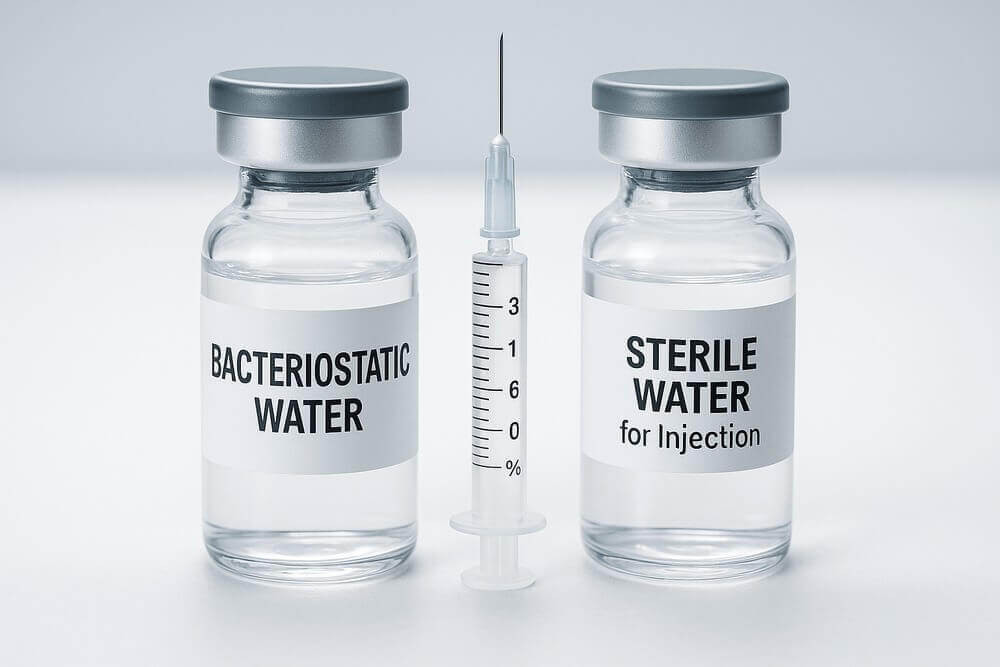
Common myths and real-world pitfalls
Myth: “All sterile waters are the same after reconstitution.”
Not necessarily. Sterility at manufacture doesn’t remove differences in additives. BAC water’s preservative changes the behavior of the prepared solution and may or may not align with the medication’s labeled guidance.
Myth: “If it’s called reconstitution solution, it must be BAC water.”
Incorrect. Reconstitution solution is a function/category label. Some reconstitution solutions are bacteriostatic; many are not. If it doesn’t say bacteriostatic (or list a preservative), treat it as non-bacteriostatic.
Pitfall: Using the wrong diluent for compatibility or stability
In my experience reviewing medication prep documentation, the “wrong diluent” issue usually shows up as a mismatch with the medication’s instructions—leading to time-limit problems, handling concerns, or uncertainty about stability. If you’re unsure, the safest step is to confirm the diluent requirement before proceeding.
FAQ
Is bac water same as reconstitution solution?
Not necessarily. BAC water is bacteriostatic sterile water (contains a preservative). “Reconstitution solution” is a broader category and may be plain sterile water without a bacteriostatic preservative. Use the diluent specified for your medication.
Can I use bac water when the prescription says sterile water for injection?
Don’t assume interchangeability. Some medications require non-bacteriostatic sterile water and may specify a particular diluent for a reason. If the label/prescribing information doesn’t permit BAC water, choose the exact diluent directed.
How do I know whether my vial is bacteriostatic?
Check the vial label for the word bacteriostatic or the listed preservative (commonly benzyl alcohol). If it only says sterile water/diluent without bacteriostatic language, treat it as non-bacteriostatic.
Conclusion: the correct next step
Here’s the bottom line: BAC water and reconstitution solution are not automatically the same. BAC water is sterile water with an added bacteriostatic preservative; many reconstitution solutions are simply sterile water without that preservative. The safe, reliable way to choose is to match the diluent to your medication’s labeling and instructions.
Next step: Look up your exact medication’s reconstitution instructions (or ask your pharmacist) and confirm which diluent is specified—then select the vial that matches that requirement.
Discussion