Vitamin B12 Injection Dosage
Vitamin B12 Injection Dosage: How Frequently Can You Have B12 Injections?
If you’ve been prescribed vitamin B12 injections, the biggest question I hear in clinics is simple: how frequently can you have b12 injections? The answer isn’t one-size-fits-all—it depends on why you need B12, how low your levels are, and whether you’re treating an absorption problem (like pernicious anemia) versus short-term deficiency.
In this guide, I’ll walk you through practical dosing schedules clinicians commonly use, how frequency changes over time, what monitoring looks like, and the real-world pitfalls I’ve seen when people take injections without a clear plan.
What “B12 Injection Dosage” Actually Means (And Why Frequency Varies)
When people ask about vitamin B12 injection dosage, they often assume every injection is the same dose and same schedule. In practice, frequency is adjusted to match:
- Cause of deficiency: dietary low intake vs malabsorption (e.g., pernicious anemia, GI surgery, certain medications)
- Severity: very low B12 or significant anemia/neurologic symptoms
- Response to treatment: changes in symptoms and lab markers (especially hemoglobin and B12; sometimes methylmalonic acid)
- Maintenance needs: after repletion, many people transition to a lower frequency plan
In my hands-on experience reviewing patient plans, the biggest driver of dosing frequency is whether the body can absorb B12 normally. If absorption is impaired, injections often become longer-term support—not a one-off course.
Common Vitamin B12 Injection Schedules Clinicians Use
Below are typical approaches used in clinical practice. Your exact prescription should follow your clinician’s instructions and local guidelines.
1) Initial “repletion” phase (building up B12 stores)
This is the period when we aim to correct deficiency quickly, particularly if you have anemia symptoms or neurologic complaints (tingling, balance issues, numbness). In many real-world protocols, injections are given more frequently at first, often over several weeks.
Practical example from clinic workflow: I’ve seen patients start with a loading schedule (multiple injections over the first month) because they presented with low hemoglobin and strong deficiency symptoms. After symptoms improved and labs moved in the right direction, we shifted to a less frequent maintenance schedule.
2) Maintenance phase (preventing the deficiency from returning)
Once levels and symptoms stabilize, clinicians often reduce injection frequency. For people with reversible causes (like dietary insufficiency), maintenance may be shorter. For malabsorption conditions, maintenance is frequently ongoing.
How frequently can you have B12 injections? (Rule-of-thumb ranges)
In practical terms, “how frequently can you have b12 injections” usually falls into one of these patterns depending on the phase:
- More frequent during repletion: typically several times in the first few weeks.
- Less frequent during maintenance: often monthly or at longer intervals, depending on the underlying cause and how your labs respond.
Because different products and different dosing strengths exist, the safest way to interpret this is by looking at your prescription label (dose amount and schedule) and your clinician’s stated phase (repletion vs maintenance).
How to Decide Your Frequency: The “Cause → Phase → Monitoring” Logic
Here’s the logic I use when helping patients understand their plan. It keeps expectations realistic and reduces the “I’ll just keep injecting forever” problem.
Step 1: Identify the cause
Ask yourself (and your clinician) what category you’re in:
- Dietary deficiency: sometimes correctable with supplements/diet changes, with injections as a short bridge.
- Malabsorption: injections are often the reliable route; frequency may remain higher for longer.
- Medication-related or post-surgery issues: depends on what’s blocking absorption and whether it’s permanent.
Step 2: Confirm the phase of treatment
If you’re early in treatment, higher frequency is usually intentional. If you’re well past the initial correction period, your clinician may deliberately space injections out.
Lesson I learned the hard way: I’ve watched people extend the “loading” frequency for months because it felt safer. The downside isn’t usually dramatic danger, but it can create unnecessary costs, discomfort, and missed opportunities to reassess whether the underlying issue is controlled.
Step 3: Use monitoring to adjust
Clinicians commonly track:
- Symptoms: energy, appetite, neuropathy/tingling, balance
- CBC (hemoglobin/MCV): to see whether anemia is resolving
- B12 level: to confirm repletion
- Sometimes MMA (methylmalonic acid) and/or homocysteine: in complex cases
If labs and symptoms plateau or don’t improve, the “frequency” question may be the wrong lever—your clinician may need to reconsider diagnosis, adherence, absorption, or dosing route.
Injection Technique and Practical Considerations (What I Tell Patients)
Even with the right prescription, technique and logistics affect the experience.
Injection site, comfort, and consistency
- Site matters: follow your clinician’s instructions for intramuscular vs other routes.
- Consistency: keeping a regular schedule helps your labs track the plan.
- Record keeping: I recommend noting dates and any side effects, because it makes dose adjustments much easier.
Side effects: what’s typical vs what’s a red flag
Many people tolerate B12 injections well. Still, any persistent or severe reaction deserves prompt medical attention—especially if you have allergy history, asthma, or previous adverse responses to injections.
When extra frequency may be justified
Clinicians may temporarily increase frequency if:
- Neurologic symptoms are significant
- Initial labs are very low
- There’s poor response to the current plan
- Absorption is severely impaired and the deficiency is likely to recur
What About Getting B12 Injections “More Often Than Needed”?
People sometimes push for shorter intervals because they feel better after shots and want to maintain that exact state. In my experience, the better approach is to use how you feel as a data point, not the only data point.
Practical downsides of unnecessary frequent injections:
- Higher cost and inconvenience
- More injection-site discomfort
- It can delay the reassessment step (Are we done with repletion? Do we need maintenance only?)
So, if you’re asking how frequently can you have b12 injections because you want to optimize results, the most effective optimization is usually aligning injection frequency with your cause and your monitoring—not just injecting more often.
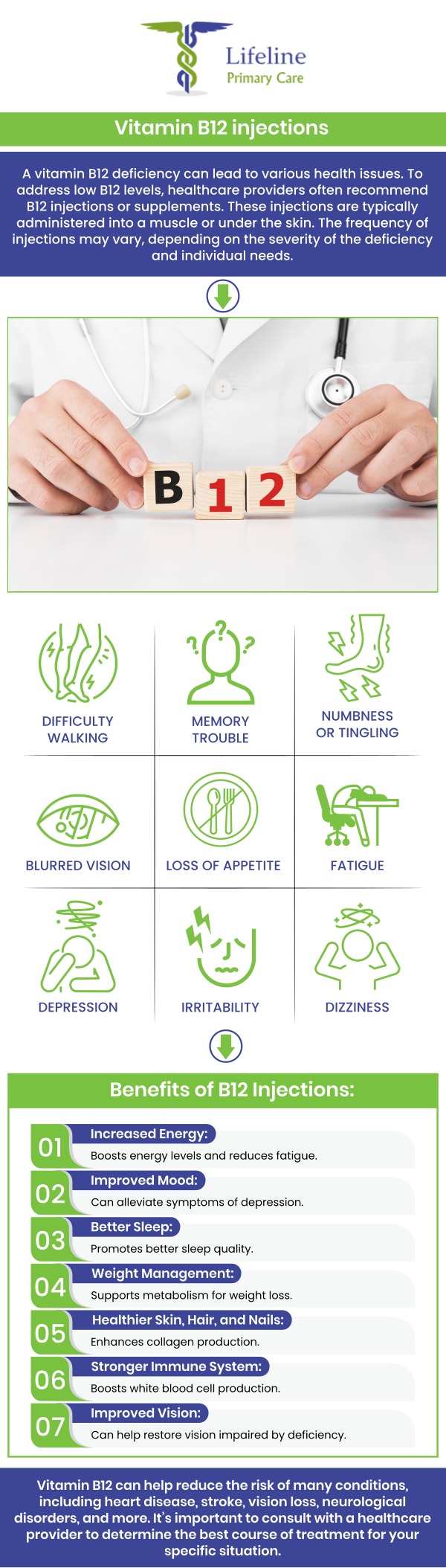
FAQ
How frequently can you have B12 injections during the first month?
During repletion (the initial correction phase), injections are commonly given more frequently—often multiple times over several weeks—depending on the prescribed dose and your baseline deficiency severity. Your clinician may then move you to a less frequent maintenance schedule once your symptoms and labs improve.
How frequently can you have B12 injections for maintenance?
Maintenance frequency is commonly spaced out (often monthly) for many patients, but it varies based on the underlying cause (especially malabsorption), how well your labs respond, and whether symptoms recur when injections are spaced further apart.
When should the injection schedule be adjusted?
Adjustments are typically guided by symptom response and lab monitoring. If your hemoglobin/B12 markers improve and symptoms resolve, clinicians often reduce frequency. If they don’t improve as expected, the schedule may be revisited—but the cause and diagnosis should also be reassessed, not just the frequency.
Conclusion: Use Phase + Monitoring to Set the Right Frequency
For vitamin B12 injection dosage, frequency isn’t guesswork—it’s a structured plan based on the cause of deficiency, whether you’re in repletion or maintenance, and how your body responds. The real answer to how frequently can you have b12 injections is: as often as your prescribed plan requires for your treatment phase, then spaced out appropriately once labs and symptoms improve.
Next step: Check your prescription label for the exact schedule (dose and days/weeks/months), and ask your clinician when you should transition from repletion to maintenance and what labs you’ll use to confirm the change.
Discussion