What Is Bacteriostatic Water For Peptide Reconstitution? – UMBRELLA Labs
If you’re reconstituting peptides and wondering whether you can skip bacteriostatic water, you’re not alone. In my hands-on work optimizing peptide workflows for research and compounding contexts, the same question shows up every time someone is trying to reduce variables: do you have to use bac water for peptides, or can you use something else? This guide explains what bacteriostatic water (often called “bac water”) is for peptide reconstitution, when it matters, and what trade-offs to consider—so you can make an informed, safer choice.
Quick preview: Bacteriostatic water is designed to help limit microbial growth in the vial once reconstituted. Whether you “have to” use it depends on your storage time, workflow design, and how consistently you maintain sterile technique—but it’s commonly used because it reduces risk during multi-day use.
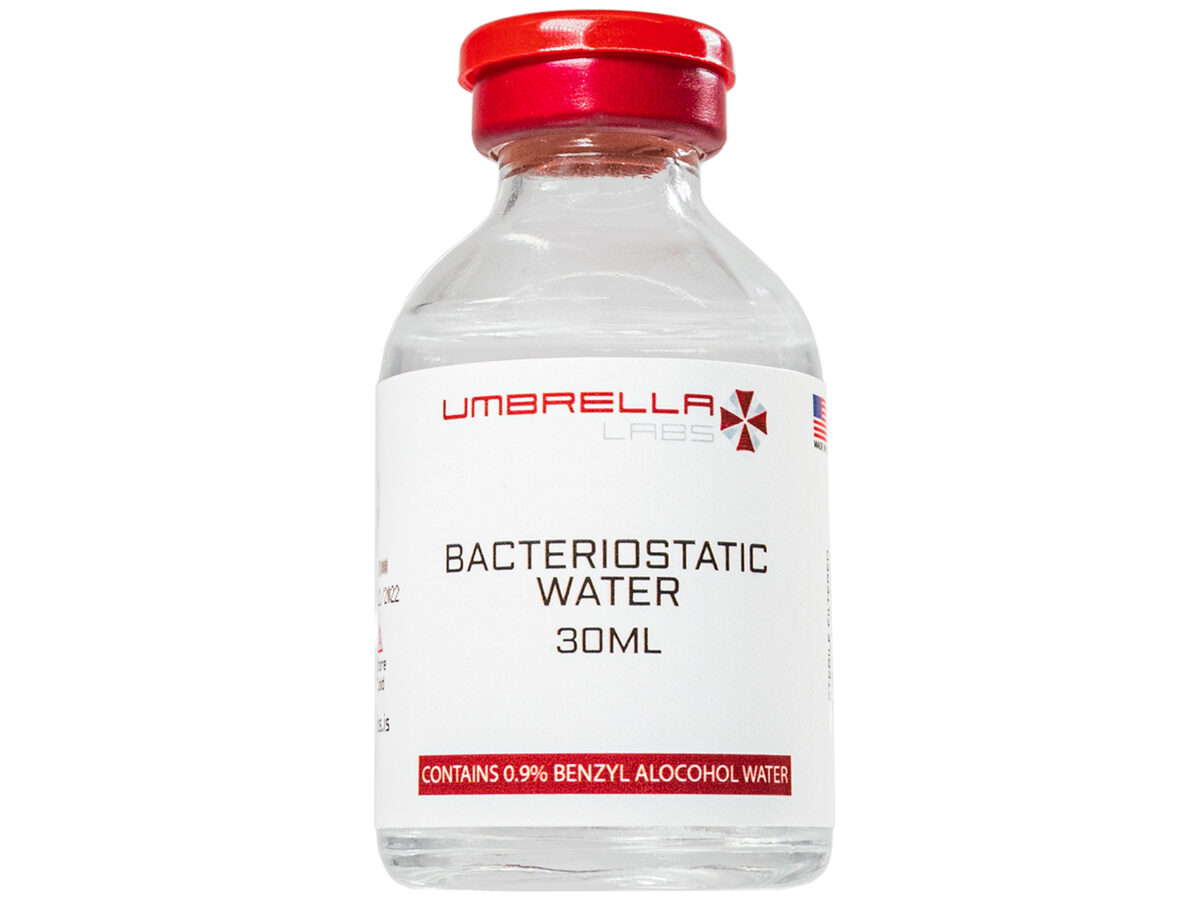
What Is Bacteriostatic Water for Peptide Reconstitution?
Bacteriostatic water is sterile water intended for injection that includes a bacteriostatic agent—most commonly benzyl alcohol—at a low concentration. The key purpose in peptide reconstitution is microbial control: it helps inhibit bacterial growth if the vial is repeatedly accessed during typical laboratory use.
In practice, I’ve seen reconstitution workflows fail less because the math or mixing was wrong and more because the bottle was opened, sampled, and used over time. Every puncture is a potential contamination event if technique isn’t perfect. Bacteriostatic water is one of the risk-reduction tools that makes real-world use more forgiving.
Why “bacteriostatic” matters (not “sterile forever”)
Important nuance: bacteriostatic does not mean “no contamination can ever happen.” It means growth is inhibited under conditions that would otherwise allow microbes to multiply. That distinction is why sterile technique still matters, and why storage duration and handling still affect outcomes.
Do You Have to Use Bac Water for Peptides?
The most accurate answer I can give from field experience is: it depends on your workflow. Many people ask, “do you have to use bac water for peptides,” because the reassurance is appealing—but requirements can vary based on product guidance, peptide stability considerations, and how long you plan to keep the reconstituted solution in use.
When using bac water is the practical default
- You’ll access the vial multiple times: repeated needle entries make microbial control more valuable.
- You need flexibility across days: if you’re using fractions of a reconstituted vial over an extended period, bacteriostatic properties can reduce risk.
- Your lab environment isn’t perfectly controlled: even with good technique, real-world constraints happen—time pressure, crowded benches, interruptions.
- You want fewer variables: bac water provides a consistent microbial inhibition strategy that pairs well with careful mixing.
When bac water may not be the only option
In some workflows, people use alternatives (for example, sterile water without bacteriostatic agent) if the plan is to use immediately, minimize vial punctures, and follow product-specific guidance. In my own setups, the question wasn’t theoretical—I saw a contamination risk rise when we extended vial access time without bacteriostatic protection. If your plan is strictly “mix and use right away,” the microbial-growth concern is smaller than in multi-day use scenarios.
Bottom line: You may not always “have to” use bac water for peptides, but it is often the safer, more forgiving choice when you’ll store and sample a reconstituted vial.
How Bacteriostatic Water Works During Mixing and Storage
Reconstitution typically involves dissolving a peptide powder into a liquid solvent so you can measure precise doses. The solvent choice influences how reliably the solution stays safe for use over time. Bacteriostatic water helps address the microbial side of the equation.
What changes when you choose bac water vs alternatives
| Factor | Bacteriostatic water (bac water) | Sterile water without bacteriostatic agent (typical alternative) |
|---|---|---|
| Microbial growth control | Inhibits bacterial growth, helping reduce risk during multi-day vial access | No built-in inhibition; contamination risk increases more quickly if punctured repeatedly |
| Workflow flexibility | More tolerant of real-world handling and storage between uses | Better aligned with “mix and use immediately” strategies |
| Handling still matters | Yes—sterile technique and correct storage temperature remain critical | Yes—often more critical because there’s no growth inhibition |
| Product-specific compatibility | Commonly used, but always confirm with peptide and provider instructions | May be compatible, but must match product guidance and intended use timing |
Best-Practice Steps for Peptide Reconstitution (Regardless of Solvent)
Whether you decide to use bac water or another sterile solvent, the procedures that protect quality are the same. In my day-to-day practice, the biggest improvements came from tightening consistency—not from “secret” techniques.
1) Confirm instructions for your specific peptide
Peptides differ in solubility, handling requirements, and storage guidance. I treat the product’s reconstitution directions as the primary “source of truth” because they reflect stability and compatibility trade-offs that may not be obvious.
2) Use disciplined sterile technique
- Prepare a clean workspace and reduce unnecessary movement.
- Use appropriate sterile supplies and avoid touching critical surfaces.
- Minimize vial punctures by planning your measurements.
3) Label and track your reconstituted vial
One practical lesson I learned: most mistakes come from mixing first and thinking later. Labeling with date/time, solvent used, and concentration prevents “silent” dosing errors and helps you follow the intended storage window.
4) Consider minimizing time at “used” state
Even with bac water, leaving a vial repeatedly exposed during sampling increases contamination risk. When possible, reduce how often the vial is opened and keep storage conditions consistent.
Common Concerns People Have About Bac Water
“Will bac water affect peptide effectiveness?”
In standard peptide workflows, bacteriostatic water is commonly used specifically because it’s compatible with reconstitution practices. That said, compatibility and dosing depend on your peptide’s formulation guidance and intended use. I recommend treating the product instructions as the final authority on solvent choice for your exact case.
“Is bacteriostatic water the same as normal saline?”
No. Bacteriostatic water is not the same as saline. If someone swaps solvents without guidance, they may change the environment in ways that affect dissolution, stability, or subsequent measurements. My approach is always to align the solvent type with the instructions for the peptide.
“What if I only plan to use it once?”
If you genuinely mix and use immediately and don’t re-enter the vial multiple times, the microbial-growth advantage of bac water becomes less critical. Still, you should follow the peptide’s guidance and your own sterile-handling constraints.
FAQ
Do you have to use bac water for peptides?
Not universally. Many people use bac water because it helps inhibit microbial growth, especially when you’ll store a reconstituted vial and access it multiple times. Whether you must use it depends on your peptide’s instructions and your workflow timing and handling.
What’s the main benefit of bacteriostatic water for peptide reconstitution?
The main benefit is microbial growth inhibition during reconstitution and storage, helping reduce risk when the vial is punctured more than once.
Can I use another sterile water instead of bac water?
Sometimes, but compatibility and risk profile differ. If you use an alternative, your plan should be structured around minimizing vial punctures and using the solution within the timeframe supported by the peptide’s instructions and safe handling practices.
Conclusion: Make the Choice Based on Your Workflow
Bacteriostatic water is designed to help limit microbial growth when you reconstitute peptides, and it’s commonly used because it makes real-world, multi-day vial usage more forgiving. When people ask, do you have to use bac water for peptides, the most practical answer is: you don’t always “have to,” but it’s often the safer option when you’ll store and repeatedly access a reconstituted vial—provided you follow your specific peptide’s instructions.
Next step: Write down your reconstitution plan (how many days you’ll keep the vial, how many times you’ll access it, and the solvent instructions for your specific peptide) and choose the solvent that best matches both compatibility and your handling timeline.
Discussion