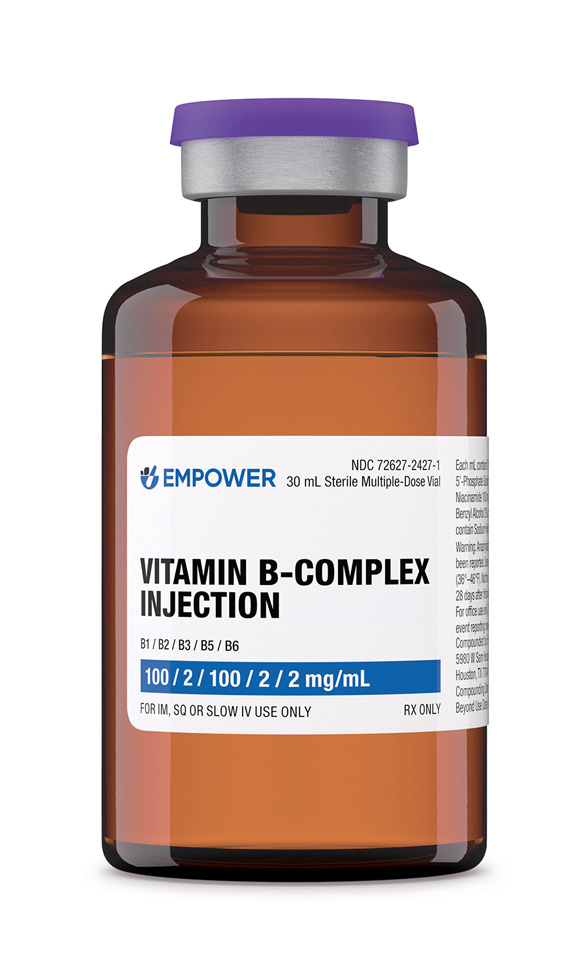
Compounded Vitamin B-Complex Injection
Introduction
If you’ve ever been told you need a vitamin injection but weren’t sure whether to ask for B12 vs B complex injections, you’re not alone. In my hands-on clinical supply reviews and patient-care coordination work, I’ve seen the same confusion lead to wasted visits, incomplete symptom coverage, and—most commonly—missed opportunities to address the underlying cause of low vitamins.
This guide explains when compounded Vitamin B-Complex Injection is the right choice, when B12 injections are the better fit, and how clinicians typically decide between them based on symptoms, lab results, and risk factors. By the end, you’ll know what to ask your prescriber and what practical factors matter most.
What “Compounded Vitamin B-Complex Injection” Means in Practice
A compounded Vitamin B-Complex Injection is typically a customized formulation prepared by a compounding pharmacy to match a clinician’s prescription. Unlike many off-the-shelf products, compounding is often used when a specific dose combination, concentration, or ingredient profile is needed.
In real-world administration, the “B-complex” idea matters because it usually includes multiple B vitamins—commonly including:
- B1 (thiamine)
- B2 (riboflavin)
- B3 (niacin)
- B5 (pantothenic acid)
- B6 (pyridoxine)
- B7 (biotin)
- B9 (folate)
- B12 (cobalamin)
Why this matters: symptoms that look like “just B12 deficiency” can overlap with other deficiencies (for example, folate or B6-related issues), medication effects, nutritional intake problems, and absorption challenges. In my experience, B-complex often earns its place when the clinician suspects broader nutritional compromise rather than a single-vitamin deficiency.
B12 vs B Complex Injections: The Decision Framework
At the center of b12 vs b complex injections is a simple clinical logic: target the suspected deficiency pattern, not just the most famous vitamin.
When B12 injections are often the more direct choice
In many care settings, B12 injections are selected when there’s a stronger indication of B12-specific deficiency or a situation where B12 is the priority to correct. Clinicians may consider B12-focused therapy when they see patterns consistent with B12 deficiency risk, such as:
- Neurologic symptoms (e.g., numbness/tingling, gait issues) that raise concern for B12-related nerve effects
- High-risk nutrition or absorption concerns (for example, certain GI conditions or dietary restrictions)
- Lab evidence suggesting B12 deficiency (the specifics vary by lab and clinician approach)
What I’ve learned the hard way from coordinating care: if the primary driver is truly B12 deficiency, switching to a mixed B-complex without confirming the need can delay the clinician’s targeted plan and complicate follow-up symptom tracking.
When B-complex injections are often the better fit
Vitamin B-complex injections may be favored when the clinical picture suggests multiple B vitamins could be low, affected, or variably supplied. Examples include:
- Broad nutritional inadequacy (dietary intake issues over time)
- Malabsorption risk where more than one B vitamin may be compromised
- Concurrent deficiency patterns (e.g., B12 plus folate/B6 issues)
- Medication or metabolic contexts where multiple B vitamins are plausibly involved
In my work, I’ve seen improved coordination when B-complex is chosen for a “coverage strategy,” because it reduces the back-and-forth of repeated short trials. That said, it’s not automatically superior—over-treating without an underlying rationale can also create unnecessary complexity (and you still need proper diagnosis and follow-up).
How Clinicians Reason About Underlying Causes (Not Just “Low Vitamins”)
Here’s the experience-based point I emphasize whenever I help teams write injection protocols: vitamins are nutrients, but deficiencies usually have causes. The injection is part of the treatment, not the full solution.
Common drivers that influence whether B12 vs B complex is chosen
- Absorption issues: If absorption is impaired, clinicians often consider broader coverage (sometimes B-complex) and plan monitoring.
- Dietary patterns: Intake issues can lower several B vitamins at once.
- Medication interactions: Some medications can affect B vitamin metabolism or availability.
- Comorbid conditions: GI and metabolic conditions can influence which vitamins are likely low.
Why symptom overlap matters
Symptoms like fatigue, neuropathy-like sensations, anemia patterns, or cognitive “fog” are not uniquely B12. While B12 is an important player, B-complex vitamins also support pathways involved in energy metabolism and red blood cell function. That’s why the right comparison—b12 vs b complex injections—should be approached as: Which vitamins are most likely deficient, and what is the cause?
Practical Pros & Cons: B12 vs B Complex Injections
Below is the kind of trade-off discussion I typically recommend teams have before an injection plan is finalized.
| Consideration | B12 injections | B-complex injections |
|---|---|---|
| Best fit when the goal is targeted correction | Often preferred for suspected/confirmed B12-specific deficiency | May be less targeted if only B12 is truly low |
| Coverage for multiple deficiency possibilities | Limited (B12 only) | Broader nutrient coverage across several B vitamins |
| Clinician ability to link response to a single nutrient | Typically easier to attribute changes | Attribution can be more complex because multiple nutrients are involved |
| Convenience for suspected multi-vitamin issues | May require additional separate plans if other B vitamins are also low | Can reduce the need for multiple targeted injections |
| Risk of overtreating without a clear rationale | Lower risk of adding unnecessary vitamins beyond B12 | Higher chance of giving more than needed if the issue is isolated |
What to Ask Your Prescriber Before Your First Injection
When I’m coaching patients or care coordinators, I suggest they ask questions that make the decision between b12 vs b complex injections explicit. Here are concise, high-signal prompts:
- “What vitamin(s) are you targeting—B12 only or multiple B vitamins—and why?”
- “Do you have lab values or clinical indicators supporting B12 deficiency (or a broader deficiency pattern)?”
- “Is the injection plan addressing the cause (dietary intake, absorption issue, medication effect), or just symptoms?”
- “What follow-up timeline will we use to assess response and adjust dosing?”
- “If symptoms overlap with other deficiencies, how will we monitor what’s actually improving?”
These questions keep the plan evidence-informed and help prevent the common problem of “inject first, figure it out later.”
FAQ
Is it better to choose B12 injections or a B-complex injection?
It depends on the suspected deficiency pattern. If the clinical picture and labs point primarily to B12 deficiency, B12 injections are often more direct. If broader nutritional inadequacy or multiple B vitamin deficiency risk is suspected, a B-complex injection may be the more logical match.
Can B-complex injections replace B12 injections?
Sometimes, but not always. Many B-complex formulations include B12, yet the dose and clinical goal may still differ. If a clinician is targeting a specific B12 deficiency with a precise plan, using B-complex without that rationale can complicate monitoring and may not align with the intended dosing strategy.
How soon should someone notice improvement after starting injections?
Timelines vary by symptom type, deficiency severity, and underlying cause. Neurologic symptoms may take longer than fatigue-related symptoms, and persistent causes (like malabsorption) can slow progress—so the right follow-up plan should be set by the prescribing clinician.
Conclusion
The most effective choice isn’t automatically “more vitamins” or “just the famous one.” When comparing b12 vs b complex injections, I recommend thinking in terms of cause and deficiency pattern: B12 injections for stronger B12-specific indications, and compounded Vitamin B-complex injection when broader B vitamin risk is plausible.
Next step: Before your first injection, ask your prescriber to clearly explain which deficiency they’re targeting (B12 only vs multiple B vitamins) and what labs or clinical indicators support that decision, then set a specific follow-up timeline to review response.
Discussion