DocVilla
If you’ve ever tried to code a clinical service quickly—only to realize the documentation doesn’t match the ICD-10-CM expectation—then you already know the real problem: the billing code must align with the medical record, not just with what you “think” the diagnosis is. In this guide, I’ll walk you through how to correctly select the b12 injection icd 10 code using real-world documentation patterns I’ve seen across outpatient clinics and infusion/medspa workflows, with practical tips to reduce coding back-and-forth.
We’ll focus on the diagnosis coding side (ICD-10-CM) that supports billing for B12 injections, and I’ll show you how to connect the ICD-10-CM code to the medical necessity documented in the chart.
What “B12 injection” coding actually depends on
When people search for a “b12 injection icd 10 code,” they often assume there’s a single ICD-10-CM code that represents the injection itself. In practice, ICD-10-CM is used to code the diagnosis (the reason the injection is given), while the injection procedure is handled separately in CPT/HCPCS and payer-specific billing rules.
In my hands-on work, the fastest correct coding path has always been this:
- Identify the documented reason the patient is receiving vitamin B12 (e.g., deficiency, anemia due to deficiency, neurologic symptoms attributed to deficiency, malabsorption, history of bariatric surgery with resultant deficiency).
- Pick the most specific ICD-10-CM diagnosis code that matches the assessment in the chart.
- Ensure documentation supports the diagnosis (symptoms, lab findings, clinician assessment, or risk factor clearly tied to the condition).
This is the difference between “we gave B12” and “we gave B12 for X condition.” Payers care about the latter.
Common ICD-10-CM diagnosis patterns for B12 injections
Below are the diagnosis categories I see most often when clinicians justify a B12 injection. Your exact code selection depends on what the chart actually says.
1) Vitamin B12 deficiency (with or without anemia)
If the clinician documents vitamin B12 deficiency, the ICD-10-CM selection should typically reflect that deficiency. In many outpatient settings, patients receive B12 injections because they have lab-confirmed low B12, symptomatic deficiency, or clinician-confirmed deficiency after ruling out other causes.
Documentation that helps:
- Lab result showing low B12 (and date of test)
- Clinician assessment: “B12 deficiency,” “vitamin B12 deficiency,” or “B12 deficiency anemia” (if anemia is documented)
- Symptoms consistent with deficiency if they’re being used for medical necessity
What I’ve learned: When chart notes say “B12 shot for low energy,” without tying it to deficiency, it becomes much harder to defend the diagnosis coding. In one clinic workflow, tightening the note template to require a deficiency statement (and at least one objective supporting element) reduced denials related to medical necessity.
2) Anemia due to vitamin B12 deficiency
Some patients are coded under deficiency plus anemia when the clinician documents anemia and links it to B12 deficiency. If anemia is present in the assessment, you generally want the ICD-10-CM code that reflects anemia due to B12 deficiency, rather than deficiency alone.
Documentation that helps:
- Hemoglobin/hematocrit values or a diagnosis of anemia in the assessment
- Clinician statement linking the anemia to B12 deficiency
- Follow-up plan describing why B12 injections are needed
3) Neurologic or symptomatic presentations attributed to B12 deficiency
In some notes, clinicians document neurologic complaints (e.g., neuropathy symptoms) and attribute them to B12 deficiency. If the chart explicitly links the neurologic condition to B12 deficiency, the ICD-10-CM coding should reflect that relationship as documented.
Documentation that helps:
- Neurologic symptom description
- Assessment: “neurologic manifestations due to B12 deficiency” (or equivalent clinician linkage)
- Evidence or rationale (lab, response to treatment, or clinician’s diagnostic reasoning)
Practical tip: In my experience, charts that clearly separate “history of B12 deficiency” from “current B12 deficiency causing symptoms today” prevent coder confusion and reduce claim friction.
4) Malabsorption or related conditions causing B12 deficiency
When B12 deficiency is secondary to malabsorption or a condition such as post-surgical nutritional issues, the diagnosis coding often needs to reflect the underlying cause as documented, not just the lab value.
For example, if the note states B12 deficiency due to malabsorption, bariatric-related malabsorption, or other absorption issues, the clinician assessment should drive the ICD-10-CM code selection.
How to choose the correct ICD-10-CM “b12 injection icd 10 code”
Here’s the step-by-step process I recommend to reduce errors in real clinic or medspa billing workflows.
Step 1: Match ICD-10-CM to the clinician’s assessment
ICD-10-CM should come from what the clinician documented as the diagnosis. If the assessment is “vitamin B12 deficiency,” your ICD-10-CM selection should reflect that deficiency. If the assessment states “anemia due to B12 deficiency,” choose the anemia-linked code.
Step 2: Use symptom and lab details when the note is specific
When documentation includes lab confirmation, symptom attribution, or severity descriptors, you can often select more specific ICD-10-CM codes that align with the medical picture.
Why this matters: more specific coding is not about “finding a bigger number”—it’s about accurate capture of the diagnosis the injection is treating.
Step 3: Don’t overreach—if the note doesn’t say it, code can’t assume it
This is where I’ve seen many teams get stuck. If the chart doesn’t explicitly document a diagnosis (or explicitly links a condition), you should not code beyond what’s supported. Creating a diagnosis code mismatch is one of the quickest ways to trigger claim denials or audit risk.
Step 4: Separate diagnosis coding (ICD-10-CM) from injection procedure coding
Even when the patient is receiving the same medication (B12) the diagnosis justification can differ—deficiency, deficiency with anemia, malabsorption-related deficiency, neurologic manifestations attributed to deficiency, and so on.
In short: The phrase “B12 injection” guides the reason you’re coding—but the ICD-10-CM code comes from the diagnosis statement.
DocVilla: a practical way to standardize how your team codes
Standardization is what turns a “coding guessing game” into a repeatable workflow. For teams using documentation templates and coding references, tools like DocVilla can help create consistency by aligning how clinicians document the diagnosis with how coders select ICD-10-CM codes.
In my experience, one of the most effective improvements is training staff to use a consistent note structure that makes the diagnosis unambiguous—so when coders select the b12 injection icd 10 code, it’s based on a clear assessment rather than interpretation.
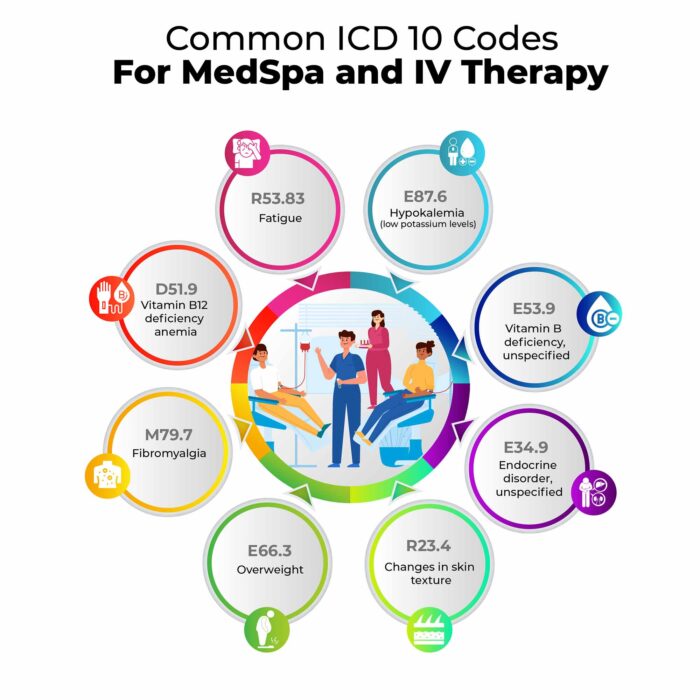
Quality checklist for B12 injection documentation and ICD-10-CM coding
Use this checklist to audit your own notes before claims go out.
- Assessment present: Does the clinician explicitly document a diagnosis related to B12 (deficiency, anemia due to deficiency, malabsorption-related deficiency, or deficiency with neurologic manifestations)?
- Support present: Are there supporting elements like lab values, symptom documentation, or clearly stated clinical reasoning?
- Specificity matched: Does the ICD-10-CM code reflect the specificity in the assessment (deficiency vs. anemia due to deficiency vs. manifestation due to deficiency)?
- No diagnosis drift: Are the same diagnosis terms used consistently between the assessment, problem list, and coding notes?
- ICD-10-CM separated from procedure: Is everyone clear that diagnosis coding is ICD-10-CM and the injection itself is procedure coding elsewhere?
FAQ
What is the ICD-10-CM code for a B12 injection?
There usually isn’t a single ICD-10-CM code that represents “B12 injection” itself. ICD-10-CM codes represent the diagnosis (the reason for the injection). The correct code depends on what the clinician documented—commonly vitamin B12 deficiency, anemia due to B12 deficiency, or malabsorption-related B12 deficiency (as supported in the chart).
Can I use an ICD-10-CM code for “low energy” and then bill for B12 injections?
Often you need a diagnosis that matches the medical necessity in the record. If “low energy” is the only documented reason and there’s no clinician assessment of B12 deficiency or related condition, the diagnosis coding may not be sufficiently supported. In general, code what’s documented: if deficiency is assessed, code the deficiency diagnosis that supports the injection.
How do I code when the patient has a history of B12 deficiency but isn’t currently documented as deficient?
Code based on the current assessment, not solely on history. If the clinician documents current deficiency (or current symptoms attributed to deficiency), code accordingly. If the record only states historical deficiency without current deficiency or related manifestations, select the diagnosis that matches the documented status.
Conclusion
To get the b12 injection icd 10 code right, don’t start from the injection. Start from the clinician’s documented diagnosis: vitamin B12 deficiency, anemia due to B12 deficiency, deficiency with attributed manifestations, or malabsorption-related deficiency. In my day-to-day work, the biggest coding wins come from tighter documentation that makes the diagnosis unambiguous—so the ICD-10-CM code matches the chart, and billing has a clear medical-necessity trail.
Next step: Take your last 10 B12 injection notes, highlight the clinician’s assessment line, and compare it to the ICD-10-CM diagnosis code selected. If the chart says “deficiency with anemia,” but the code only reflects deficiency, update the workflow so specificity is captured from the start.
Discussion