Bacteriostatic Water Injection
Introduction: Is Bac Water the Same as Sterile Water?
If you’ve ever stood at the pharmacy counter (or compared labels online) and wondered is bac water the same as sterile water, you’re not alone. I’ve worked with clinicians and compounding teams who needed to get this distinction right—because a small labeling difference can change how the solution behaves over time in a vial.
In this guide, I’ll explain what bacteriostatic water (often called “bacteriostatic water injection” or “BAC water”) is, how it differs from sterile water, and when each is appropriate for reconstitution or dilutions. I’ll also cover the practical checks you can do to avoid mix-ups.
What Bac Water Is (and Why It Exists)
Bacteriostatic water is a sterile water-based injection intended to inhibit bacterial growth. The key word is bacteriostatic: it does not “sterilize” anything after the fact; instead, it helps slow or prevent microbial proliferation when the vial is being accessed over a period of time.
In day-to-day practice, I’ve seen teams select bacteriostatic water specifically because they want a workable workflow for multiple needle entries into the same vial (for example, during reconstitution steps), assuming aseptic technique is followed and the product is used within labeled constraints.
How it works in plain terms
Bacteriostatic formulations typically include an antimicrobial agent that helps reduce the risk of bacterial growth in the vial. That “keep the solution stable for access” concept is the real reason bac water exists as a product category.
Important: bacteriostatic water is still not the same as “guaranteed sterile after opening forever.” If technique is poor or the product is compromised, the bacteriostatic concept can’t fully override contamination introduced during handling.
What Sterile Water Is
Sterile water is water that has been sterilized to remove viable microorganisms at the time of manufacturing. Many products are designed for injection or compounding, but the crucial difference is that sterile water is not intended to provide an antimicrobial “extra layer” inside the vial.
In my hands-on work, the practical takeaway has been simple: sterile water is appropriate when the workflow expects either single-use or tightly controlled handling intervals, and when the product’s labeled instructions align with your method (such as immediate use after withdrawal).
Direct Answer: Is Bac Water the Same as Sterile Water?
No—bac water and sterile water are not the same. The difference isn’t just wording on a label; it’s the functional intent. Bac water is formulated to be bacteriostatic (helping inhibit bacterial growth), while sterile water is formulated to be sterile without necessarily providing bacteriostatic protection for repeated access.
Key differences at a glance
| Feature | Bacteriostatic Water (“BAC water”) | Sterile Water |
|---|---|---|
| Primary purpose | Inhibit bacterial growth during vial access/use | Be sterile at time of manufacture; no bacteriostatic agent by default |
| Often used for reconstitution when compatible with the product/labeled instructions | Often used for reconstitution when immediate use is expected or per protocol | |
| Risk profile with repeated punctures | Generally designed to reduce microbial growth risk, assuming aseptic technique | Can be less forgiving if the vial is entered multiple times over longer periods |
| Not interchangeable | May not match the intended formulation constraints of the protocol | May not provide bacteriostatic protection expected by the protocol |
When People Mix Them Up: The Labeling and Workflow Trap
In real-world settings, mix-ups usually happen for one of three reasons:
- Same “water” base: Both are water for injection, so it feels interchangeable—until you consider the bacteriostatic component.
- Same-looking packaging: Many vials look similar, and quick decisions at the point of use can lead to errors.
- Workflow assumptions: Teams sometimes assume “sterile” automatically means “safe for repeated access.” Sterility and bacteriostasis aren’t the same concept.
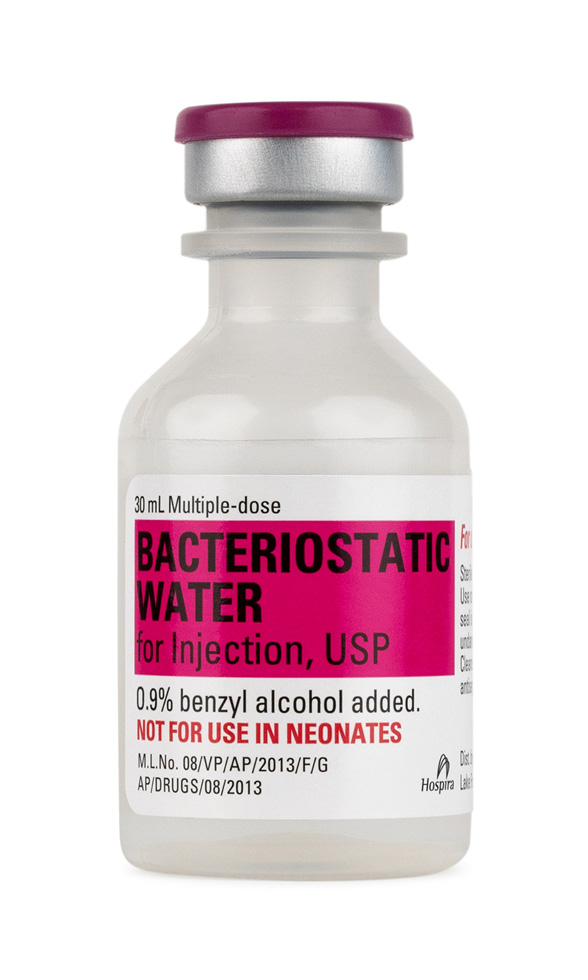
Product Image: Bacteriostatic Water Injection
Here’s an example of how bacteriostatic water injection is commonly packaged:
Practical Guidance: How to Choose the Right One for Your Use Case
If you’re deciding between bac water and sterile water, the safest approach is to let the intended use and labeling instructions drive the decision—not convenience.
Use bac water when
- Your protocol expects bacteriostatic protection during vial access (per the reconstituted product’s instructions).
- You’re working in a workflow where the vial may be accessed more than once and the labeled guidance supports that model.
- You’re using it for reconstitution where the instructions permit bacteriostatic water as the diluent.
Use sterile water when
- Your protocol expects immediate use after withdrawal or single-use handling.
- The reconstituted medication’s instructions specify sterile water or do not allow bacteriostatic diluents.
- You’re following a protocol that emphasizes minimizing any variables beyond what the final medication requires.
Common limitations (where people get burned)
- Protocol mismatch: Even if both are “water for injection,” some reconstituted products have strict diluent guidance.
- Technique matters: A bacteriostatic agent is not a substitute for aseptic technique.
- Expiration and storage: The vial and the reconstituted solution must be handled according to labeled storage and time constraints.
Expert Checklist: Avoiding Errors in Real Life
Here’s a quick checklist I’ve used with teams to reduce the “same-looking vial” problem:
- Check the exact label wording (bacteriostatic vs sterile; and the product name and concentration/ingredients if listed).
- Confirm the diluent requirement for the medication being reconstituted (follow the medication’s instructions).
- Use aseptic technique every time you access the vial.
- Stay within labeled constraints for storage, time, and handling after puncture/reconstitution.
- Document your choice if you’re working in a clinical or compounded environment (consistency reduces repeat mistakes).
FAQ
Is bac water safe to use as a substitute for sterile water?
It depends on the medication and the protocol. Bac water is formulated to be bacteriostatic, while sterile water is sterile without necessarily being bacteriostatic. Always follow the reconstituted product’s labeled instructions for the correct diluent.
Can I use sterile water instead of bac water for reconstitution?
Sometimes, but not always. If the protocol or medication instructions specifically call for bacteriostatic diluent (or assume bacteriostatic protection), substituting sterile water may not meet the intended formulation or handling model.
What’s the biggest difference in one sentence?
Bacteriostatic water (bac water) is designed to inhibit bacterial growth during vial access, while sterile water is designed to be sterile without providing bacteriostatic inhibition.
Conclusion: Make the Right Choice the First Time
Is bac water the same as sterile water? The direct answer is no. Bac water is bacteriostatic and intended to inhibit bacterial growth during use/access, while sterile water is sterile without that bacteriostatic function. In practice, the safest decision comes from matching the diluent to the reconstituted medication’s instructions and following aseptic technique and labeled handling constraints.
Next step: Look up the exact reconstitution/diluent instructions for your specific medication, then purchase and label the correct water type (bacteriostatic vs sterile) before you start—so you don’t have to improvise mid-process.
Discussion