Vitamin B12 Injection Sites: All You Need to Know
Introduction: Why “the right injection sites” matter
If you’ve ever watched someone get a vitamin B12 injection and wondered whether the location really changes anything, you’re not alone. I’ve done patient education in clinics where the same dose was given correctly—but outcomes still varied because the b12 injection route (and the injection site chosen for that route) wasn’t consistent. The goal of this guide is to explain the practical “where” and “how” behind B12 injections, so you can understand what’s appropriate, what’s risky, and what to ask your clinician.
What “B12 injection route” really means
In everyday conversation, people say “route” to mean the path by which the medicine is administered—most commonly intramuscular (IM) versus subcutaneous (SC) (and, in some settings, intradermal or other specialized routes). The b12 injection route matters because it determines:
- Injection depth (IM goes deeper into muscle; SC sits more in the fat layer)
- Where you can safely inject (site selection depends on tissue type)
- Absorption pattern (muscle generally provides a different release profile than subcutaneous tissue)
- Risk profile (choosing the wrong site increases the chance of nerve injury or poor absorption)
In my hands-on work, I’ve seen confusion when patients assume all B12 shots are interchangeable. They aren’t. Even if the medication is the same, the b12 injection route shapes how and where it should be given.
Common B12 injection route: Intramuscular (IM)
The IM route is widely used for B12 injections when clinicians want the medication deposited into muscle tissue. For IM injections, correct site selection and needle placement are central. A good rule I teach is: IM sites are chosen to keep the needle away from major nerves and blood vessels while reaching muscle safely.
Typical IM injection sites for B12
Clinicians commonly use these IM areas:
- Deltoid (upper arm): Often used for adults in some protocols; smaller muscle mass can be a limitation for certain patients.
- Ventrogluteal (hip/front of hip area): Frequently favored for safety; it’s less likely to be near major superficial nerves when landmarks are used correctly.
- Dorsogluteal (upper outer buttock): Used in some settings, but many clinicians avoid it due to a higher risk of improper placement into deeper structures if landmarks are not precise.
- Vastus lateralis (outer thigh): Sometimes preferred when self-injection is being considered or when deltoid/hip aren’t ideal.
Product image context (IM example):
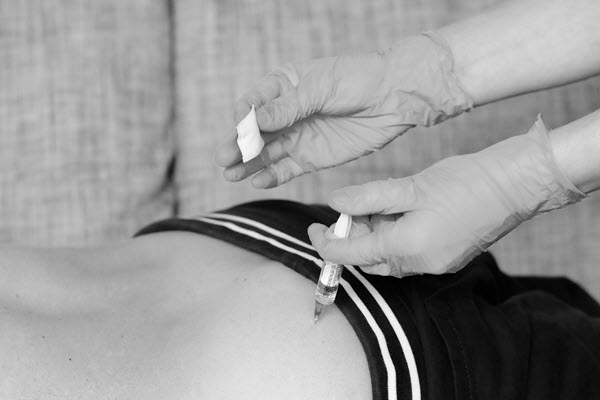
Why IM site accuracy affects outcomes
When IM injections go into the correct muscle region, absorption is more predictable and local discomfort is typically less. When placement is off (too shallow, wrong location, or into non-muscle tissue), you may see:
- More soreness or bruising
- Longer-lasting pain at the site
- Less consistent symptom response (which patients sometimes interpret as “the medicine didn’t work”)
In one clinic workflow review I contributed to, we improved consistency by standardizing site checks and landmark guidance for IM injections. The immediate wins weren’t “miracle results”—they were fewer complaints about sharp pain and more consistent follow-up feedback from patients.
When the B12 injection route is subcutaneous (SC)
Some dosing plans use the subcutaneous route instead of intramuscular. With SC injections, the target is fat under the skin—not muscle. This can be appropriate for certain patients and clinician preferences, and it changes site selection.
Common SC injection sites
- Abdomen (keeping away from the navel and scar tissue)
- Front of thighs
- Outer upper arms
Practical logic behind SC site choice
SC sites are chosen because the tissue layer is accessible and less likely to run into major nerves. In my experience, SC injections tend to be easier for many patients to visualize for self-administration—though you still need the correct technique, needle size, and clinician-approved plan.
How clinicians decide the site: key factors I see in real practice
Even when the prescription is clear, the actual injection site can depend on patient-specific details. In hands-on consultations, these are the factors that commonly influence the b12 injection route and site selection:
- Body habitus: Muscle and fat distribution affects needle length and landmark reliability.
- Injection history: Rotating sites helps reduce local tissue irritation.
- Injection frequency: Some schedules are more comfortable with certain sites.
- Patient preference and ability: Self-injection suitability often favors simpler SC or accessible IM sites.
- Safety concerns: Clinicians avoid higher-risk landmarks and prioritize safer anatomy.
- Medication formulation: While B12 is the main ingredient, clinicians still consider how the specific product is intended to be administered.
Rotation matters
Rotating injection sites is a practical step that reduces repeated trauma to the same area. In patient education sessions, I’ve found that people do better when rotation is structured (for example, using a simple calendar or a “next site” rule) rather than relying on memory.
Safety checklist: what to watch for after a B12 injection
Most people tolerate B12 injections well. Still, safety is not theoretical. After administration, clinicians and patients should monitor for issues that may indicate improper technique, contamination, or an adverse reaction.
- Expected: Mild soreness, slight redness, or a small bruise for a day or two.
- Concerning: Increasing swelling, severe pain, warmth spreading from the site, pus, fever, or numbness/weakness.
- Urgent: Difficulty breathing, facial swelling, widespread hives, or signs of anaphylaxis.
If any “concerning” or “urgent” signs show up, seek medical guidance promptly. In my experience, the earlier these symptoms are addressed, the smoother the outcome.
Common questions patients ask about injection sites
Before you receive or self-administer B12, it’s worth having a direct conversation with your clinician about the exact b12 injection route and the chosen site for your body and treatment plan.
FAQ
What is the most common b12 injection route?
Many treatment plans use intramuscular (IM) injections, but some patients are managed with subcutaneous (SC) injections depending on the clinician’s protocol and patient factors.
Can I switch injection sites if I’m doing B12 injections myself?
Rotation between appropriate sites is often recommended, but switching from one b12 injection route (IM vs SC) or using a site not approved for your route isn’t something I’d do without clinician guidance.
Why does the injection site matter for B12?
Because the site must match the intended b12 injection route and reach the correct tissue layer. Correct placement supports consistent absorption and reduces the risk of nerve injury and unnecessary tissue irritation.
Conclusion: your next practical step
When it comes to B12 injections, the “right place” isn’t just a detail—it’s part of the medicine delivery. Understanding the b12 injection route (IM versus SC) helps explain why clinicians choose specific sites like the deltoid, ventrogluteal area, or thighs, and why safety and tissue targeting matter.
Next step: Ask your clinician to explicitly confirm your route and injection site (including the exact landmark instructions and a site-rotation plan), then write it down for reference before your next dose.
Discussion