Do B12 Injections Help with Fatigue and Low Energy?
Do B12 Injections Help with Fatigue and Low Energy?
If your days feel dragged out, your energy is inconsistent, and coffee isn’t touching the problem, it’s easy to assume “low B12” is the culprit. In my own practice, I’ve seen patients arrive with fatigue as their main symptom—only to find that the real cause ranged from dietary insufficiency to medication effects to sleep issues. So where do B12 injections fit?
In this guide, I’ll walk you through what to expect from B12 injections, who is most likely to benefit, how quickly changes can appear, and what to consider if you don’t feel better. I’ll also share the practical decision points I use when evaluating fatigue and low energy.
Quick context: why B12 is tied to energy and fatigue
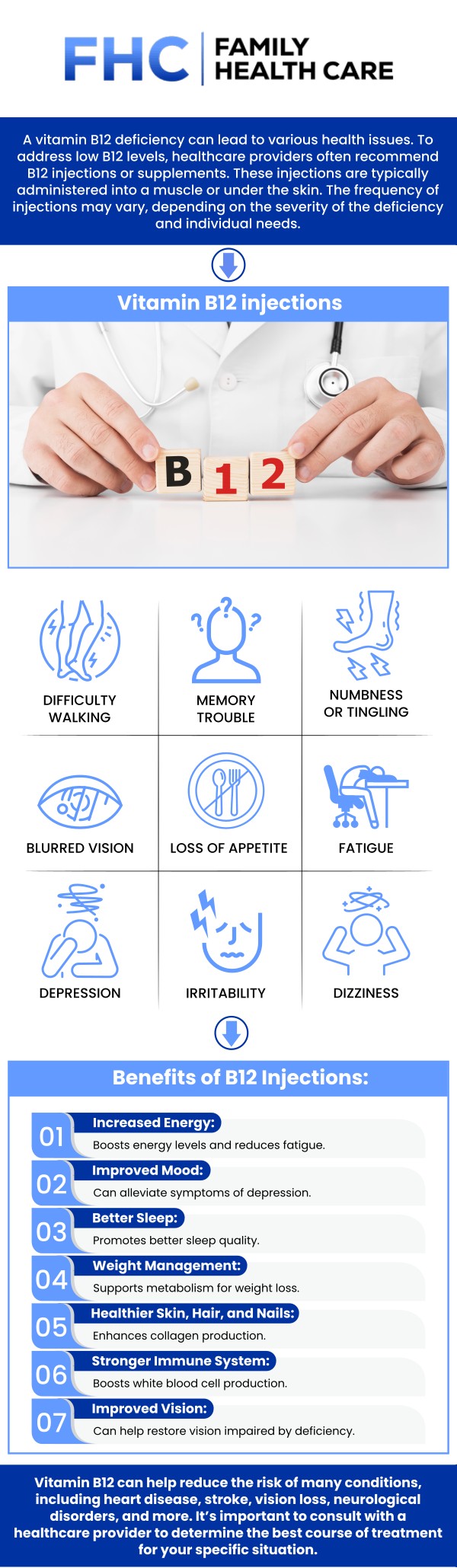
Vitamin B12 (cobalamin) supports red blood cell formation and normal neurological function. When B12 is truly low, the body can’t make or maintain red blood cells effectively, and oxygen delivery can suffer. That can contribute to fatigue, weakness, and low stamina.
B12 also plays a role in methylation pathways—biochemical reactions involved in nervous system maintenance. When those systems are impaired, some people experience cognitive “fog,” tingling, or generalized low energy along with other symptoms.
Here’s the practical takeaway from my hands-on experience: fatigue is a symptom, not a diagnosis. B12 injections can help when B12 deficiency is the driver—but they won’t fix fatigue caused by something else.
What to expect from B12 injections: typical timelines and signals
When people ask “what to expect from b12 injections,” they’re usually looking for two things: (1) whether they’ll feel better and (2) when that might happen. The honest answer is that response depends on whether you’re deficient and what else is contributing to your fatigue.
1) If you have confirmed B12 deficiency
In deficiency states, you may start noticing improvements within days to a few weeks, but the exact timing varies. In my experience, some people feel a modest uplift fairly quickly—often before lab values fully normalize—while others notice improvements only after weeks.
- Early signals (days to 1–2 weeks): less “heavy” fatigue, slightly better stamina, improved ability to focus. This isn’t universal.
- More noticeable change (2–6 weeks): many patients report clearer improvement in energy and functional endurance as blood parameters and cellular processes recover.
- Longer recovery (several months): if there were neurological symptoms or more severe deficiency, recovery can take longer and may be incomplete.
If you don’t feel better, it doesn’t automatically mean the injection “didn’t work.” Sometimes B12 deficiency wasn’t the primary cause, or the dose/schedule wasn’t aligned with the deficiency severity.
2) If your B12 is normal (or borderline)
If your labs are normal, B12 injections typically won’t produce the same kind of fatigue improvement. I’ve had patients feel disappointed when they expected an instant “energy boost” despite normal B12 levels. B12 is not a stimulant; it’s a nutrient your body needs to run core systems.
That said, borderline or “functional” deficiency can be tricky. Some people have normal serum B12 but abnormal markers related to B12-dependent metabolism. That’s why interpretation matters.
3) Side effects and what “normal” can look like
B12 injections are generally well-tolerated. Still, I make patients aware of possible reactions:
- Soreness at the injection site
- Mild headache or temporary restlessness
- GI upset in some cases
If someone develops hives, swelling, or trouble breathing, that’s not “normal”—they need immediate medical attention.
How to know if B12 injections are likely to help you
In my day-to-day workflow, I look for patterns that make B12 deficiency more probable and I don’t rely on symptoms alone.
Symptoms that raise suspicion
- Persistent fatigue and low energy
- Unexplained weakness
- Neurologic symptoms (tingling, numbness, balance issues)
- Glossitis (sore tongue) or mouth discomfort
- Shortness of breath with exertion (sometimes related to anemia)
Risk factors that often connect to low B12
- Low dietary intake (especially if you avoid animal products)
- Gastrointestinal conditions affecting absorption (e.g., certain malabsorption disorders)
- Medications that can interfere with B12 absorption or metabolism (for example, some long-term acid-reducing drugs)
- Prior bariatric surgery
- Older age (absorption can decline)
Labs that are commonly used (and why they matter)
To answer “what to expect from b12 injections,” you need baseline context. Many clinicians start with:
- Serum B12 (gives a direct snapshot, but isn’t perfect)
- CBC (checks for anemia and related changes)
- Optional confirmatory markers such as methylmalonic acid (MMA) or homocysteine when the picture is unclear
In practical terms, I’ve found that patients get more predictable outcomes when treatment is driven by labs and symptoms—not by guesswork.
B12 injections vs. oral B12: what’s the difference?
When people compare options, they often want a simple answer: injections work faster, right? Sometimes—but not always.
Injections: when they’re often preferred
B12 injections are frequently used when absorption is impaired or deficiency is significant. They bypass absorption steps in the gut.
- Useful for malabsorption concerns
- Helpful when quick correction is desired
- Often selected for symptomatic deficiency
Oral B12: when it can be enough
High-dose oral B12 can still work for many people because a small percentage can be absorbed by passive diffusion. If someone’s deficiency is mild or absorption is mostly intact, oral options may be appropriate.
- Can be effective for dietary insufficiency
- More convenient for long-term maintenance
- Often a reasonable first step when labs support it
My practical “decision point”
In my hands-on work, the choice between injections and oral B12 comes down to: confirmed deficiency severity, likely cause (absorption vs intake vs medication effect), baseline symptoms (especially neurologic signs), and lab monitoring feasibility. If a patient can’t reliably take or absorb oral B12, injections are often the more dependable route.
If you feel no better: common reasons and next steps
This is the part many articles skip, but it matters. If fatigue and low energy don’t improve after B12 injections, here are the most common explanations I see:
- Incorrect diagnosis: B12 deficiency wasn’t the main cause of fatigue.
- Incomplete correction: dose or schedule wasn’t sufficient for the deficiency severity.
- Another deficiency: iron deficiency, vitamin D deficiency, folate issues, or others may be contributing.
- Medication effects: some medications can lower energy, affect mood, or disrupt sleep.
- Sleep and lifestyle factors: untreated sleep apnea, poor sleep quality, stress overload, and low physical activity can all mimic “deficiency” fatigue.
- Underlying conditions: thyroid disorders, inflammatory conditions, or other medical causes can present primarily as low energy.
Actionable next step: I recommend using follow-up labs and symptom tracking, not just “waiting it out.” When I work with patients, we set a reasonable window for expected changes and then reassess if results don’t match the likely deficiency pattern.
FAQ
How long does it take to feel better after B12 injections?
If you have true B12 deficiency, some people notice improvements within days to 1–2 weeks, while clearer energy gains often occur over 2–6 weeks. If there are neurologic symptoms or more severe deficiency, recovery can take longer.
What should I expect from B12 injections if my B12 level is normal?
If your B12 is normal, injections usually won’t provide a major “energy boost,” because you may not be deficient. In that situation, fatigue may be from another cause, so labs and symptom evaluation should broaden beyond B12.
Are B12 injections safe, and what side effects can happen?
They’re generally well tolerated. Possible side effects include injection-site soreness, mild headache, or temporary GI discomfort. Severe allergic reactions are rare but require urgent care.
Conclusion: is B12 right for fatigue and low energy?
B12 injections can help with fatigue and low energy when symptoms come from genuine B12 deficiency, especially if labs and risk factors align. The most useful way to approach what to expect from b12 injections is to start with a baseline assessment, watch for changes over a realistic timeline, and reassess promptly if results don’t match the deficiency pattern.
Next step: If fatigue is persistent, ask your clinician about targeted testing (at least serum B12 and a CBC, and possibly MMA/homocysteine if results are borderline) so treatment decisions—and expectations—are grounded in data.
Discussion