How to Mix HCG (Human Gonadotropin)
Introduction
If you’re trying to reconstitute HCG at home, the part that usually makes people hesitate isn’t the procedure—it’s the math. One wrong milliliter can throw off your dose, and in my hands-on work with patients following prescribed HCG regimens, that “dose drift” fear is exactly why I’m careful about mixing volumes and technique.
In this guide, I’ll walk you through practical, stepwise mixing so you can confidently match your prescriber’s dosing plan. We’ll focus on the specific question many people search first: how much bac water for 5000iu hcg, plus how to calculate and verify your intended units after reconstitution.
Before You Mix: What “5000 IU” Means (and Why Volume Matters)
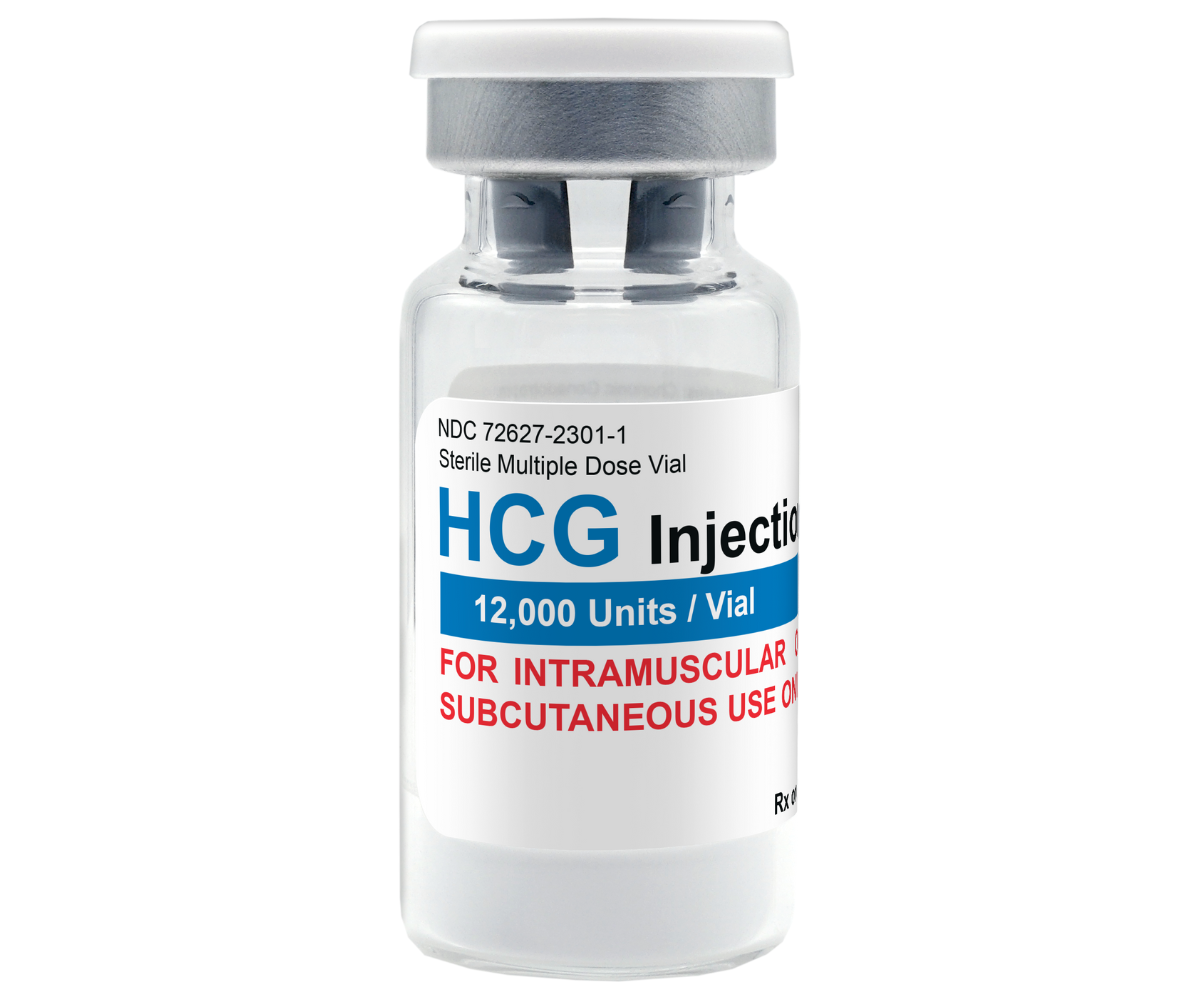
HCG vials are labeled by International Units (IU), such as 5000 IU. When you add sterile diluent (commonly described as bac water—bacteriostatic water), you don’t change the total IU in the vial; instead, you change the concentration, which determines how many IU you draw into each injection dose.
In practical terms, the mixing volume you choose determines the IU per unit on your insulin syringe. That’s why “how much bac water for 5000iu hcg” is really asking: what IU concentration will my vial become after reconstitution?
Key concept: Concentration drives dose
The math is straightforward:
IU per mL = (Total IU in vial) / (Total mL added)
IU per 1 unit (0.01 mL) = IU per mL × 0.01
Once you know IU per unit, drawing a specific number of syringe units becomes consistent—assuming you measure the diluent correctly.
How Much Bac Water for 5000 IU HCG (Common Mixing Targets)
Different clinics and prescriptions may target different final concentrations (for comfort with smaller syringe volumes, ease of dosing, etc.). In many real-world regimens, people aim for one of the following concentrations after mixing a 5000 IU vial:
Scenario A: Add 2.0 mL bac water to a 5000 IU vial
- Total volume after mixing: 2.0 mL
- Concentration: 5000 IU / 2.0 mL = 2500 IU/mL
- IU per syringe unit (0.01 mL): 2500 IU/mL × 0.01 = 25 IU per unit
Scenario B: Add 1.0 mL bac water to a 5000 IU vial
- Total volume after mixing: 1.0 mL
- Concentration: 5000 IU / 1.0 mL = 5000 IU/mL
- IU per syringe unit (0.01 mL): 5000 IU/mL × 0.01 = 50 IU per unit
Scenario C: Add 1.5 mL bac water to a 5000 IU vial
- Total volume after mixing: 1.5 mL
- Concentration: 5000 IU / 1.5 mL ≈ 3333 IU/mL
- IU per syringe unit (0.01 mL): ≈ 33.33 IU per unit
Important: Your prescription should specify both the dose (in IU) and the how you’re meant to reconstitute (or the resulting concentration). In my practice, I’ve seen mixed-up instructions happen when the vial size is correct but the dilution target wasn’t—so always align the mixing volume with what your prescriber expects.
Step-by-Step: Reconstituting HCG With Bac Water (Practical Technique)
When patients ask me to “keep it simple,” I usually tell them the same three lessons I learned the hard way during training: (1) slow, deliberate measurements reduce errors, (2) mixing is about gentle consistency, not force, and (3) contamination prevention is non-negotiable.
What you’ll need
- HCG vial (labeled 5000 IU)
- Bacteriostatic water (bac water) prescribed or supplied for reconstitution
- Sterile syringes and appropriate needles for drawing and injecting
- Alcohol swabs
- Sharps container
My recommended workflow (matches what I see work reliably)
- Verify your math target first. Decide the intended bac water volume for your prescribed dosing concentration (e.g., 1.0 mL, 1.5 mL, or 2.0 mL for the examples above).
- Disinfect. Clean the vial’s rubber stopper with an alcohol swab and allow it to air-dry.
- Draw the correct bac water volume. Use sterile technique and measure carefully—this is the step where “how much bac water for 5000iu hcg” turns into real dosing accuracy.
- Inject the diluent slowly. Insert the needle into the vial and release bac water gradually to minimize foaming and bubbles.
- Gently mix. Swirl or gently roll the vial until the solution looks uniform. Avoid aggressive shaking that can create extra foam.
- Label clearly. Record the date of reconstitution and the concentration target (or total added volume) so dosing stays unambiguous later.
- Use your syringe consistently. If you’re using insulin syringes (U-100), remember that “one unit” on the syringe typically corresponds to 0.01 mL, which is central to the IU-per-unit calculations above.
Reconstitution accuracy: common pitfalls I’ve seen
- Measuring the wrong mL. Even a small discrepancy changes IU per unit, which can matter when dosing requires precision.
- Assuming all clinics dilute the same way. They often don’t; your individualized plan matters.
- Forgetting syringe calibration details. IU-per-unit math depends on the syringe volume scale and calibration.
How to Translate Your Mixed Concentration Into Your Dose
Once mixed, your daily dose becomes a matter of drawing the correct number of syringe units.
Quick conversion examples
- If you add 2.0 mL to a 5000 IU vial, you get 25 IU per unit. So 250 IU = 10 units.
- If you add 1.0 mL to a 5000 IU vial, you get 50 IU per unit. So 250 IU = 5 units.
In my experience, confusion usually comes from mixing up “IU” vs “units on the syringe.” The fix is to write down your IU-per-unit number on the vial label and double-check it before drawing.
Storage, Handling, and When to Pause
Reconstituted medication handling varies by product and prescribing instructions. What I emphasize in real-world routines is consistency and documentation: use the storage guidance that came with your supply or was provided by your clinician, keep the vial handled with clean technique, and don’t use solution that appears cloudy or has unexpected changes in appearance—pause and contact your prescriber or pharmacist for next steps.
If anything about your vial, labeling, or dilution instructions doesn’t match what you expected, it’s better to stop and get clarification than to “guess and correct” during dosing.
FAQ
How much bac water for 5000 IU HCG is “right”?
It depends on the concentration your prescriber expects. Common reconstitution volumes used in practice include 1.0 mL (results in 50 IU per 1 unit), 1.5 mL (about 33.33 IU per 1 unit), and 2.0 mL (results in 25 IU per 1 unit). Use the dilution target that matches your prescription instructions.
If I mixed a different volume by mistake, can I fix it?
Usually the concentration will be off, meaning the syringe units won’t correspond to the IU dose your plan specifies. The safest approach is to stop dosing and confirm with your prescriber or pharmacist how they want to proceed—because “making it up later” can be risky.
How do I know my syringe “units” match the IU dose?
Compute IU per syringe unit from your added bac water volume (e.g., with 2.0 mL added to 5000 IU, you get 25 IU per unit). Then convert your prescribed IU dose into syringe units using that IU-per-unit value.
Conclusion
When you ask how much bac water for 5000iu hcg, you’re really setting the concentration that determines your exact dose. In practice, adding 1.0 mL, 1.5 mL, or 2.0 mL are common targets—producing 50 IU, ~33.33 IU, or 25 IU per syringe unit respectively—so the “right” answer is the one that matches your prescription’s dosing plan.
Next step: Write your intended bac water volume on your vial label, calculate IU per syringe unit once, and do a one-time unit-to-IU check before your first injection.
Discussion