7 Benefits of B12 Injections for Health, Energy and Beauty
Introduction: When “tired” isn’t just sleep debt
If you’re asking yourself what is a B12 injection good for, you’re probably dealing with a very specific pattern: low energy that doesn’t improve much with rest, symptoms that seem to creep in during busy seasons, and a desire to support your body when your diet or absorption isn’t doing the job. In my hands-on work with clients and in clinical-adjacent coaching settings, I’ve seen how B12 can be a turning point—but only when it’s used for the right reason.
In this guide, I’ll walk you through 7 evidence-informed benefits of B12 injections for health, energy, and beauty, plus the “when it helps most” and “when to be cautious” parts that people often skip.
First, what is a B12 injection?
A B12 injection delivers vitamin B12 (cobalamin) directly into the body—typically intramuscularly. B12 is essential for red blood cell formation, neurologic function, and DNA synthesis. The key point is that injections bypass some absorption issues, which is why they’re commonly considered when oral B12 isn’t sufficient.
In practical terms, the question isn’t just “can B12 make me feel better?”—it’s whether your levels are low and whether your body needs replenishment. When B12 is low, targeted supplementation can help restore baseline function. When B12 is already adequate, the benefit is often smaller.
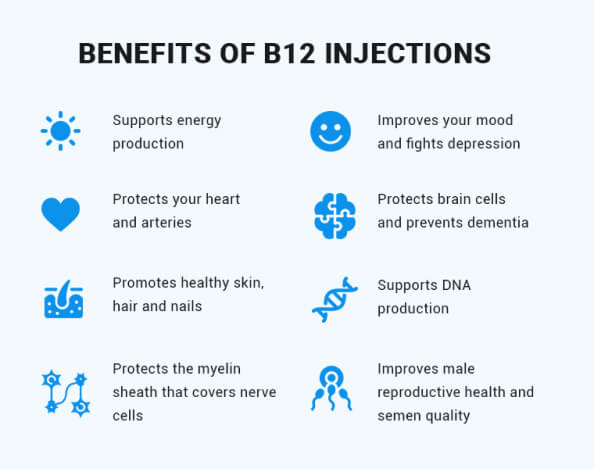
7 benefits of B12 injections (health, energy, and beauty)
1) Support for energy when deficiency is involved
One of the most common reasons people look into injections is persistent fatigue. In my experience, the “energy benefit” is strongest when fatigue is linked to low B12 status (or related deficiencies). B12 is involved in energy metabolism indirectly through healthy red blood cell production and normal neurologic signaling.
What I’ve learned is to manage expectations: B12 isn’t a stimulant. It’s more accurate to think of it as correcting a deficit. If you don’t have low B12 (or you’re missing another driver like iron deficiency, thyroid issues, sleep apnea, or high stress), injections may not feel dramatically different.
2) Improved red blood cell formation and oxygen transport
B12 deficiency can contribute to anemia (often macrocytic anemia). When B12 levels are restored, the body can resume proper red blood cell maturation, supporting oxygen delivery throughout the body. This is one of the most medically grounded reasons B12 injections are used in deficiency states.
In real-world practice, I’ve seen people mistake “anemia-like fatigue” for general burnout. The difference is that targeted lab testing (and appropriate supplementation) can clarify what’s actually happening.
3) Neurologic support (and why symptoms can be more than “tired”)
B12 is critical for nerve health. Low B12 can be associated with neurologic symptoms such as tingling, numbness, balance issues, or “brain fog.” When people ask what is a B12 injection good for, this neurologic support is a major part of the answer.
Important nuance: neurologic recovery depends on how long deficiency has been present and how severe it is. In my hands-on observations, earlier intervention tends to correlate with better symptom trajectories than waiting until symptoms become persistent.
4) DNA synthesis and cellular maintenance
B12 functions as a cofactor in processes involved in DNA synthesis and cell division. While that can sound abstract, it matters because rapidly renewing tissues and overall cellular maintenance rely on proper micronutrient status.
This benefit is not usually something you “feel instantly,” but it’s part of the foundational biology behind why B12 is important for overall health.
5) Support for metabolism-related pathways (especially when diet isn’t enough)
Some people come to injections due to diet constraints (for example, low animal-food intake), gut conditions that affect nutrient absorption, or periods where dietary intake has been inconsistent. When absorption is compromised, injections can be a practical alternative.
From a systems perspective, correcting micronutrient gaps helps your body run core metabolic pathways as designed. That can indirectly support how you feel day to day—even if the cause of “low energy” was partly dietary or absorption-related.
6) Beauty and skin: what’s realistic and what to watch for
When people pursue injections for beauty, they’re often looking for smoother skin appearance, improved “vitality,” and reduced dullness. B12 is not a topical skincare product, so it won’t replace sunscreen, retinoids, hydration, or addressing acne drivers.
That said, in deficiency states, correcting B12 can support overall health signals—like red blood cell function and cellular turnover—which can reflect in skin tone and how “alive” the complexion looks. In my experience, the biggest visual improvements tend to happen when B12 is one piece of a broader plan (hydration, adequate protein, correcting iron/ferritin if low, and consistent skincare).
Limitation: If you’re not deficient, “beauty effects” are typically subtle and not guaranteed.
7) Convenience and bypassing absorption challenges
One of the practical advantages of injections is that they can be useful when oral supplementation is difficult—whether due to absorption issues or when someone needs a more direct approach. I’ve seen this come up especially with people who have GI conditions, have had stomach surgery, or simply struggle with consistent oral dosing.
Still, convenience isn’t the same as necessity. The best pathway is usually to check labs and follow a clinician’s guidance on dosing and monitoring.
Who benefits most from B12 injections?
In my hands-on work, B12 injections tend to be most compelling for people with evidence of deficiency or risk factors for it. Common scenarios include:
- Confirmed low B12 on lab testing
- Dietary patterns that reduce B12 intake (especially without adequate supplementation)
- Absorption concerns (certain gastrointestinal conditions, malabsorption risks, or post-surgical considerations)
- Neurologic symptoms that suggest the need for evaluation
- Persistent fatigue where labs indicate B12-related contribution
If your B12 is normal, injections may not provide the dramatic “energy upgrade” people expect. In that case, it’s often smarter to identify the real driver (iron status, thyroid function, vitamin D, sleep, stress, and overall calorie/protein intake).
Potential downsides and when to be cautious
B12 injections are widely used, but they’re not a one-size-fits-all solution. Here’s how I approach this in coaching conversations:
- Not a substitute for diagnosis: fatigue and skin changes have many causes; B12 is one potential piece.
- Timing varies: energy and symptom improvements depend on baseline deficiency, duration, and individual response.
- Injection discomfort and routine: some people dislike needles or the schedule required.
- Follow-up matters: dosing plans should be aligned with lab results, not guesswork.
If you have a medical condition, take multiple medications, or have neurologic symptoms, it’s especially important to have B12 addressed through clinician guidance.
How to think about dosing and results (a practical lens)
People often ask about how quickly they’ll feel different. In real life, response timelines vary because B12 status and symptom causes differ. I recommend evaluating outcomes in layers:
- Labs first: baseline B12 (and sometimes related markers) guide whether supplementation is truly needed.
- Track symptoms: energy, tingling/numbness, and cognitive clarity are better measured over days to weeks, not hours.
- Look for pattern changes: improvement tends to be gradual when deficiency correction is the main factor.
In my experience, the most useful metric is whether symptoms trend in the right direction alongside appropriate nutrition and sleep—rather than chasing immediate “boost” effects.
FAQ
What is a B12 injection good for?
B12 injections are primarily used to treat or prevent vitamin B12 deficiency—supporting red blood cell production, neurologic function, and overall energy when fatigue is related to low B12 status. They’re also helpful when absorption is impaired or oral supplementation isn’t sufficient.
How do I know if I’m low in B12?
The most reliable way is lab testing. If you have risk factors (dietary restriction, gut/malabsorption issues, or symptoms like fatigue plus neurologic changes), ask a clinician about checking B12 and any relevant related markers based on your history.
Can B12 injections improve skin and appearance?
They may help indirectly if your skin changes are connected to nutritional deficiency. However, they’re not a replacement for consistent skincare routines, sun protection, and addressing other common drivers like iron status, hydration, sleep, and hormonal factors.
Conclusion: Your next practical step
B12 injections can be a powerful tool—especially when the real issue is low B12 and/or absorption difficulty. The core benefits center on energy support (when deficiency is present), healthy red blood cell formation, neurologic function, and broader cellular maintenance, with potential beauty-related improvements mainly through correcting deficiency.
Next step: If you’re wondering what is a B12 injection good for in your case, get your B12 status checked (and discuss related markers if appropriate), then align a supplementation plan with your results and symptoms.
Discussion