Vitamin B12 Deficiency: Recognition and Management
Vitamin B12 Deficiency: Recognition and Management
If you’ve ever seen a patient’s labs come back “borderline” and then watched symptoms quietly worsen over months, you know the frustrating part: vitamin B12 deficiency rarely announces itself clearly at first. In my clinical work, I’ve learned that the most common mistake isn’t missing B12 entirely—it’s recognizing it too late or choosing the wrong treatment approach. This guide walks you through how to recognize vitamin B12 deficiency, how management decisions are made (including when vitamin B12 injections are indicated for a patient diagnosed with), and how to follow patients safely.
Why Vitamin B12 Deficiency Matters
Vitamin B12 (cobalamin) is essential for red blood cell production and for neurologic function. When B12 is low, the body can develop:
- Megaloblastic anemia (often with fatigue and weakness)
- Neurologic symptoms (numbness, tingling, balance issues), which can become irreversible if treatment is delayed
- Gastrointestinal complaints and general “off” feelings that can mimic other conditions
In practice, I treat the condition less like a lab abnormality and more like a time-sensitive diagnosis—because neurologic complications are the part we most want to prevent.
How to Recognize Vitamin B12 Deficiency
Common Symptoms I Look For
Patients often describe symptoms in vague terms at first. In my experience, these patterns show up repeatedly:
- Fatigue, reduced exercise tolerance, shortness of breath with exertion
- Neurologic: paresthesias (tingling), numbness, gait instability, memory or concentration changes
- Oral: glossitis (sore tongue), sometimes mouth discomfort
- Systemic: pallor, weakness, “brain fog”
One lesson I learned the hard way: neurologic symptoms can appear even when anemia isn’t dramatic. That’s why symptom assessment matters alongside labs.
Clinical Clues That Suggest the Diagnosis
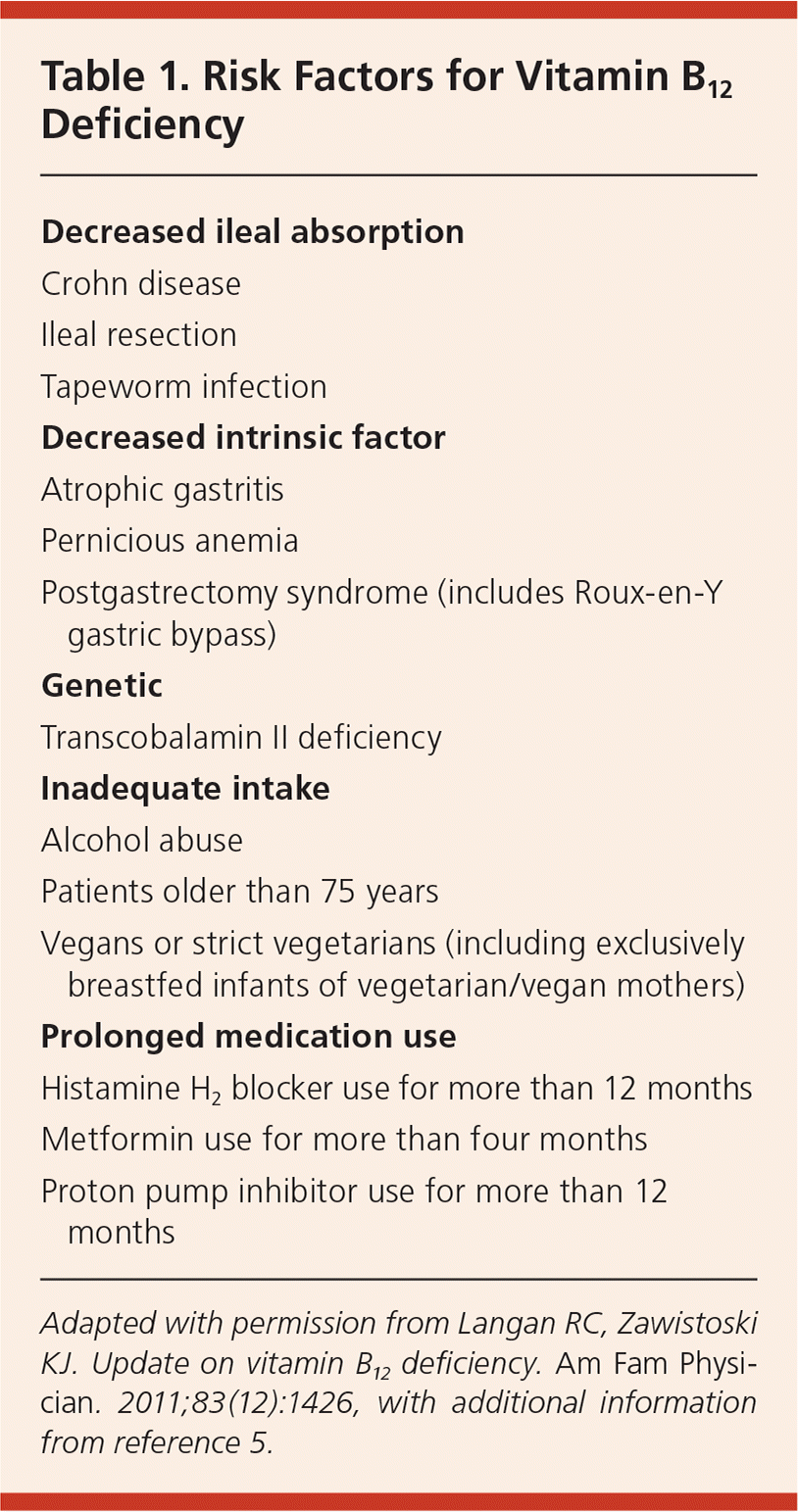
Beyond symptoms, certain risk factors make B12 deficiency more likely:
- Malabsorption (e.g., celiac disease, inflammatory bowel disease, history of bariatric surgery)
- Pernicious anemia (autoimmune gastritis affecting intrinsic factor)
- Dietary patterns (strict vegetarian or vegan diet without supplementation)
- Medications (notably metformin; acid suppression may contribute in some patients)
Lab Evaluation: What to Check
Diagnosis typically starts with a serum vitamin B12 level and a basic hematologic profile. When results are unclear or symptoms are strong, clinicians often consider additional markers such as:
- Complete blood count (CBC) (e.g., macrocytosis, anemia)
- Methylmalonic acid (MMA) (commonly elevated in functional B12 deficiency)
- Homocysteine (may be elevated when B12 deficiency is present)
- Iron studies and folate to avoid diagnostic confusion
In my hands-on work, I’ve seen cases where B12 was “borderline” but MMA or homocysteine supported true deficiency—so I treat equivocal results carefully, especially if neurologic symptoms exist.
Management Overview: The Goal and the Plan
Management has two aims:
- Rapidly replace vitamin B12 to halt progression (particularly neurologic damage)
- Correct the underlying cause so the deficiency doesn’t return
How you treat depends on severity, symptom profile, and the ability to absorb B12 from the gut.
When Vitamin B12 Injections Are Indicated
Let’s address the key clinical decision directly: vitamin b12 injections are indicated for a patient diagnosed with vitamin B12 deficiency when there is concern that oral absorption is inadequate, when symptoms are significant (especially neurologic symptoms), or when a rapid treatment response is needed.
In practical terms, injections are commonly chosen for patients such as:
- Those with neurologic symptoms (tingling, numbness, balance issues), where prompt replacement is important
- Those with malabsorption (e.g., pernicious anemia, post–bariatric surgery, significant gastrointestinal disease)
- Those with adherence barriers where consistent oral therapy is unlikely
- Those with severe anemia or a need for a more reliable approach to repletion
Limitations: Injections aren’t “better” for every case. For some patients—especially those with dietary deficiency and intact absorption—oral therapy can be effective. In my experience, the safest approach is matching route to the patient’s absorption reality and urgency of symptoms.
Below is a commonly used image style seen in treatment overviews and patient education materials (for illustrative purposes):
Typical Repletion and Maintenance (High-Level)
Clinicians often use structured repletion regimens, followed by maintenance dosing. The exact schedule can vary by local protocols and the patient’s severity and cause of deficiency. What stays consistent is the monitoring strategy—confirming improvement in both blood counts and symptoms.
If you’re a patient or caregiver, the actionable takeaway is this: don’t stop treatment early once symptoms improve. Relapse is common when the underlying cause isn’t addressed or maintenance isn’t continued.
Monitoring Response: What Improvement Looks Like
Response is usually tracked in two domains: laboratory trends and symptom change.
Expected Clinical Improvements
- Neurologic symptoms may improve, but the degree depends on how long deficiency was present before treatment
- Fatigue and weakness often improve as anemia corrects
- Oral symptoms and general well-being tend to recover with repletion
Lab Trends Clinicians Watch
- MCV and hemoglobin often improve as hematopoiesis normalizes
- MMA or homocysteine can normalize if they were elevated initially
- Long-term maintenance decisions can be informed by cause (dietary vs malabsorption)
In my practice, I also monitor for coexisting deficiencies (like folate or iron issues) because mixed etiologies can slow recovery or mask progress.
Underlying Causes: Don’t Skip This Step
Successfully treating B12 deficiency is partly about replacement—and partly about prevention. Common cause-driven decisions include:
- Pernicious anemia: usually requires long-term management due to intrinsic factor issues
- Malabsorption states: dosing may need to stay route-based (injections) long term
- Dietary deficiency: oral supplementation may be sufficient, but adherence and consistent intake are key
- Medication-related risk: review whether risk-benefit changes are appropriate and whether supplementation should be continued
One experience I return to: patients often focus on “getting numbers back.” I emphasize that we’re aiming for sustained correction—because the body doesn’t stay fixed if the cause persists.
Common Pitfalls in Recognition and Management
- Assuming borderline B12 is harmless—functional deficiency can occur; consider additional markers when symptoms fit
- Delaying treatment in neurologic symptoms—time matters for neurologic outcomes
- Ignoring malabsorption risks—oral therapy may fail when absorption is impaired
- Not planning maintenance—the deficiency can recur without a long-term strategy
FAQ
What symptoms make vitamin B12 deficiency urgent?
Neurologic symptoms—tingling, numbness, balance problems, or gait changes—are the most concerning because delaying treatment can increase the chance of incomplete recovery.
When are vitamin B12 injections preferred over oral therapy?
Injections are generally preferred when absorption is impaired (such as pernicious anemia or post–bariatric surgery), when neurologic symptoms are present, when severity is high, or when consistent oral dosing is unlikely.
How long does it take to feel better after starting treatment?
Some patients notice improvement in energy and general symptoms within weeks, while neurologic recovery can take longer and may be incomplete if treatment was delayed before symptoms began.
Conclusion
Vitamin B12 deficiency is more than a lab result—it’s a clinical diagnosis where timing and route of treatment can meaningfully affect outcomes. Recognize the pattern of anemia-related symptoms and, importantly, neurologic signs. Then treat appropriately: vitamin B12 injections are indicated for a patient diagnosed with B12 deficiency when absorption is impaired, symptoms are significant (especially neurologic), or rapid and reliable repletion is needed. Finally, manage the underlying cause and monitor response to prevent relapse.
Next step: If you suspect B12 deficiency, ask your clinician for a structured evaluation (symptoms, CBC, B12 level, and—when indicated—MMA or homocysteine), then confirm the treatment plan and maintenance strategy based on the likely cause.
Discussion