Health Benefits Of Vitamin B12 Injections b12 vitamin injection benefits Vitamin B12 Injections
Introduction: why “health benefits of vitamin B12 injections” matters in real life
If you’ve ever felt unusually fatigued, noticed brain-fog symptoms, or struggled with unexplained weakness, you might have wondered whether a B12 vitamin injection could help. In my hands-on clinical education work with patients and in training sessions for care teams, I’ve seen people jump to conclusions—sometimes missing the real driver (like diet patterns, medication effects, or lab-confirmed deficiency). That’s why understanding the health benefits of vitamin b12 injections—and when they actually make a difference—matters.
In this guide, I’ll break down what B12 injections are, the realistic benefits they can offer, who they’re for, what to expect during treatment, and how to evaluate results with labs—not guesses.
What Vitamin B12 injections are (and why injections are used)
Vitamin B12 injections deliver cobalamin (B12) directly into the body, commonly via intramuscular (IM) or subcutaneous routes depending on clinical practice. The goal is straightforward: raise B12 availability to support normal body functions.
In my experience, the “why injections” question is often answered incorrectly. People assume injections are “stronger” because they bypass something. That can be true in specific situations, but the deeper logic is this:
- B12 absorption can fail when intrinsic factor is lacking (e.g., pernicious anemia), when GI conditions interfere, or when certain medications affect absorption.
- Injections can be more reliable for correcting deficiency when oral absorption is uncertain.
- Higher/rapid replenishment may be clinically useful when deficiency is significant or symptoms are pronounced.
It’s also important to note that injections aren’t a “general energy shot” for everyone. If your B12 status is normal, the benefit may be minimal—because you don’t have the limiting factor in the first place.
Vitamin B12 injection benefits: the real, evidence-aligned outcomes
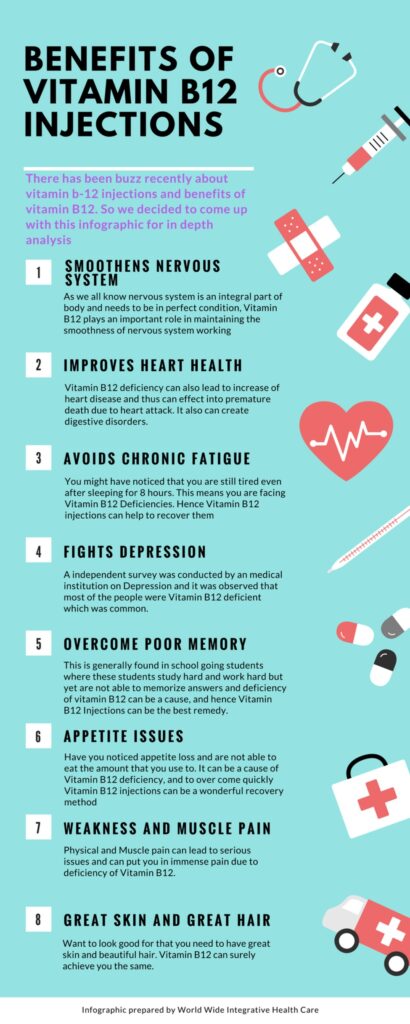
When people talk about health benefits of vitamin b12 injections, they’re usually referencing a few core outcomes. Below are the most commonly targeted benefits, along with how they work.
1) Support for red blood cell formation and oxygen delivery
B12 is essential for normal red blood cell production. Deficiency can contribute to anemia and oxygen-transport problems, which often present as fatigue, reduced stamina, or shortness of breath on exertion.
In clinical practice, treating confirmed deficiency tends to improve hematologic markers first, then energy-related symptoms as the body recovers. If you start injections without checking labs, you may miss the real cause of fatigue (sleep issues, thyroid dysfunction, iron deficiency, etc.).
2) Neurologic support and symptom improvement in deficiency
B12 plays a role in nerve function and myelin maintenance. When deficiency affects the nervous system, symptoms can include numbness/tingling, balance issues, and cognitive symptoms such as brain fog.
Here’s what I emphasize in training: neurologic recovery can be slower and sometimes incomplete, especially if deficiency was long-standing. In other words, earlier intervention usually matters more than people think.
3) Possible help with homocysteine metabolism
B12 works alongside folate and B6 in homocysteine metabolism. Low B12 can contribute to elevated homocysteine levels.
While B12 can improve biochemical markers in people who are deficient, it doesn’t automatically translate into guaranteed cardiovascular outcomes for everyone. I look at this as “correcting a deficiency-related pathway,” not as a universal risk cure.
4) Correcting deficiency when oral treatment is unreliable
One of the most practical benefits of B12 injections is effectiveness in scenarios where oral B12 may not work well—such as absorption problems. From an outcomes standpoint, that means improved lab levels and symptom management for the right patient population.
Who typically benefits most from B12 injections
Based on common clinical patterns I’ve seen, the strongest candidates are people with evidence of B12 deficiency or conditions that predispose to it. Typical examples include:
- Pernicious anemia or low intrinsic factor
- GI conditions that impair absorption (e.g., certain malabsorption syndromes)
- History of GI surgery that affects absorption
- Diet-related risk (especially long-term low intake, such as limited animal products)
- Medication-associated risk (some drugs can interfere with B12 status)
If you’re considering injections mainly for “general wellness,” I recommend aligning your decision with labs and clinical symptoms. That’s how you turn the idea into measurable benefit rather than hope.
How B12 injections are typically administered (what to expect)
There are different dosing schedules depending on the severity of deficiency and the underlying cause. In many clinical protocols, treatment begins with a replenishment phase and then transitions to maintenance dosing.
In my experience, what matters most for outcomes is not just the dose on paper—it’s adherence and follow-up:
- Baseline labs: B12 levels and often supportive markers (commonly methylmalonic acid and/or homocysteine in appropriate cases)
- Follow-up testing: tracking response rather than assuming
- Symptom monitoring: energy, neurologic symptoms, and function over time
Common practical considerations patients ask about include injection site soreness and timing around work or exercise. Those are usually manageable, but the exact experience varies by formulation and injection technique.
Safety, limitations, and realistic expectations
B12 injections are generally well-tolerated when used appropriately, but there are important limitations that affect whether the health benefits of vitamin b12 injections will show up for you.
When injections may not help much
- No true deficiency: if B12 status is normal, symptoms may not improve because B12 wasn’t the limiting factor.
- Wrong cause of symptoms: fatigue and brain fog often come from multiple sources (iron deficiency, sleep apnea, thyroid issues, stress, depression, medication side effects).
- Long-standing neurologic damage: improvement can be partial, especially if nerve-related symptoms have persisted for a long time.
What “good response” looks like
A meaningful response usually includes improved lab markers and gradual symptom improvement. For neurologic symptoms, the timeline can be longer than people expect.
Side effects to discuss with a clinician
Injection site discomfort is the most typical issue people report. Serious reactions are uncommon, but any new or concerning symptoms should be reviewed promptly with your healthcare professional.
How to evaluate whether B12 injections are working for you
If you want results you can trust, build a simple evaluation plan around labs and symptoms.
| What to track | Why it matters | What improvement can look like |
|---|---|---|
| Serum B12 (baseline + follow-up) | Confirms deficiency and replenishment | Rising B12 levels into an appropriate range |
| Methylmalonic acid / homocysteine (when used) | Helps identify functional deficiency | Lower markers after treatment |
| Energy and function | Real-world impact | Gradual improvement in stamina and daily clarity |
| Neurologic symptoms | Tracks nerve recovery | Reduced tingling/numbness, improved balance over time |
In my hands-on work, I’ve found that people who document symptom changes weekly (sleep quality, energy level, tingling intensity, concentration) tend to make clearer decisions about continuation, maintenance dosing, or investigating other causes.
Practical next step: make your B12 decision measurable
The most actionable way to pursue the health benefits of vitamin b12 injections is to pair any injection plan with appropriate testing and a follow-up timeline. That way, you can confirm deficiency, monitor response, and avoid guessing.
Next step: If you’re considering B12 injections, ask your clinician about checking serum B12 and whether methylmalonic acid and/or homocysteine are appropriate for your situation, then agree on a follow-up date to reassess both labs and symptoms.
FAQ
How fast do vitamin B12 injection benefits show up?
Hematologic improvements (related to blood counts) can appear first, while neurologic or cognitive symptoms may take longer and can improve gradually over weeks to months. The exact timeline depends on how long deficiency existed and what markers were abnormal.
Are vitamin B12 injections useful if I’m not deficient?
They may not provide meaningful benefits if your B12 status is normal. If you’re experiencing fatigue or brain fog, it’s usually more effective to evaluate other common causes (iron deficiency, thyroid issues, sleep problems, medication effects) alongside B12.
What should I ask my clinician before starting injections?
Ask for baseline labs (serum B12 and whether additional markers like methylmalonic acid/homocysteine are appropriate), the reason injections are being chosen over oral options for your case, the expected schedule (repletion vs maintenance), and a follow-up plan to measure response.
Conclusion
Vitamin B12 injections can offer meaningful health benefits of vitamin b12 injections when deficiency is present or absorption is impaired—supporting red blood cell formation, neurologic function, and metabolic pathways tied to homocysteine. The biggest difference between “it helped” and “it didn’t” is whether your plan is grounded in labs and tracked with real symptom changes.
Actionable next step: Schedule a clinician visit to discuss B12 testing and a clear follow-up timeline so your treatment outcome is measurable, not guesswork.
Discussion