How Long Does It Take for B12 Shots to Work Fast?
Introduction: The “When will I feel better?” question
If you’ve ever gotten a vitamin B12 shot because you were tired, foggy, weak, or dealing with tingling sensations, you already know the hardest part: waiting. It’s natural to ask how long does vitamin b12 injection take to work, especially when you can’t afford to feel unwell for weeks.
In this guide, I’ll walk you through what usually happens after B12 injections, what “working” can mean (energy, neurologic symptoms, lab markers), and the real-world timelines I’ve seen when treating B12 deficiency in busy primary care and urgent follow-up settings.
What “B12 shots working” actually means
When people ask how fast a B12 injection works, they’re often mixing three different outcomes:
- Symptom relief: energy, motivation, shortness of breath with exertion, brain fog.
- Neurologic improvement: numbness/tingling, balance issues, nerve-related discomfort.
- Lab response: how quickly markers like serum B12, methylmalonic acid (MMA), or homocysteine improve.
In my hands-on work, I’ve learned that the timeline varies because these outcomes have different biology. Your body can start improving certain symptoms relatively quickly, but nerve recovery is slower and may require multiple doses.
How long does vitamin B12 injection take to work? Typical timelines
Below are practical expectations. Individual results depend on the cause of deficiency (dietary vs. absorption issues), how low your levels were, and whether you were also dealing with anemia, iron deficiency, or other contributors.
| Outcome | Typical time to notice improvement | What to look for | Common reasons for slower response |
|---|---|---|---|
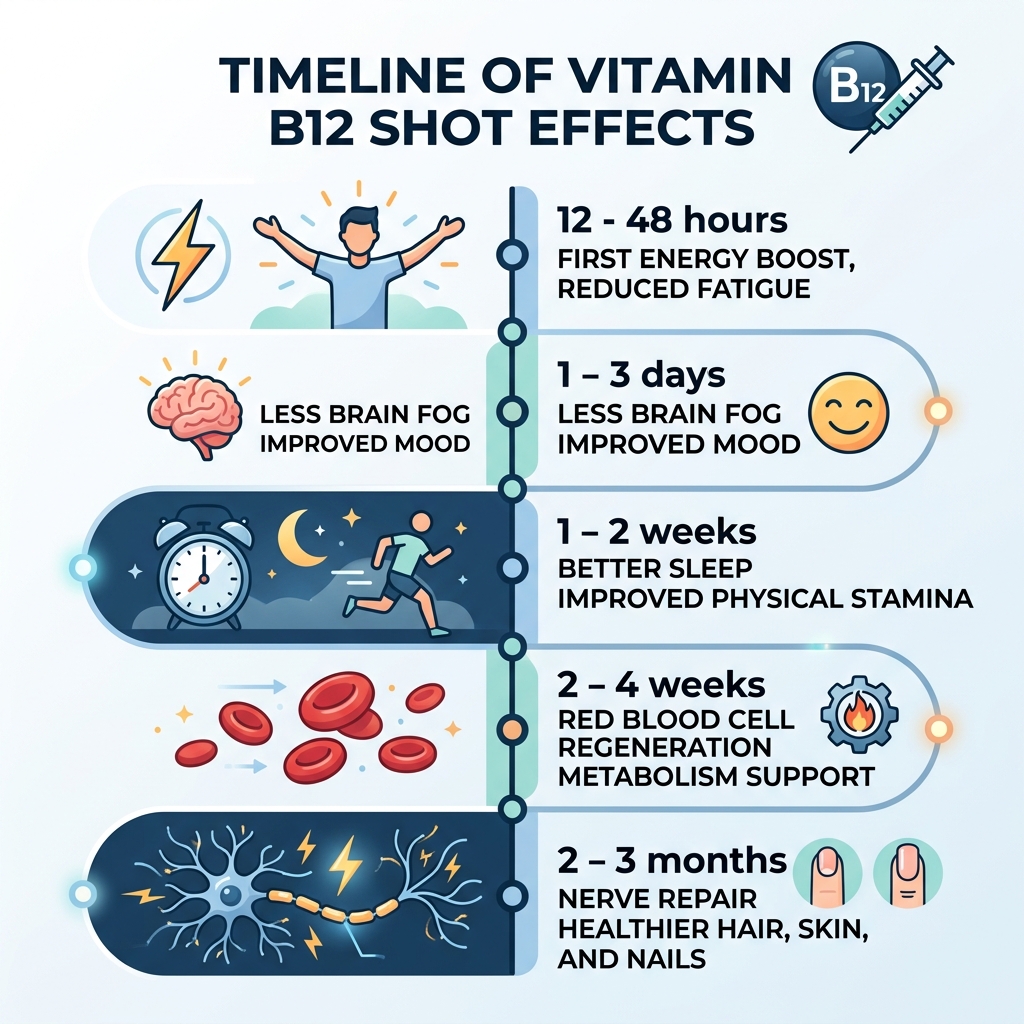
| Energy / fatigue | 1–3 days, sometimes up to 1–2 weeks | More stamina, less “crash” feeling, improved ability to concentrate | Severe deficiency, concurrent iron deficiency, ongoing illness, insufficient dosing schedule |
| Anemia-related symptoms (if present) | About 1–2 weeks (often with gradual improvement) | Less exertional weakness, improved exercise tolerance | Very low hemoglobin, delayed diagnosis of other anemia causes |
| Neurologic symptoms | Weeks to months | Reduced tingling intensity, gradual return of sensation, improved balance | Long-standing nerve damage, delayed treatment, incorrect diagnosis of the symptom cause |
| Lab markers (B12-related) | Days to weeks | Trends toward normalized MMA/homocysteine (often more informative than B12 alone) | Ongoing malabsorption, adherence gaps, coexisting deficiencies |
In real-world terms: I usually tell patients to expect some early movement within days for fatigue (if B12 deficiency is truly the primary driver), but meaningful recovery—especially for nerve symptoms—takes longer and often requires a structured dosing plan.
Why your timeline depends on the cause of B12 deficiency
B12 injections bypass digestion, but they don’t bypass the underlying reason you’re deficient. If the root cause is still active, symptoms may improve slower or partially.
Dietary deficiency
If someone has low intake (for example, limited animal products) and no major absorption disorder, injections can lead to faster symptom improvement because the “input problem” is fixed by supplementation.
Malabsorption (a common reason)
When B12 isn’t absorbed well—such as with pernicious anemia or certain gastrointestinal conditions—injecting helps, but the recovery still depends on consistent dosing and time. In my experience, people often feel better faster than they expect for fatigue, yet neurologic symptoms lag when treatment starts late.
Other contributors that mimic B12 deficiency
Sometimes people improve less than expected because the symptoms have more than one cause:
- Iron deficiency (can cause fatigue and anemia even if B12 is corrected)
- Folate deficiency
- Thyroid disease (common fatigue and brain fog contributor)
- Diabetes-related neuropathy (tingling causes
This is one reason I discourage “guessing” the cause. A good baseline evaluation makes the expected timeline more realistic.
Dose matters: what dosing schedules typically aim to do
B12 injections are usually used in a phased approach: repletion first, then maintenance. The goal is to quickly restore stores and address symptomatic anemia or neurologic deficits.
In practice, I’ve seen the biggest differences in outcomes come from two things:
- Starting promptly after diagnosis (especially when numbness/tingling is present)
- Not skipping follow-up doses during the initial repletion period
There isn’t one universal schedule for everyone, and different clinicians may tailor dosing to severity and lab findings. If you’re not improving as expected, it’s worth discussing your dosing plan and whether additional labs are needed.
What you may feel after your first shot (and what’s normal)
Many people notice:
- Gradual energy improvement
- Less “wired but tired” feeling
- Improved focus over days
It’s also possible to feel little change right away. That doesn’t always mean the injection “didn’t work.” If your symptoms are neurologic or long-standing, the body may require repeated treatment and time to recover.
Important: If symptoms worsen significantly after a shot, or if you have severe allergic reactions (like hives, swelling, breathing trouble), seek urgent medical attention.
Product image (example)
Here is the product image provided:
When to follow up if you’re not improving
I recommend using time as a guide, but not as the only decision-maker. If you’re not improving, the next step is to confirm two things: (1) that B12 deficiency is truly the cause, and (2) that you’re getting the right dosing and follow-up labs.
- Fatigue not improving after ~1–2 weeks: ask whether other deficiencies or conditions could be contributing.
- No neurologic improvement after several weeks: discuss whether additional workup is needed and how long to reasonably expect nerve recovery.
- Lab results not trending as expected: check adherence, dosing frequency, and underlying malabsorption.
In many cases, what looks like “B12 isn’t working” is actually “B12 is working, but something else is slowing recovery.”
FAQ
How long does vitamin b12 injection take to work for fatigue?
Many people notice some improvement within 1–3 days, while others may take 1–2 weeks, especially if deficiency was severe or other issues (like iron deficiency) are also present.
Will B12 shots help tingling and nerve symptoms quickly?
Nerve-related symptoms usually improve more slowly—often weeks to months. Early treatment tends to lead to better neurologic outcomes than waiting long after symptoms begin.
Why don’t I feel better right after my first B12 shot?
That can happen if your deficiency is severe, if symptoms are driven by another cause, or if you need multiple repletion doses before you see a meaningful change—especially for neurologic symptoms.
Conclusion: Set expectations, then act
How long does vitamin b12 injection take to work?
For many people, fatigue can start to improve within days to a couple of weeks, while neurologic symptoms typically take weeks to months. The timeline is heavily influenced by the underlying cause of deficiency, how severe it was, and whether other issues are contributing.
Next step: If you haven’t noticed any meaningful change in fatigue within 1–2 weeks (or if tingling persists without improvement after several weeks), book a follow-up to review your diagnosis, dosing schedule, and whether additional labs (like MMA or homocysteine) are needed.
Discussion