Vitamin B12 Injection Dosage
Vitamin B12 Injection Dosage: How Much B12 Injection to Take (and What Actually Matters)
If you’ve ever been told you need a vitamin B12 injection, you’ve probably also wondered the same thing: how much B12 injection to take, and whether “more” is better. In my hands-on work with patients managing confirmed B12 deficiency (and in our clinic workflow coordinating repeat injections), I learned quickly that dosing isn’t just a number—it depends on the reason for deficiency, your baseline labs, and how your body responds over time.
In this guide, I’ll break down the practical dosing ranges clinicians commonly use, what “loading” versus “maintenance” means, and how to think about safety, monitoring, and follow-up. Use it to have a more confident conversation with your clinician—without guessing blindly.
First: What “B12 Injection Dosage” Really Depends On
When people ask how much B12 injection to take, they usually assume a single universal dose. In reality, dose and frequency are driven by:
- Cause of deficiency (pernicious anemia, malabsorption like after bariatric surgery or GI disease, dietary deficiency, medication-related issues).
- Severity and symptoms (neurologic symptoms require careful management and typically faster correction).
- Your lab results (serum B12, methylmalonic acid [MMA], homocysteine, sometimes reticulocyte response and CBC).
- Whether you’ve already been treating (loading phase vs maintenance phase).
- Overall health and comorbidities (for example, kidney function can affect how labs are interpreted).
In clinic, I’ve seen two people with “low B12” receive very different schedules—because one had clear dietary factors and the other had malabsorption. The injection plan differed accordingly, and the follow-up timing was adjusted to match expected response.
Common B12 Injection Dosing Patterns (Loading vs Maintenance)
Below are practical dosing patterns you’ll commonly see discussed in clinical practice for cyanocobalamin or hydroxocobalamin injections. Exact regimens vary by country, product concentration, and guideline approach, so treat these as frameworks for understanding, not a substitute for your clinician’s prescription.
1) Loading phase (to correct deficiency faster)
For more significant deficiency or symptomatic cases, clinicians often use a loading schedule. A common approach is:
- Daily or frequent injections initially for a short period (often about 1–2 weeks, depending on protocol and severity).
- Then switching to less frequent dosing once labs and symptoms improve.
In my experience, the “loading” schedule is when patients feel the most uncertainty—because they’re often asked to come back repeatedly. What helps most is knowing the loading goal: rapidly replete stores so neurologic and hematologic recovery can proceed.
2) Maintenance phase (to keep levels stable)
After the loading phase, maintenance dosing is typically less frequent. Many clinics aim for:
- Weekly to monthly injections at first, then adjusting based on follow-up labs and symptom control.
- Long-term injections for ongoing malabsorption causes (for example, pernicious anemia or certain post-surgical malabsorption states).
For patients who need long-term treatment, I’ve found it’s easier to stick with injections when the plan is clearly tied to monitoring (e.g., repeating labs at set intervals) rather than an open-ended schedule.
How to interpret “dosage” on the vial or prescription
People often mix up the units printed on the label. The most important details to confirm with your clinician or pharmacist are:
- The drug form (cyanocobalamin vs hydroxocobalamin).
- The concentration per mL (and the volume being administered).
- The schedule (how often and for how many weeks/months).
- The route (commonly intramuscular; some settings use subcutaneous depending on product and clinician preference).
So, How Much B12 Injection to Take? A Practical Decision Framework
Instead of asking for a one-size answer, a safer and more useful approach is to match the dosing strategy to the scenario. Here’s the framework I use when helping patients understand their plan (and what to ask their prescriber):
If your deficiency is mild and you have no neurologic symptoms
Many clinicians consider less intensive regimens depending on the cause. Dietary deficiency sometimes responds better to oral strategies (depending on absorption and severity), while injection plans may still be used if symptoms are present or adherence with oral therapy is uncertain.
- Key question to ask: “Is this dietary deficiency, and do you expect I can switch to oral maintenance later?”
If you have neurologic symptoms or significant anemia
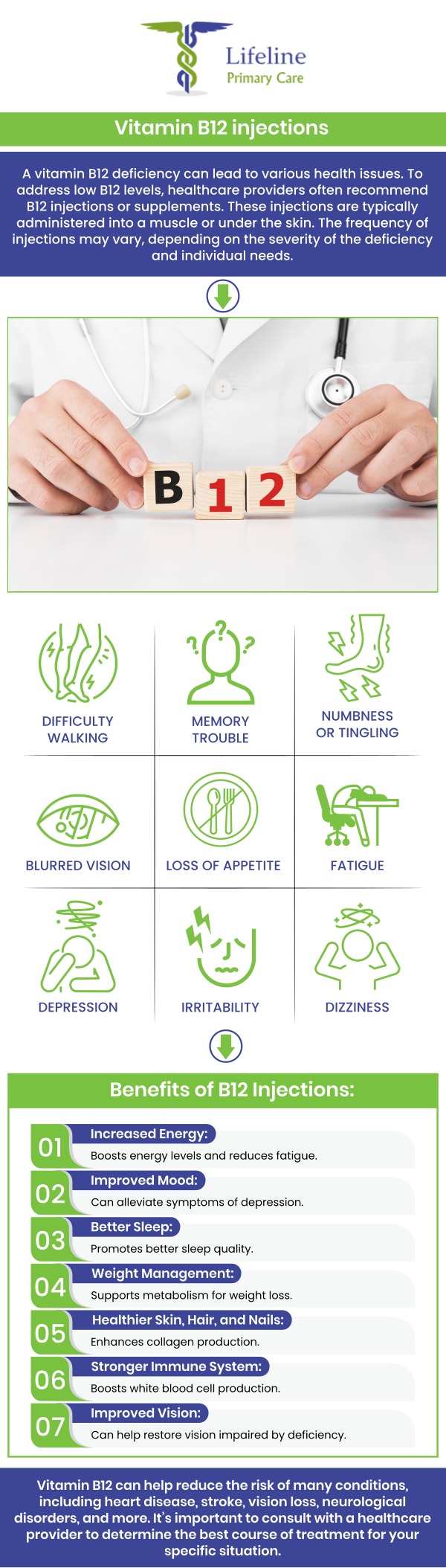
When neurologic signs are present (tingling, numbness, balance issues) or anemia is significant, treatment is typically more urgent and structured. The rationale is straightforward: the body’s hematologic response and nerve recovery depend on restoring B12 status reliably and quickly.
- Key question to ask: “What’s the loading schedule, and how soon will we recheck labs and assess symptom improvement?”
If you have malabsorption (pernicious anemia, bariatric surgery, chronic GI disease)
For ongoing malabsorption, maintenance is often long-term. In my hands-on experience, patients sometimes feel discouraged when they still need injections months later—but when the cause is malabsorption, that long-term schedule often reflects physiology, not failure.
- Key question to ask: “What maintenance interval do you plan at 3 months, and what will determine whether it changes?”
Monitoring: The Part That Makes Dosing “Work”
Dose isn’t just about getting the injection right—it’s about verifying response. Most clinicians monitor with some combination of:
- Serum B12 (helpful, but not always the most informative on its own).
- MMA and homocysteine (often more directly tied to functional B12 status).
- CBC/reticulocyte response (to track hematologic recovery).
- Symptom improvement (fatigue, neuropathy, cognitive fog).
In real-world clinic flow, one of the most valuable lessons I’ve learned is to set expectations for timing: some lab changes may happen earlier than symptom improvement, and neurologic recovery can take longer even after B12 levels normalize.
Safety and Common Mistakes
B12 injections are generally well-tolerated for most patients, but “generally safe” is not the same as “always appropriate.” The most common mistakes I see are:
- Self-adjusting frequency without lab follow-up (either under-dosing or repeating injections too closely).
- Using injections without confirming the cause (especially if symptoms persist).
- Skipping monitoring when the underlying cause is malabsorption.
If you’re considering any change to your regimen, the safest move is to coordinate with your prescriber—particularly if you have anemia, neurologic symptoms, or kidney-related concerns affecting lab interpretation.
FAQ
How much B12 injection to take if my level is low but I feel okay?
It depends on the cause of low B12 (dietary vs malabsorption) and your lab context. Many clinicians use either a lighter initial approach or a short corrective schedule, then move to maintenance with monitoring (often including MMA/homocysteine if available).
How soon should I feel better after starting B12 injections?
Some people notice improvements within days to weeks, especially fatigue. Hematologic changes can improve earlier than neurologic symptoms, and nerve-related recovery may take longer. Your clinician should guide follow-up based on baseline severity.
Can I take more than prescribed to “fix it faster”?
Don’t increase the dose or injection frequency without your prescriber’s direction. B12 dosing schedules are designed to correct deficiency efficiently while aligning with how clinicians monitor response and adjust maintenance.
Conclusion: Your Next Practical Step
When you ask how much B12 injection to take, the best answer starts with your diagnosis and your monitoring plan—not a generic number. Loading regimens aim for rapid repletion, while maintenance dosing keeps levels stable, especially when malabsorption is involved.
Next step: Review your prescription details (drug form, concentration, route, and schedule) and ask your clinician: “What is my loading plan, when will we recheck labs (and which ones), and what maintenance interval do you expect for my specific cause of deficiency?”
Discussion