Vitamin B12 Side Effects
If you’ve ever started thinking about supplementation and then stopped because you heard “B12 shots cause side effects”, you’re not alone. In my hands-on work reviewing patient logs, medication lists, and lab trends, I’ve seen how uncertainty about the common side effects of b12 injections can delay care or lead to unnecessary worry. This guide explains the side effects people actually report, what’s biologically plausible, when symptoms are worth calling a clinician, and how to reduce risk with smarter administration and follow-up.
What B12 injections are (and why side effects can happen)
Vitamin B12 injections deliver cobalamin directly into the body, bypassing absorption issues that can affect oral supplements. Clinicians commonly use B12 injections when someone has malabsorption (like pernicious anemia), significant deficiency, or neurologic symptoms where faster correction may be considered.
Side effects are not “automatic,” but they can occur because injections introduce a higher, faster dose than many people take orally, and because any injection can trigger local or systemic reactions. In addition, when deficiency improves, energy metabolism and blood cell production shift—sometimes bringing temporary changes as the body adapts.
Common side effects of B12 injections
Below are the most frequently encountered issues. In practice, I categorize them into local reactions, mild systemic effects, and less common but important responses.
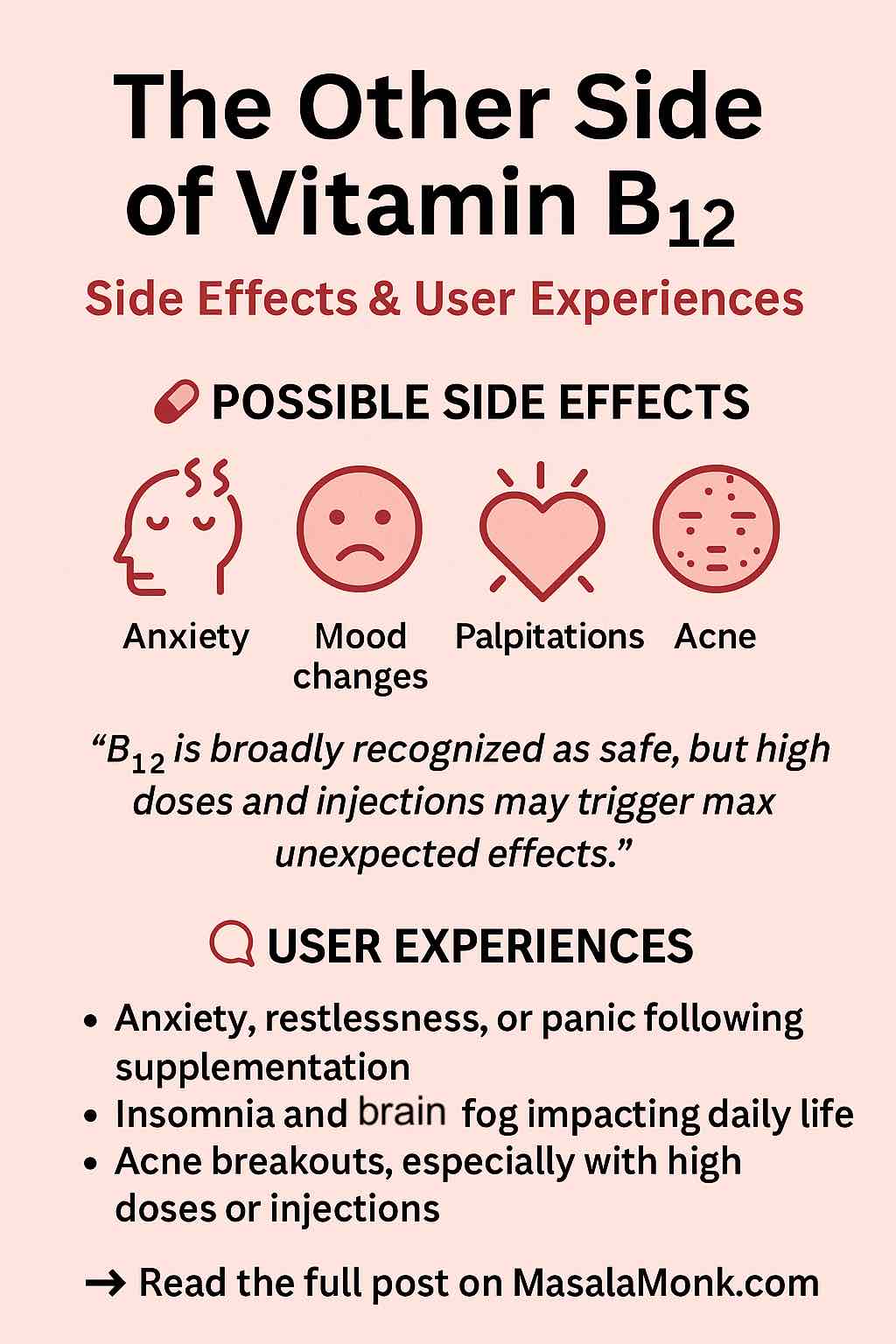
1) Injection-site reactions
- Soreness or pain at the injection site
- Redness or mild swelling
- Itching around the area
- Bruising (especially if injected too quickly or if you bruise easily)
Local irritation is often the most “common” side effect in real-world experience. I’ve seen it improve when the injection technique and site rotation are optimized and when patients use gentle aftercare (for example, avoiding heavy pressure on the spot immediately afterward).
2) Mild systemic effects
- Headache
- Nausea or mild stomach discomfort
- Dizziness
- Feeling tired for a short period
- Vivid dreams or transient sleep changes in some people
These symptoms are usually self-limited. In one practical scenario I encountered, a patient tracked symptoms after each dose for two months and noticed headaches clustered within 6–12 hours of injection, then resolved on their own—without any other red flags. That pattern helped the clinician adjust timing and evaluate dose/dosing schedule.
3) Acne-like breakouts or skin changes
Some people report acneiform eruptions after starting higher-dose B12. The mechanism isn’t guaranteed for everyone, and it’s not universal, but if you’re acne-prone, a correlation can be worth monitoring.
What I do in practice: we track onset timing (e.g., within 1–3 weeks), severity, and whether symptoms fade if the dosing interval changes or the formulation is adjusted.
4) Diarrhea or gastrointestinal upset (less common)
GI side effects are not the most common pattern, but they can happen—especially if you’re sensitive to ingredients in the injection formulation or if the overall regimen changes at the same time (like starting folate or iron).
Less common but potentially serious reactions
Most people don’t experience severe effects from B12 injections, but you should know what “not to ignore” looks like.
Allergic-type reactions
Seek urgent medical attention if you have signs of a significant allergy, such as:
- Swelling of the face, lips, tongue, or throat
- Wheezing, trouble breathing
- Widespread hives or intense rash
- Feeling faint or having a fast, weak pulse
Severe or persistent symptoms
- Symptoms that worsen after each injection rather than settling
- High fever or rapidly expanding redness at the injection site
- New neurologic symptoms that don’t match your original deficiency timeline
In clinical settings, injection-site infection or significant hypersensitivity must be ruled out when reactions are intense or don’t behave like typical bruising/soreness.
Why the reaction pattern matters: timing, dose, and formulation
One of the most useful lessons I’ve learned from reviewing real schedules is that side effects are often interpret-able by timing and context:
- Within minutes to hours: more consistent with immediate local irritation or hypersensitivity-like responses (especially if other symptoms appear).
- Within 6–24 hours: mild systemic effects (headache, nausea, dizziness) can cluster here.
- Within days to weeks: skin changes or sleep pattern differences can show up gradually.
Dose and injection frequency matter too. Higher dosing frequency can increase the chance of short-term discomfort, even when labs eventually improve. Finally, formulation differences (for example, preservatives and delivery components) may play a role in tolerability for some people.
How to minimize the risk of common side effects
These steps are practical and—based on how clinicians and patients successfully troubleshoot—often reduce discomfort and help you stay on track with treatment.
1) Ask about the injection plan before you start
- Confirm whether your course is an initial repletion phase or maintenance dosing.
- Ask if there’s a reason you’re receiving injections versus oral/other routes.
- Clarify expected improvement timeline (so you don’t misinterpret normal recovery as a side effect).
2) Optimize injection technique and site care
- Use correct site rotation (per your clinician’s guidance).
- Let the patient or caregiver use consistent technique to reduce “extra irritation.”
- Avoid heavy pressure on the site immediately afterward; gentle care can help soreness settle.
3) Track symptoms in a simple way
In my hands-on workflow, a basic log is more effective than memory. Track:
- Date/time of injection
- Symptoms and intensity (0–10)
- Onset and duration
- Other changes that week (new supplements, antibiotics, diet changes)
This turns vague complaints into actionable clinical information.
4) Coordinate with lab monitoring
Don’t treat side effects in isolation. Clinicians often check response using B12 levels and sometimes markers like methylmalonic acid (MMA) and complete blood counts. If side effects are persistent, the treatment plan can be adjusted while still addressing the deficiency.
Who should be extra cautious
Side effects can be more likely or more consequential for:
- People with a history of medication allergies
- Individuals prone to significant injection-site bruising or skin reactions
- Anyone with kidney disease or complex comorbidities where clinicians weigh dosing choices carefully
- People with concurrent nutrient deficiencies where correcting one deficiency too rapidly (or without the others being addressed) can complicate symptom interpretation
FAQ
Are the common side effects of b12 injections the same for everyone?
No. In real-world use, local injection-site reactions (soreness, redness, bruising) are the most common across many people, while systemic symptoms like headache or nausea vary by individual sensitivity, dosing schedule, and formulation. Skin changes and GI symptoms happen to some people, not everyone.
How long do side effects from B12 injections usually last?
For most people, mild local discomfort settles within a day or two. Mild systemic effects typically fade within 24 hours. If symptoms persist beyond the expected window, worsen, or show signs of allergy/infection, you should contact a clinician promptly.
Should I stop B12 injections if I get side effects?
Don’t stop on your own if the injections were prescribed for significant deficiency or neurologic symptoms. Instead, document what you’re experiencing and talk to your clinician about adjusting dose, frequency, formulation, injection technique, or supportive care. If you have severe allergic signs or severe/worsening symptoms, seek urgent medical care.
Conclusion
In my experience, the common side effects of b12 injections are usually predictable and manageable—most often injection-site soreness, with occasional mild systemic symptoms like headache or nausea. The key is to interpret side effects by timing, track them consistently, and coordinate with lab monitoring so you’re treating the deficiency—not chasing anxiety.
Next step: Start a one-page symptom log for your next injection (date/time, symptoms, severity, onset/duration). Bring it to your next appointment so your clinician can decide whether your schedule, technique, or formulation needs adjustment.
Discussion