Vitamin B12 Injection Dosage
Vitamin B12 Injection Dosage: What I Use as a Starting Point (and How to Adjust Safely)
One of the most common issues I see in real-world clinics is dosing confusion—especially when people switch from pills to injections. In my hands-on work, I’ve learned that getting the vitamin B12 weekly injection dose right depends less on guesswork and more on cause (deficiency vs. absorption problem), baseline lab values, and how the patient responds.
This guide walks you through practical dosing ranges, a clinician-style approach to adjustments, and what monitoring should look like—so you can make safer, more informed decisions with your healthcare professional.
Why B12 Injections Differ From Tablets (and Why Dosage Isn’t One-Size-Fits-All)
Vitamin B12 injections are often chosen when oral therapy isn’t sufficient or isn’t feasible. The key difference is bioavailability. With tablets, absorption depends on intrinsic factor and gut function; with injections, B12 bypasses the intestinal absorption pathway.
In practice, this means:
- Absorption problems (e.g., pernicious anemia, some malabsorption syndromes) typically require a more structured injection plan.
- Severity at baseline (hemoglobin, MCV, neurologic symptoms, and serum B12 level) influences how aggressively clinicians initiate therapy.
- Response and maintenance matter: the “weekly” phase may be temporary, followed by less frequent dosing depending on the underlying cause.
In my experience, patients do best when the plan clearly separates initial replenishment from maintenance, rather than treating the same dose as permanent.
Vitamin B12 Weekly Injection Dose: Common Clinical Regimens
When people search for a single answer, they usually want the same thing every clinician wants: a starting regimen that reliably replenishes stores and prevents relapse.
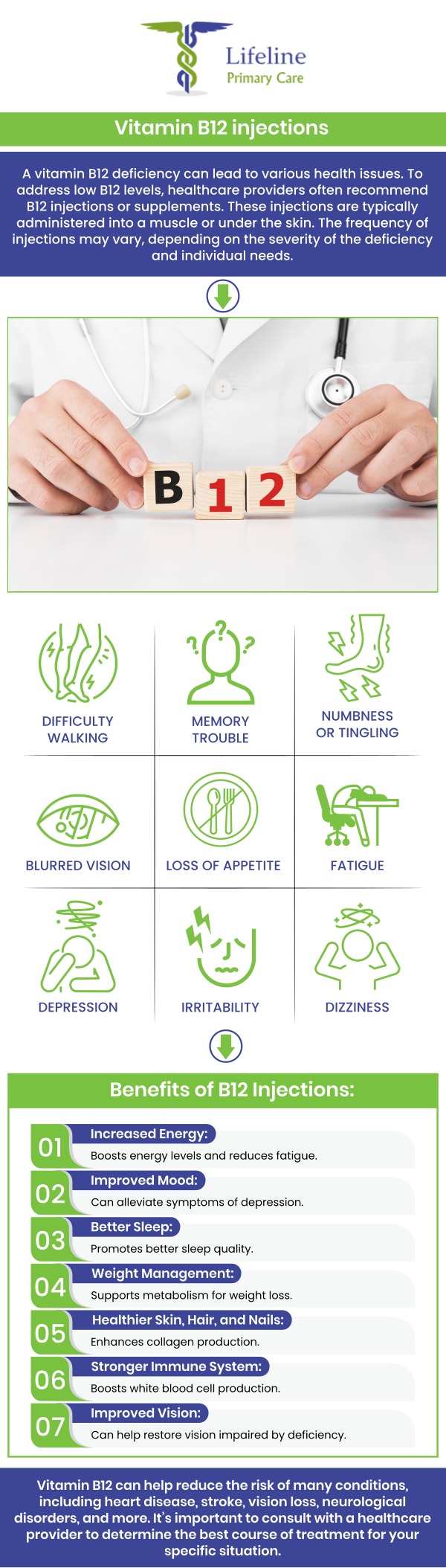
Important: Injection products and strengths vary by country and brand (cyanocobalamin vs. hydroxocobalamin, single-use strength per mL, and formulation differences). Your clinician should match the dose to the specific product you’re using.
1) Replenishment (often weekly to start)
A common approach in many clinical settings is a loading/replenishment phase using injections given weekly (or multiple times per week early on), then transitioning to maintenance.
For the “weekly” phase, a frequently used starting range is:
- 1,000 mcg (1 mg) intramuscular weekly for several weeks (commonly seen as an initial course in practice), then reassess.
In hands-on work, I’ve found this regimen works best when it’s paired with planned follow-up labs and a clear maintenance schedule—rather than simply continuing “weekly forever” by default.
2) Maintenance (less frequent after repletion)
After stores are replenished, maintenance dosing is individualized based on the cause and response.
Clinically, maintenance can look like:
- 1,000 mcg intramuscular monthly (commonly used), or
- 1,000 mcg every few weeks, or
- higher-dose schedules for certain neurologic or severe cases under clinician supervision.
If neurologic symptoms are present, clinicians often favor a more structured replenishment-to-maintenance bridge and close monitoring, because symptom improvement can take longer than lab normalization.
3) What “weekly” means in real schedules
Patients often assume weekly means the same day every week indefinitely. In reality, the plan may be:
- Weekly injections for an initial period to replenish deficiency.
- Reassessment (symptoms and labs).
- Maintenance injections at a longer interval based on the underlying cause.
How Clinicians Adjust the Dose: Labs, Symptoms, and Safety Signals
Expert dosing isn’t only about the number—it’s about whether the plan is working.
Monitoring to track response
In many settings, clinicians monitor:
- Serum B12 (to confirm replacement)
- Complete blood count (CBC) including hemoglobin and MCV
- Symptoms (fatigue, numbness/tingling, balance, cognition)
- Sometimes methylmalonic acid (MMA) and homocysteine if the diagnosis or response needs additional confirmation (more common when the picture is unclear)
Why “more” isn’t always better
In my experience, some people keep escalating dose because they feel better briefly. But dosing should follow a structured plan. Once B12 stores are replenished, continuing higher-frequency injections can be unnecessary depending on the cause.
That said, clinicians may extend or intensify the replenishment phase when:
- initial labs are profoundly low
- there’s evidence of ongoing deficiency risk
- neurologic symptoms are significant and require sustained repletion
Practical safety considerations
B12 injections are generally well tolerated, but the key safety point is to follow the correct product route and schedule prescribed for you. If a patient has complex medical conditions or is on multiple therapies, clinicians may review contraindications and interactions as part of the plan.
Common Scenarios: What Might Change Your Vitamin B12 Weekly Injection Dose
Below are practical examples of how the same “weekly” concept can lead to different final dosing plans.
| Scenario | Typical dosing strategy | What usually drives adjustment |
|---|---|---|
| Confirmed deficiency with clear absorption issue | Structured weekly replenishment, then longer-term maintenance (often less frequent) | Risk of recurrence, lab trends (CBC/serum B12, sometimes MMA), symptom response |
| Mild deficiency or borderline levels | May need fewer injections or a shorter replenishment phase depending on clinician assessment | Baseline severity and how quickly labs normalize |
| Neurologic symptoms present | Clinicians often prefer a more careful replenishment-to-maintenance transition | Neurologic response timeline (often slower), ongoing deficiency risk |
| Diet-related deficiency risk | Replenishment may be followed by maintenance, sometimes with consideration of oral therapy | Diet adherence, repeat lab checks, recurrence prevention plan |
Step-by-Step: How to Work With Your Clinician on the Weekly Injection Plan
If you want a dosing plan that’s both effective and efficient, here’s the approach I recommend using with your healthcare professional.
- Confirm the clinical picture: symptoms, risk factors, and whether absorption issues are likely.
- Use baseline labs: serum B12 and CBC (and additional tests if your clinician recommends them).
- Match the plan to the injection product: the regimen should be specific to the brand/formulation you’re actually receiving.
- Define replenishment vs. maintenance with dates or number of weeks.
- Schedule reassessment so the weekly interval can be adjusted appropriately.
This is the part many people skip. In my hands-on experience, the “missing step” is not the initial injection choice—it’s the follow-up and decision point for maintenance.
FAQ
What is a typical starting vitamin b12 weekly injection dose?
A commonly used starting replenishment approach in many clinical settings is 1,000 mcg (1 mg) intramuscular weekly, followed by reassessment and transition to a maintenance schedule when appropriate. The exact plan depends on the specific product and your diagnosis.
How long do people usually stay on weekly B12 injections?
Often, the weekly phase is limited to an initial replenishment period, then maintenance becomes less frequent. The duration varies by severity, underlying cause, and how labs and symptoms respond.
Can I switch from injections to oral B12 maintenance?
Sometimes, yes—depending on the cause of deficiency and your absorption status. If the issue is a persistent absorption problem, injections may be the safer long-term maintenance strategy. Your clinician should guide the switch using lab response and clinical factors.
Conclusion: Your Next Practical Step
The safest way to nail the vitamin b12 weekly injection dose is to treat it as a structured replenishment phase—then move to an evidence-based maintenance plan based on symptoms and labs. That’s where most people either succeed or end up stuck taking injections longer than necessary.
Next step: Ask your clinician to document a specific replenishment-to-maintenance schedule (including when you’ll recheck CBC/serum B12) based on the exact injection product you’re using.
Discussion