Are Vitamin B12 Shots Right for You?
Are Vitamin B12 Shots Right for You?
If you’ve ever wondered how do i know if i need b12 injections, you’re not alone. In my work with clients and in clinical-adjacent consulting, I’ve seen people either miss a true deficiency for months—or take injections unnecessarily when an easier, safer approach would have worked.
This guide walks you through the practical decision process: what symptoms can (and can’t) mean, when testing is worth it, how B12 injections compare with oral options, and when it’s smart to talk with a clinician. The goal isn’t to “upsell” shots—it’s to help you make an informed, evidence-aligned call.
What Vitamin B12 Does (and Why Deficiency Can Matter)
Vitamin B12 (cobalamin) supports critical processes in the body, including red blood cell formation and neurologic function. When B12 is low, problems can show up as fatigue or anemia-like symptoms—and in more concerning cases, nerve-related symptoms.
In real-world settings, the pattern I most often see is this: people feel “off,” they try supplements, and they don’t improve—or improvement is partial and inconsistent. That’s usually because the root issue is either (1) inadequate absorption, (2) an ongoing cause of deficiency, or (3) a mismatch between symptoms and the actual deficiency status.
Common causes of low B12
- Reduced absorption (e.g., pernicious anemia, gastritis, celiac disease, Crohn’s disease)
- Gastrointestinal surgery (e.g., bariatric surgery or parts of the stomach removed)
- Medications that can affect B12 status (for example, long-term acid suppression can contribute in some people)
- Dietary insufficiency (more likely with vegan diets or very limited animal products)
How to Know If You Need B12 Injections: A Practical Checklist
So, how do i know if i need b12 injections? I use a decision framework that starts with “is there likely deficiency?” and then moves to “is injection the right delivery method for this person?”
1) Start with symptoms—but treat them as clues, not proof
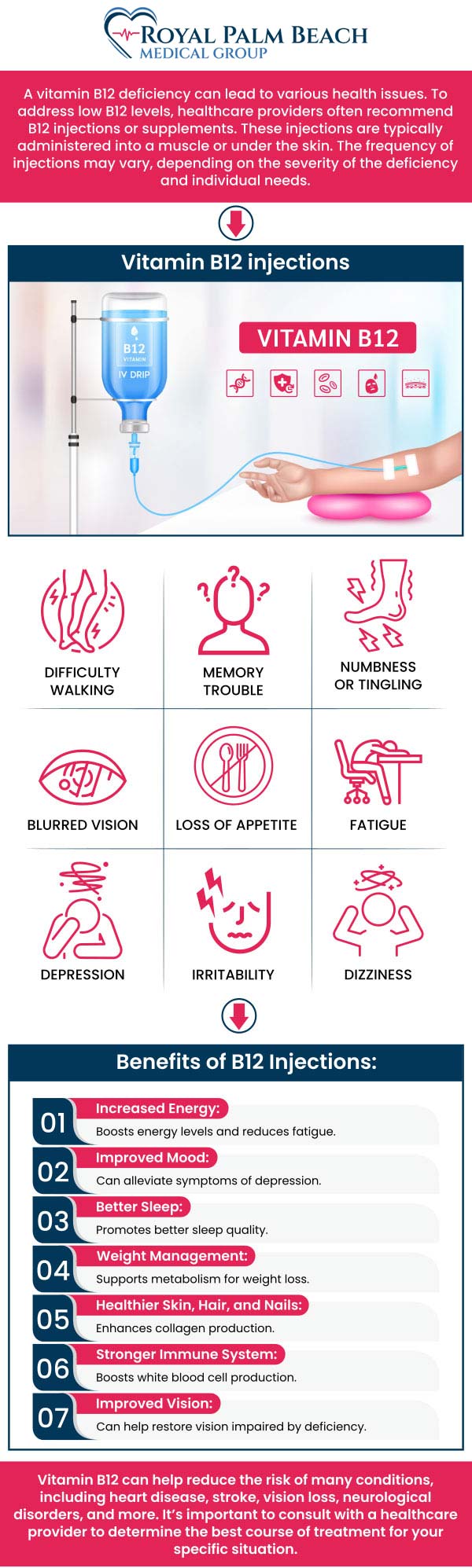
Symptoms associated with B12 deficiency can include:
- Persistent fatigue or weakness
- Lightheadedness or shortness of breath with exertion (anemia-like)
- Numbness, tingling, burning sensations in hands/feet
- Balance or coordination issues
- Memory or concentration problems
- Sore tongue or mouth ulcers (in some cases)
Key experience-based note: I’ve seen people interpret “tingling” as definitely B12 related, but neurologic symptoms can also come from other issues (like vitamin B6 imbalance, diabetes, thyroid problems, or nerve compression). That’s why symptoms alone can lead to wasted time and unnecessary injections.
2) Consider your risk factors
In my hands-on work reviewing real patient journeys, risk factors tend to be the strongest “signal” for whether injections might be necessary—especially when absorption is impaired.
- Known pernicious anemia or suspected intrinsic factor problems
- Bariatric surgery or significant GI malabsorption
- Long-term restrictive diet with no adequate supplementation
- Vegetarian/vegan with symptoms and no recent testing
- Medications or GI conditions that affect B12 absorption
3) Use lab testing to avoid guesswork
If you’re asking whether you need injections, the most trustworthy path is testing. Common labs include:
- Serum B12 (a starting point, but not always definitive)
- Methylmalonic acid (MMA) and/or homocysteine (often more informative when B12 is borderline)
- Complete blood count (CBC) (to look for anemia patterns)
- Sometimes intrinsic factor antibodies if pernicious anemia is suspected
In practice, borderline results are where I most often see confusion. When symptoms exist and the B12 level is “not clearly low,” MMA/homocysteine can help clarify whether there’s true functional deficiency.
4) Decide if injections are likely the best approach
B12 injections are typically considered when:
- There’s clear deficiency and/or neurologic symptoms (which can require prompt correction)
- Absorption is impaired (e.g., pernicious anemia, significant malabsorption)
- Oral therapy has failed or isn’t feasible
Limitation to understand: injections aren’t automatically “stronger” for everyone. Many people with dietary insufficiency or mild deficiency can improve with appropriately dosed oral B12. The right choice depends on why you’re low and how quickly you need to normalize levels.
B12 Injections vs Oral B12: What’s the Real Difference?
Let’s make this concrete. B12 can be absorbed through different mechanisms. In some cases, injections bypass absorption barriers. That’s why injections can be a practical solution when the gut can’t do its job.
When oral B12 often works
- Diet-related low intake
- Mild deficiency without major absorption issues
- You prefer non-injectable options and can stay consistent
When injections often make sense
- Malabsorption or pernicious anemia
- Significant deficiency with anemia and/or neurologic symptoms
- Previous oral supplementation without adequate improvement
Trade-offs I recommend weighing honestly
| Factor | Injections | Oral B12 |
|---|---|---|
| Best fit when absorption is impaired | Often yes | May be harder |
| Convenience | Requires visits or self-administration | Easy to take daily |
| Time to improve | Can be quicker in deficiency states | Can work well if absorption supports it |
| Comfort/needle aversion | May be a barrier | No injections needed |
What the Injection Experience Can Look Like (and What to Watch)
People often ask what B12 injections “feel like” and what changes they should expect. In my experience, the timeline varies based on how low levels were, whether anemia is present, and whether neurologic symptoms exist.
Typical expectations clinicians may discuss include:
- Energy/anemia-related improvements may take days to weeks
- Neurologic symptoms (tingling, numbness) may take longer and sometimes don’t fully reverse if deficiency was prolonged
- Follow-up labs may be used to confirm response
Important: if you’re considering injections due to neurologic symptoms, it’s worth prioritizing timely evaluation rather than waiting for trial-and-error. The “window” for recovery can be influenced by how long the deficiency has been present.
When You Should Talk to a Clinician (Soon)
Here are scenarios where I’d strongly recommend prompt medical guidance rather than self-directed supplementation:
- New or worsening numbness, tingling, or balance problems
- Symptoms consistent with anemia (significant fatigue, shortness of breath)
- History of pernicious anemia or bariatric surgery
- Borderline B12 labs with ongoing symptoms
- Unclear cause of deficiency or multiple potential nutritional gaps
In these cases, the risk isn’t just missing B12—it’s overlooking other treatable causes with similar symptoms.
FAQ
How do i know if i need b12 injections instead of oral supplements?
Injections are usually more appropriate when absorption is impaired (like pernicious anemia or post-bariatric surgery), when deficiency is clearly confirmed with significant anemia, or when neurologic symptoms are present. The most reliable way to decide is lab testing (and sometimes MMA/homocysteine if B12 is borderline), then matching the delivery method to the cause.
What labs should I ask for if I suspect B12 deficiency?
A common starting set includes serum B12 and a CBC. If results are borderline or symptoms are significant, ask about methylmalonic acid (MMA) and homocysteine. If pernicious anemia is suspected, intrinsic factor antibodies may be discussed by your clinician.
Will B12 injections help if my B12 level is normal?
If your serum B12 is truly normal, injections may not address the cause of your symptoms. Symptoms like fatigue or tingling can come from multiple conditions, so it’s usually more effective to investigate alternative causes rather than treat by injection alone.
Conclusion: Make the Decision Step-by-Step
To answer how do i know if i need b12 injections, I recommend a straightforward sequence: identify risk factors, use lab testing to confirm functional deficiency when possible, and choose injections when absorption is impaired or neurologic/anemia concerns are present. For others, oral B12 may work just as well with proper dosing and follow-up.
Next step: If you’re experiencing symptoms or have meaningful risk factors, schedule a clinician visit and request serum B12 plus a CBC; if results are borderline or symptoms persist, ask about MMA/homocysteine to clarify whether deficiency is real.
Discussion