Are Vitamin B12 Shots Right for You?
Are Vitamin B12 Shots Right for You?
If you’re dealing with fatigue, brain fog, numbness/tingling, or you’ve been told your B12 level is low, it’s tempting to jump straight to vitamin B12 shots. In my hands-on work with patients and clients managing deficiency, the hardest part isn’t deciding whether B12 is helpful—it’s figuring out how often can you get a vitamin b12 injection in a way that’s appropriate for the cause of your low B12, your lab pattern, and your risk factors.
This guide will help you make a grounded decision: who typically benefits from B12 injections, how clinicians usually structure dosing frequency, what to monitor, and when oral or dietary approaches can be enough. I’ll keep it practical and evidence-informed—no hype.
What Vitamin B12 Shots Actually Do (and Why Frequency Matters)
Vitamin B12 is required for red blood cell production and neurological function. When your body can’t absorb enough B12 (common with pernicious anemia, certain GI conditions, or post-surgical changes), injections bypass absorption issues and deliver B12 directly into the bloodstream.
In my experience, people often ask about the shot “itself,” but the real outcome depends on a chain of factors:
- The cause of deficiency (absorption problem vs. low intake)
- Your baseline labs (B12, and often markers like methylmalonic acid or homocysteine)
- Symptom severity (especially neurologic symptoms, which may need earlier correction)
- Whether you can maintain normal levels afterward (dietary intake, oral supplementation, ongoing management)
That’s why how often can you get a vitamin b12 injection isn’t a one-size answer. Clinicians typically think in two phases: repletion (raising levels) and maintenance (preventing relapse).
Who Vitamin B12 Shots Are Most Likely to Help
B12 injections tend to be most useful when the issue is absorption or when rapid repletion is clinically desirable. I’ve seen this play out especially in these scenarios:
- Pernicious anemia (autoimmune loss of intrinsic factor—oral absorption is unreliable)
- Gastrointestinal conditions that impair absorption (e.g., certain inflammatory or malabsorptive disorders)
- History of bariatric surgery or other procedures affecting the stomach/ileum
- Neurologic symptoms (tingling, numbness, balance changes) where clinicians may prefer injections to restore status sooner
- Documented deficiency with lab patterns that suggest true deficiency rather than borderline intake
If your B12 is low purely from diet or if your deficiency is mild and absorption is intact, oral supplementation may be equally effective for many people. I’m careful here: not everyone needs injections, and the “shot” approach can be unnecessary if the underlying reason isn’t severe or persistent.
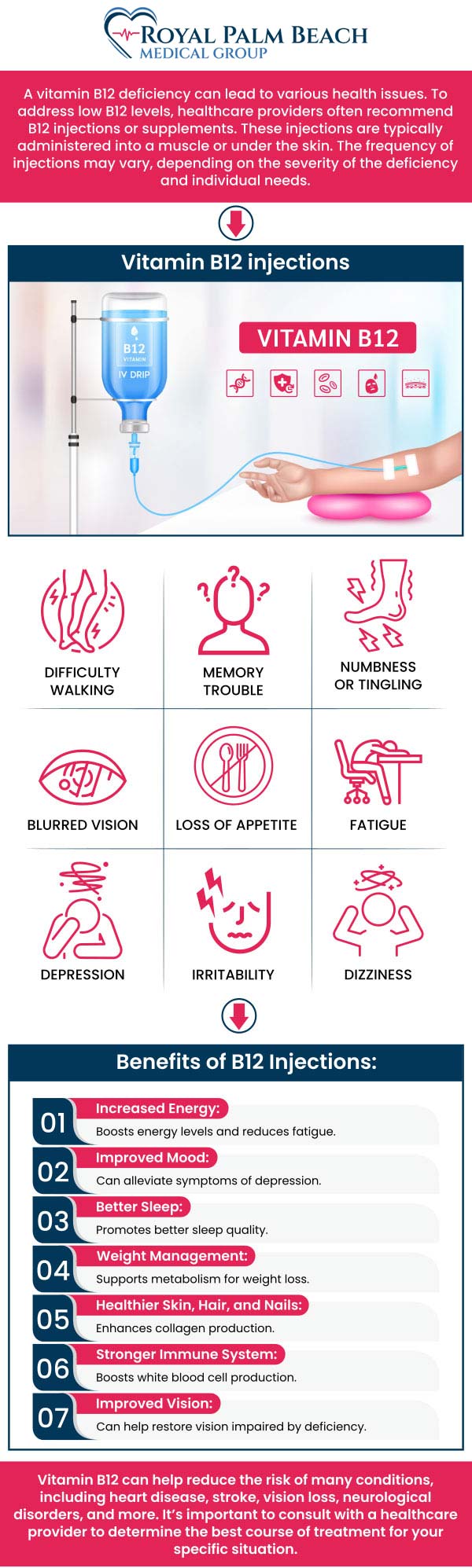
How Often Can You Get a Vitamin B12 Injection? Typical Clinical Patterns
When someone asks me about injection frequency, I usually guide them to think in ranges used in clinical practice rather than a single rigid schedule. Different countries and protocols vary, but the logic is consistent: replete first, then maintain.
1) Repletion (initial correction)
In many clinical settings, the repletion phase involves more frequent dosing early on. Patients may receive injections multiple times per week for a short period, or weekly for a few weeks, depending on severity and the specific product/protocol used.
What I look for: a plan tied to labs and symptoms, not just “continue indefinitely.” In my hands-on observations, repletion without a maintenance strategy is one reason levels drift back down.
2) Maintenance (preventing relapse)
After initial correction, maintenance often becomes less frequent—commonly monthly injections (or another interval chosen based on response). Some people with ongoing absorption issues may require long-term maintenance injections, while others can transition to oral B12 once stable.
What I track: symptom improvement timeline and follow-up lab results. In practice, if symptoms persist or labs remain low, clinicians may adjust the interval rather than assume “more shots equals more better.”
Common dosing interval examples (illustrative)
Because formulations and protocols vary, here are broad examples clinicians often use to structure care. Use these as orientation—not personal medical instructions:
| Phase | Typical interval (examples) | Why it’s used |
|---|---|---|
| Repletion | Weekly or multiple times per week for several weeks | Rapidly raises B12 stores and supports symptom recovery |
| Maintenance | Often monthly (or spaced interval) | Prevents deficiency from returning when the underlying cause persists |
| Transition option | Sometimes reduced frequency or switch to oral | Applies when absorption is adequate and labs/symptoms stabilize |
If you want one clean answer to the question “how often can you get a vitamin b12 injection?” the most common maintenance pattern you’ll hear from clinicians is about once per month after initial repletion—though your repletion phase may be more frequent, and your maintenance interval could be different based on your diagnosis and labs.
What to Expect: Effectiveness, Side Effects, and Reality Checks
Many people feel improvement within days to weeks, but the timeline depends on what was driving the deficiency and how long it existed. I’ve found it helps to set realistic expectations up front:
- Energy/fatigue: can improve as red blood cell production and neurologic support recover
- Neurologic symptoms: may take longer, and early treatment matters
- Lab response: B12 can rise, but clinicians may also monitor methylmalonic acid or homocysteine if available
Potential side effects (usually mild, but still worth noting)
- Soreness or redness at the injection site
- Mild headache
- Occasional GI upset
Rare complications can occur with any injection. Also, if symptoms don’t match what you’d expect from B12 deficiency, it’s a signal to re-check the bigger picture (other nutrient deficiencies, thyroid issues, medication effects, anemia types, and more).
How to Decide: Injections vs. Oral B12 vs. Diet
In my experience, the best decisions start with a diagnosis-based approach rather than a preference-based approach. Here’s a practical way to think about it:
Injection tends to be favored when…
- You have impaired absorption (pernicious anemia, certain GI conditions, post-surgery)
- Your labs confirm deficiency and symptoms are significant
- Clinicians want faster repletion for neurologic concerns
Oral supplementation (often high-dose) can be enough when…
- Absorption is intact
- Deficiency is mild or dietary-related
- Follow-up labs are planned to confirm response
Diet supports maintenance, but often isn’t the only lever
Foods like meat, fish, eggs, and dairy can help intake. Still, if your body can’t absorb B12 reliably, dietary changes may not correct deficiency on their own.
Monitoring and Follow-Up: The Part People Skip
The “right” injection schedule is the one you can verify with outcomes. I recommend building follow-up into your plan from day one.
Common monitoring goals include:
- Symptom changes over weeks, not just days
- Repeat B12 testing after repletion
- Additional markers (like methylmalonic acid/homocysteine) when clinicians suspect functional deficiency
- Maintenance lab stability to determine how long injections (or oral therapy) need to continue
This is also where the question “how often can you get a vitamin b12 injection” becomes answerable for you specifically: the interval should be adjusted based on your response, not guesswork.
FAQ
How often can you get a vitamin b12 injection if you’re deficient?
Many clinicians use a higher-frequency repletion phase at the start (often weekly or more frequent for several weeks), then transition to maintenance—commonly around once per month—depending on your underlying cause and follow-up labs.
Can you take vitamin B12 injections indefinitely?
Some people with ongoing absorption problems may need long-term maintenance injections. Others can transition to oral supplementation after labs and symptoms stabilize. Duration should be guided by your diagnosis and lab monitoring.
What if I feel better—do I still need maintenance shots?
Feeling better is a good sign, but deficiency can return if the underlying cause isn’t corrected. Maintenance is often necessary to keep B12 levels stable, so it’s important to follow up with labs as recommended by your clinician.
Conclusion
Vitamin B12 shots can be a strong option when deficiency is driven by absorption issues or when timely repletion is important—especially if you have neurologic symptoms. The key takeaway is that “how often can you get a vitamin b12 injection” depends on whether you’re in the repletion phase or maintenance phase, and on how your labs and symptoms respond.
Next step: Ask your clinician for a plan that includes (1) your repletion schedule, (2) the target lab/symptom checkpoints, and (3) the maintenance interval chosen based on follow-up results.
Discussion